

Role of Phone Cases for Children – Safety and Peace of Mind
Over half of British parents report feeling anxious about their children’s smartphone safety. With mobile devices now a daily part of kids’ lives, it is no wonder families are searching for smarter, safer solutions. Specialized phone cases for children do much more than prevent cracks and scratches. They combine robust protection with designs made for active hands, giving parents peace of mind while helping kids safely explore the digital world.
Table of Contents
- Defining Phone Cases For Children
- Types Of Children’s Phone Cases Explained
- Key Protective Features For Kids’ Devices
- UK Safety Regulations And Standards
- Parental Mistakes And What To Avoid
Key Takeaways
| Point | Details |
|---|---|
| Specialised Design | Phone cases for children are uniquely designed to prioritise safety, durability, and ease of use, addressing their specific needs. |
| Diverse Case Types | Various case types, such as rugged, flexible, and educational cases, cater to different protection and functionality needs that appeal to children. |
| Key Protective Features | Essential features include shock absorption, drop protection, and grip enhancement to minimise damage from drops and make devices safer for children. |
| Parental Guidance | Parents should actively manage their children’s device usage through proper case selection and open communication to foster responsible technology habits. |
Defining Phone Cases for Children
A phone case for children is more than just a protective accessory. It represents a specialised design approach focused on safeguarding mobile devices while addressing the unique needs of younger users. Unlike standard phone cases, these protective solutions incorporate additional features tailored specifically for children’s usage patterns and safety requirements.
Researchers have been exploring innovative approaches to managing children’s device interactions, with some schools implementing creative strategies. For instance, researchers at King’s College London launched a pioneering study investigating smartphone management to understand how device restrictions might impact learning outcomes and student wellbeing. Such research underscores the importance of thoughtful device protection and usage guidelines for children.
Phone cases for children typically feature several key characteristics that distinguish them from adult-oriented designs:
- Enhanced durability to withstand drops and impacts
- Bright, child-friendly colours and designs
- Shock-absorbing materials like silicone or reinforced polymers
- Integrated safety features such as wrist straps or attachment options
- Simplified access to essential device functions
- Potentially lockable pouches that restrict unauthorized device usage, similar to school-based management systems
These specialised cases represent more than simple protective gear. They are strategic tools that help parents manage device interactions, promote responsible technology use, and provide peace of mind in an increasingly digital world. By combining robust physical protection with thoughtful design considerations, phone cases for children bridge the gap between technological access and parental oversight.
Types of Children’s Phone Cases Explained
Children’s phone cases come in a diverse range of designs, each addressing specific protection and functionality requirements. Flexible cases represent one of the most popular options in the smartphone accessory market, utilising advanced materials like thermoplastic polyurethane (TPU), silicone, and soft rubbery blends that prioritise grip and shock absorption.
The primary categories of children’s phone cases include:
- Rugged Protection Cases: Designed for maximum durability, these cases feature multi-layer construction with reinforced corners and raised edges to shield devices from drops and impacts
- Lightweight Flexible Cases: Slim profiles that offer basic protection while maintaining device aesthetics
- Wallet-Style Cases: Featuring card slots and additional storage, ideal for older children who might need to carry small items
- Character and Theme Cases: Decorated with popular cartoon characters, colours, and designs that appeal to children’s interests
- Educational Interactive Cases: Some advanced models include learning elements or parental control features
When selecting a phone case for children, parents should consider factors beyond mere physical protection. The complete guide to phone cases for kids highlights the importance of choosing cases that balance safety, functionality, and child engagement. Advanced cases now incorporate features like built-in screen protectors, antimicrobial materials, and ergonomic designs that make devices more secure and age-appropriate.

Ultimately, the right phone case transforms a potential fragile electronic device into a resilient, child-friendly tool. By carefully matching the case to a child’s age, interests, and usage patterns, parents can provide both physical protection and a sense of personalised technological independence.
Key Protective Features for Kids’ Devices
Device protection for children requires a comprehensive approach that goes beyond simple physical shielding. Parents seeking robust protection can explore multiple screen protection strategies that safeguard expensive electronic devices from potential damage.
The most critical protective features for children’s devices include:
- Shock Absorption: Multi-layered cases with reinforced corners that dissipate impact energy
- Drop Protection: Raised bezels that protect screen edges during accidental falls
- Material Durability: High-grade polymers and rubberised materials resistant to cracking
- Impact Resistance: Specially engineered protective layers that minimise device vulnerability
- Grip Enhancement: Textured surfaces preventing accidental slips and drops
Modern protective cases incorporate advanced technological features beyond traditional protection. Comprehensive phone case protection guides for UK parents emphasise the importance of selecting cases that combine physical durability with smart design elements. These might include antimicrobial coatings, integrated stand functionality, and ergonomic designs specifically tailored for smaller hands.
Ultimately, choosing the right protective features requires understanding a child’s specific usage patterns, age, and interaction with technology. By investing in high-quality, thoughtfully designed device protection, parents can significantly reduce the risk of costly damages while teaching children responsible device management.
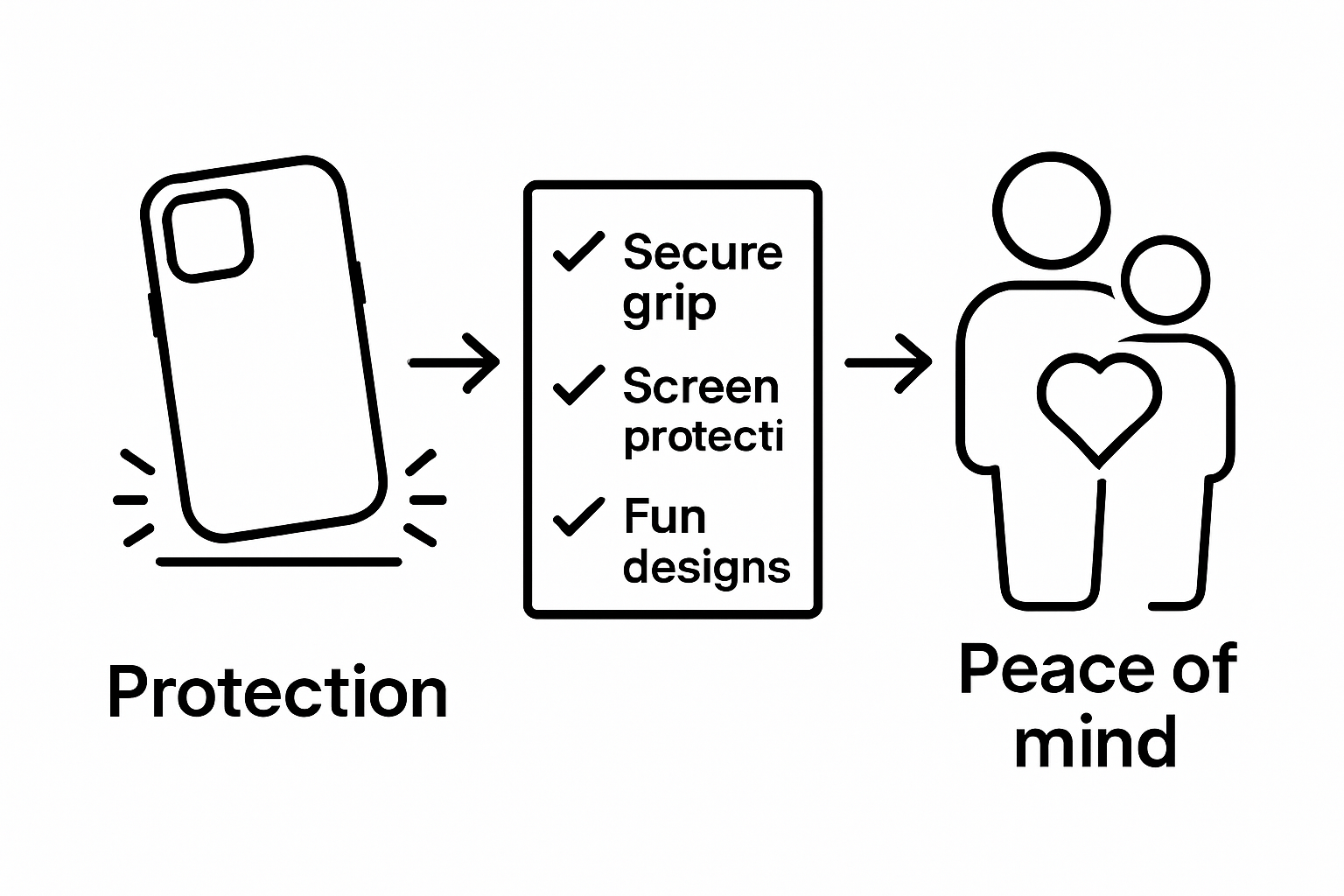
UK Safety Regulations and Standards
Device safety for children in the United Kingdom involves a complex framework of educational, technological, and regulatory considerations. Researchers at King’s College London are pioneering studies to understand the impact of smartphone management in educational environments, highlighting the growing national concern about responsible device usage among young people.
Key safety standards and regulatory approaches for children’s device management include:
- School Device Policies: Comprehensive guidelines limiting smartphone usage during educational hours
- Age-Appropriate Restrictions: Graduated access controls based on student maturity levels
- Digital Safeguarding: Protective mechanisms preventing inappropriate content access
- Physical Device Protection: Mandatory safety features in educational technology
- Data Privacy Compliance: Strict regulations protecting children’s digital information
Innovative approaches like lockable phone pouches have emerged as a practical solution for managing student device interactions. These systems allow students to retain their devices while preventing unauthorized usage during critical learning periods. Such strategies represent a nuanced approach to balancing technological access with educational priorities.
Navigating these safety regulations requires collaboration between parents, educational institutions, and technology providers. By implementing comprehensive, age-appropriate guidelines, the UK continues to develop forward-thinking strategies that protect children’s wellbeing while acknowledging the importance of digital literacy in modern educational environments.
Parental Mistakes and What to Avoid
Navigating children’s device safety requires careful consideration and proactive strategies. Parents often make unintentional errors that can compromise their children’s technological experience and digital wellbeing. Understanding comprehensive phone case protection strategies can help mitigate potential risks associated with device management.
Common parental mistakes to avoid include:
- Unrestricted Device Access: Providing unlimited smartphone usage without supervision
- Ignoring Software Updates: Failing to maintain current device security protections
- Inadequate Physical Protection: Purchasing cheap, low-quality phone cases
- Overlooking Digital Boundaries: Not establishing clear usage guidelines
- Avoiding Open Communication: Preventing honest discussions about digital risks
- Neglecting Parental Controls: Not utilising built-in device management tools
The most critical aspect of responsible device management involves creating a balanced approach that respects a child’s growing independence while maintaining appropriate safety measures. Parents can explore multiple screen protection strategies to ensure comprehensive device safety. This means implementing thoughtful restrictions, maintaining open dialogue, and selecting age-appropriate protective technologies that support healthy digital interactions.
Ultimately, effective parental guidance transforms potential technological risks into valuable learning opportunities. By avoiding knee-jerk reactions and instead adopting measured, informed approaches, parents can help children develop responsible, safe digital habits that will serve them throughout their lives.
Secure Your Child’s Device with Thoughtful Protection
Ensuring your child’s phone is safeguarded against drops, impacts, and daily wear is vital for peace of mind. The article highlights the importance of shock absorption, durability, and child-friendly designs as key factors in choosing the right phone case. At StudioShake, we understand these concerns and offer a diverse selection tailored to provide robust physical protection while supporting responsible device use.
Explore our Home page – StudioShake for phone cases crafted with your child’s safety in mind.

Protect your child’s device today with our trusted mobile accessories that combine durability and fun designs. Don’t wait until an accident happens – visit https://studioshake.co.uk now to find the perfect phone case that ensures lasting protection and peace of mind.
Frequently Asked Questions
What are the key features of phone cases designed for children?
Phone cases for children typically include enhanced durability, bright colours, shock-absorbing materials, integrated safety features such as wrist straps, and simplified access to essential functions.
How do I choose the right phone case for my child?
Consider your child’s age, interests, and usage patterns. Look for cases that offer a balance of safety, functionality, and engagement, such as those with built-in screen protectors and ergonomic designs.
Why is shock absorption important in children’s phone cases?
Shock absorption is crucial because it helps to dissipate impact energy during accidental drops, protecting the device from damage. Multi-layered cases with reinforced corners offer effective drop protection.
Are there any safety regulations regarding children’s phone usage?
Yes, there are comprehensive guidelines that focus on school device policies, age-appropriate access controls, digital safeguarding, and mandatory physical protection features in educational technology.
Recommended
- Complete Guide to Phone Cases for Kids – StudioShake
- Phone Cases: Everything You Need to Know – StudioShake
- 7 Durable Phone Case Features Every Parent Should Know – StudioShake
- Why Custom Phone Cases: Complete Guide for UK Parents – StudioShake
- Meilleurs gadgets plein air enfants – Comparatif 2025 – The Zoofamily