

Phone Case Design Terminology – What Every Parent Should Know
Most British parents quickly discover that buying the right phone case is about far more than just picking a fun color or sleek pattern. With over 80 percent of families relying on mobile devices daily, the confusing world of phone case design terminology can leave anyone second guessing their choices. Clear explanations cut through the jargon so you know exactly how different materials and protective features impact your devices’ safety and style.
Table of Contents
- Defining Phone Case Design Terminology Clearly
- Exploring Main Phone Case Types and Styles
- Understanding Key Materials and Durability Terms
- Custom Features and Finish Options Explained
- Common Buyer Mistakes and How to Avoid Them
Key Takeaways
| Point | Details |
|---|---|
| Understand Material Composition | Different materials offer unique protective qualities; choose based on your lifestyle needs. |
| Check Drop Protection Ratings | Always verify the drop protection rating of a case to ensure adequate safeguarding for your device. |
| Match Case Type to Lifestyle | Select a phone case type that aligns with daily activities, prioritising durability and functionality. |
| Avoid Common Buyer Mistakes | Consider compatibility, lifestyle demands, and material properties to make informed purchasing decisions. |
Defining Phone Case Design Terminology Clearly
Parents today encounter a bewildering array of phone case design terminology that can seem like a foreign language. Understanding these technical terms helps make informed decisions about protecting your family’s valuable mobile devices. Phone case design standards involve multiple complex considerations beyond simple aesthetic preferences.
The fundamental terminology begins with material composition. Modern phone cases are typically constructed from polymers like polycarbonate, silicone, leather, and hybrid materials designed to absorb shock and resist daily wear. Each material offers distinct protective qualities. Polycarbonate provides rigid protection, silicone offers flexible cushioning, and leather delivers sophisticated style with moderate impact resistance.
Design terminology also encompasses structural elements like drop protection ratings, which measure a case’s ability to withstand accidental falls. Manufacturers use standardised testing protocols to determine how many metres a device can survive when dropped onto different surfaces. Some cases are rated for military-grade protection, suggesting they can withstand drops from significant heights without compromising device integrity.
Pro Tip: Always check the specific drop protection rating before purchasing a phone case, as not all protective cases offer the same level of safeguarding for your device.
Exploring Main Phone Case Types and Styles
Phone case types represent far more than simple decorative accessories. Modern parents require comprehensive understanding of diverse case styles that protect valuable mobile devices against daily wear and potential damage. Phone case materials offer distinct protective qualities depending on specific design characteristics and intended usage scenarios.
The primary phone case categories include hard plastic, soft TPU, silicone, leather, wooden, and hybrid variants. Hard plastic cases provide rigid protection with minimal bulk, ideal for parents seeking slim profiles. Soft TPU and silicone options deliver superior shock absorption, cushioning devices against accidental drops. Leather cases combine sophisticated aesthetics with moderate impact resistance, appealing to professionals and style-conscious users.
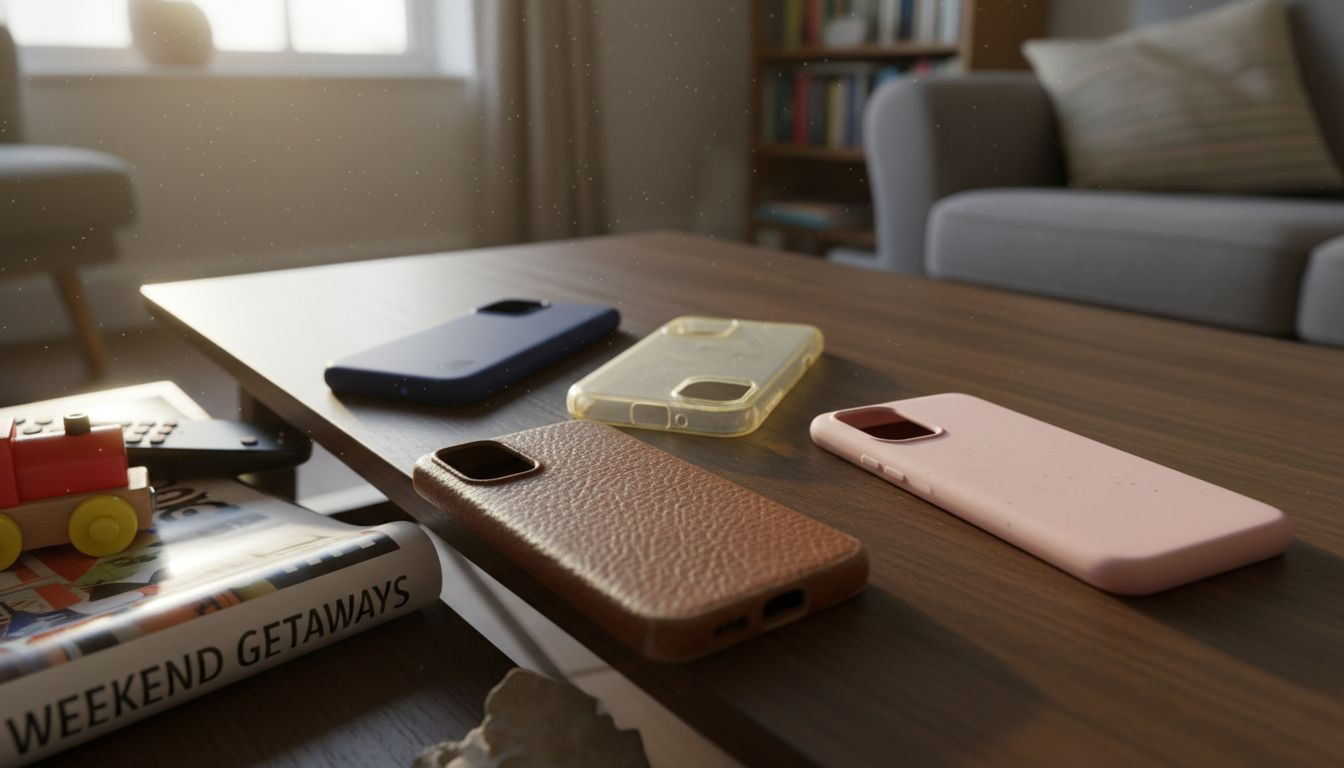
Each case type presents unique advantages. Rugged cases feature reinforced corners and raised edges, offering maximum protection for active families with children. Clear cases allow device aesthetics to shine through while providing fundamental protection. Wooden cases represent a premium segment, delivering natural textures and distinctive visual appeal. Hybrid cases combine multiple materials, strategically integrating rigid and flexible components to maximise device safeguarding.
Here’s a quick comparison of common phone case materials and their core qualities:
| Material | Protection Level | Flexibility | Style Impact |
|---|---|---|---|
| Polycarbonate | High rigidity, strong shell | Limited, very stiff | Modern, minimal bulk |
| Silicone | Good shock absorption | Very flexible | Soft touch, playful |
| TPU | Superior cushioning | Moderately flexible | Subtle, slim profile |
| Leather | Moderate impact resistance | Semi-rigid, slight give | Elegant, traditional |
| Wood | Hard, scratch-resistant | Inflexible | Natural, unique grain |
| Hybrid | Maximised total protection | Flexible corners, firm back | High-tech, versatile |
Pro Tip: Always match your phone case style to your lifestyle, considering factors like workplace environment, family activities, and personal usage patterns to select the most appropriate protection.
Understanding Key Materials and Durability Terms
Navigating the complex world of phone case materials requires understanding fundamental durability terminology that directly impacts device protection. Phone case material properties encompass critical protective characteristics parents must comprehend before selecting appropriate device safeguarding solutions.
The primary durability metrics include impact resistance, flexibility, shock absorption, and environmental resilience. Thermoplastic polyurethane (TPU) represents an exceptional material offering superior shock-absorbing qualities, creating a soft yet protective barrier against accidental drops. Polycarbonate provides rigid protection with exceptional structural integrity, while silicone delivers remarkable flexibility that helps dissipate impact energy across the case surface.
Advanced material compositions like hybrid cases combine multiple substances to maximise protective capabilities. These sophisticated designs strategically layer rigid and flexible materials, creating comprehensive protection zones that shield devices from multiple potential damage sources. Environmental resistance becomes crucial, with premium materials offering protection against moisture, temperature variations, dust, and everyday wear and tear that can compromise device integrity.
Pro Tip: When evaluating phone case materials, prioritise your specific lifestyle needs by considering factors like workplace environment, personal activity levels, and potential exposure to challenging conditions that might impact device durability.
Custom Features and Finish Options Explained
Personalisation has transformed phone case design from mere protective accessories to extensions of individual style and functionality. Custom phone case features now offer unprecedented personalisation opportunities that enable parents to balance practical protection with aesthetic preferences.
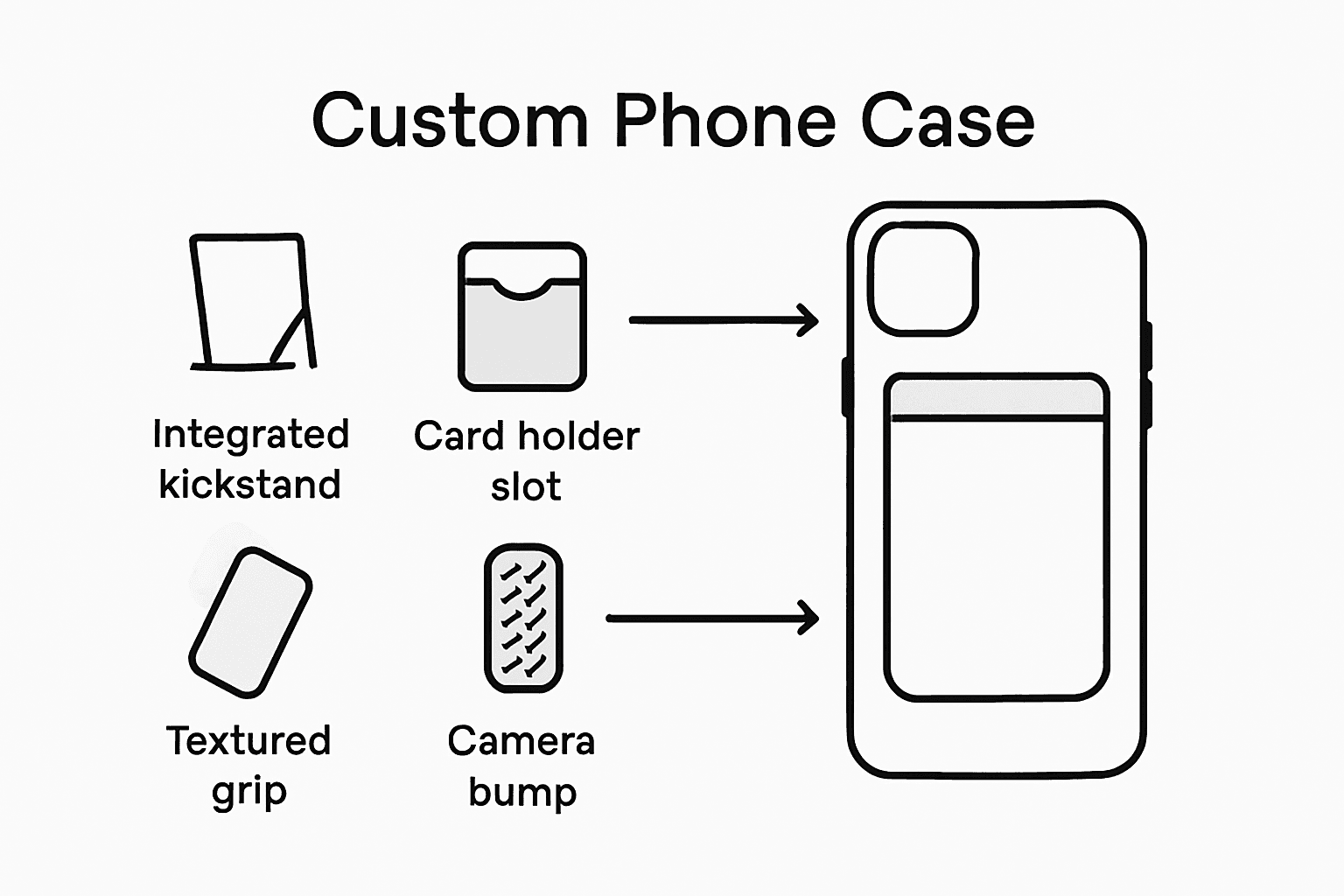
Modern phone cases present a diverse array of customisation options including unique textures, enhanced grip surfaces, integrated camera protection, and specialised screen safeguarding mechanisms. Matte finishes provide understated elegance and reduced fingerprint visibility, while glossy surfaces offer vibrant colour depth and reflective qualities. Textured cases incorporating subtle patterns or subtle geometric designs can dramatically improve grip and reduce accidental device slippage.
Beyond aesthetic considerations, advanced custom features now include practical enhancements like integrated kickstands, card storage compartments, and wireless charging compatibility. Some premium cases offer modular designs allowing users to adapt their phone protection based on changing lifestyle requirements. Material finishes range from soft-touch silicone to hard polycarbonate shells, each delivering distinct tactile experiences and protective characteristics that cater to individual preferences.
Pro Tip: When selecting a custom phone case, prioritise functionality alongside visual appeal, ensuring the design complements your daily activities and personal style without compromising device protection.
Common Buyer Mistakes and How to Avoid Them
Parents frequently encounter numerous pitfalls when selecting phone cases, often making decisions based on superficial criteria. Choosing phone case protection requires careful consideration of multiple critical factors that extend far beyond simple aesthetic preferences.
One of the most common purchasing errors involves prioritising visual appeal over genuine protective capabilities. Many buyers select cases that look attractive but provide minimal device safeguarding, leaving expensive smartphones vulnerable to accidental damage. Another significant mistake includes neglecting device-specific compatibility, assuming universal cases will adequately protect different smartphone models. Some parents overlook crucial details like precise camera cutout alignments, port accessibility, and wireless charging compatibility when selecting protective accessories.
Lifestyle alignment represents another critical consideration often overlooked by consumers. Active families require robust cases with enhanced shock absorption, while professionals might prioritise sleek, minimalist designs that maintain device aesthetics. Material selection becomes paramount, with buyers frequently underestimating the importance of understanding how different substances like TPU, silicone, and polycarbonate interact with daily usage patterns. Durability does not always correlate with thickness, and lightweight cases can sometimes offer superior protection when engineered with advanced material technologies.
To help avoid common pitfalls, consider how these key factors influence phone case selection:
| Selection Factor | Why It Matters | Example Consideration |
|---|---|---|
| Device Compatibility | Ensures precise fit and functionality | Camera and button accessibility |
| Lifestyle Demands | Matches case durability to activities | Sports, workplace, family outings |
| Material Properties | Affects protection and comfort | Shock absorption, grip feel |
| Feature Integration | Adds extra practicality | Card slots, kickstand, wireless charging |
Pro Tip: Before purchasing a phone case, conduct a thorough personal lifestyle assessment, considering your typical device usage, potential environmental challenges, and specific protection requirements to make an informed selection.
Discover Phone Cases That Truly Protect and Reflect Your Lifestyle
Choosing the right phone case means understanding complex terms like drop protection ratings, material durability, and custom features that keep your device safe in everyday family life. Many parents struggle to match their unique lifestyle with the perfect case that balances shock absorption, flexibility and style. At StudioShake, we simplify this challenge by offering a curated selection tailored for your needs. Explore our iPhone collection that blends cutting-edge technology with practical protection for busy households.
Take control of your device’s safety today by browsing our technology range that embraces durable, stylish designs suited to all environments. Don’t wait until a costly accident happens — visit StudioShake now to find your ideal phone case and give your device the care it deserves.
Frequently Asked Questions
What materials are commonly used in phone cases?
Modern phone cases are typically made from materials such as polycarbonate, silicone, leather, TPU, wooden, and hybrid variants. Each material offers distinct protective qualities; for instance, polycarbonate provides rigid protection, while silicone offers flexibility and cushioning.
What is a drop protection rating, and why is it important?
A drop protection rating measures a phone case’s ability to withstand accidental falls. This rating indicates how many metres a device can survive a drop onto different surfaces. It’s crucial to check this rating to ensure the case provides adequate protection for your device.
How do I choose the right phone case for my lifestyle?
Consider factors like your daily activities and environment. Active families may benefit from rugged cases with superior shock absorption, while professionals might prefer sleek designs that enhance the device’s aesthetics. Matching the case style to your lifestyle needs is essential for optimal protection.
What are some common mistakes to avoid when purchasing a phone case?
Common mistakes include choosing a case based solely on visual appeal rather than protective capabilities, neglecting device-specific compatibility, and overlooking material properties that impact protection and comfort. Understanding your lifestyle demands can also help you avoid purchasing the wrong type of case.