

How to Select Drop-Proof Cases for Ultimate Device Safety
Most British consumers underestimate how much their lifestyle impacts the safety of their mobile devices. With more than 60 percent of phone owners experiencing accidental drops each year, finding the right protection has never been more important. Whether your routine involves outdoor adventures, busy workplaces, or running after children, understanding the science behind device protection can help you make smarter, longer-lasting choices for your technology.
Table of Contents
- Stage 1: Identify Your Device Protection Needs
- Stage 2: Research Reliable Drop-Proof Materials
- Stage 3: Compare Case Designs for Functionality
- Stage 4: Check Case Certification and Durability Ratings
- Stage 5: Test Fit and Accessibility Before Purchase
- Stage 6: Verify Performance with Practical Drop Scenarios
Quick Summary
| Essential Insight | Explanation |
|---|---|
| 1. Assess Your Protection Needs | Understand how your lifestyle and device usage affect the type of protective case required for optimal safety. |
| 2. Choose the Right Materials | Research materials like TPU and polycarbonate to ensure your case provides effective shock absorption and durability. |
| 3. Compare Functionality and Design | Evaluate case designs for usability features like grip, button responsiveness, and protection without added bulk. |
| 4. Verify Certification Standards | Look for recognised certifications such as MIL-STD-810H to ensure your case meets high durability and protection standards. |
| 5. Test for Fit and Usability | Check the case’s compatibility with your device and ensure it does not hinder access to ports or controls during use. |
Stage 1: Identify Your Device Protection Needs
Selecting the right protective case for your mobile device requires understanding your unique usage patterns and potential risks. Your first step involves conducting a comprehensive assessment of how you interact with your gadget daily, which will directly inform the type of protection you truly need.
Start by examining your lifestyle and typical device environments. Are you an outdoor enthusiast who frequently encounters rugged terrains? A professional working in challenging workplace conditions? Or perhaps a parent managing a busy household with active children? Each scenario demands different protective specifications. Shockproof phone case specifications become crucial in determining the right level of protection. Technical details like material density and impact resistance ratings help you understand whether a case can genuinely safeguard your device against potential drops and impacts.
Consider these key factors when assessing your protection requirements: device model, typical usage scenarios, work environment, and personal handling habits. A construction worker will need significantly more robust protection compared to an office professional. Similarly, a parent might prioritise cases with additional grip and corner reinforcement to withstand occasional drops.
Quick tip: When evaluating protective capabilities, look beyond aesthetic appeal and focus on scientifically tested impact resistance standards.
Stage 2: Research Reliable Drop-Proof Materials
Researching the right drop-proof materials for your mobile device case is a critical step in ensuring maximum protection. Your goal is to understand the scientific principles behind material performance and select a case that offers genuine defence against potential impacts.
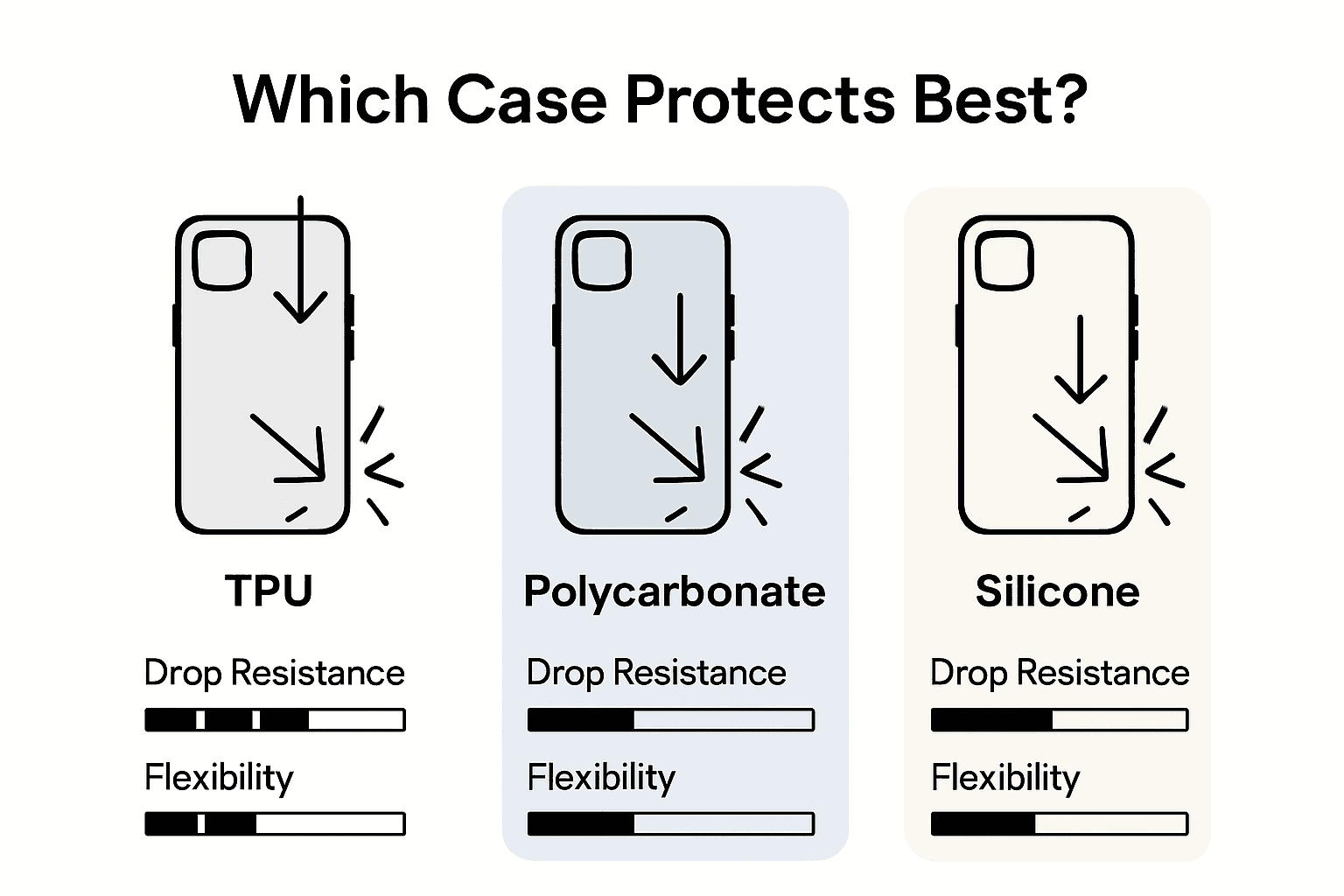
Insights from expert materials analysis reveal that not all protective materials are created equal. Thermoplastic polyurethane (TPU), polycarbonate, and silicone each offer unique protective characteristics. TPU stands out for its exceptional shock absorption properties, distributing impact energy across the case surface and preventing direct force transmission to your device. Polycarbonate provides rigidity and scratch resistance, creating a robust outer shell that can withstand significant mechanical stress.
When evaluating materials, pay close attention to technical specifications like impact resistance ratings, material density, and flexibility. A high quality case will combine multiple materials strategically to maximise protection. For instance, a hybrid case might feature a soft TPU inner layer for shock absorption paired with a hard polycarbonate exterior for structural integrity.
Quick tip: Always verify the manufacturer’s drop test certifications and look for cases that meet military grade protection standards for comprehensive device safety.
Here is a comparison of popular mobile case materials and their core protective attributes:
| Material | Main Protective Feature | Typical Usage Scenario |
|---|---|---|
| Thermoplastic Polyurethane (TPU) | Superior shock absorption | Active lifestyles, outdoor use |
| Polycarbonate | Strong structural rigidity | Heavy-duty, work environments |
| Silicone | Enhanced grip and flexibility | Family or everyday casual use |
Stage 3: Compare Case Designs for Functionality
Comparing case designs requires a strategic approach to ensure your mobile device receives comprehensive protection without sacrificing usability. Your objective is to evaluate multiple design elements that contribute to effective device safety.

Optimal case dimensions play a crucial role in balancing protection and practicality. Professional design assessments recommend selecting cases that provide adequate shock absorption without excessive bulk. Consider features like raised edges that protect camera lenses and screens, strategically placed reinforcement points at device corners, and cutouts that maintain full functionality of buttons, ports, and wireless charging capabilities.
Beyond physical protection, examine ergonomic aspects of case design. A well-engineered case should offer comfortable grip, prevent accidental slippage, and integrate seamlessly with your daily usage patterns. Look for textured surfaces, precise button response mechanisms, and lightweight materials that do not compromise your device handling experience. Some advanced designs incorporate multiple layer construction with soft inner shock absorption membranes and harder exterior shells to maximise impact resistance.
Quick tip: Always test the case in person if possible, checking how it feels in your hand and how smoothly it interacts with your specific device model.
Stage 4: Check Case Certification and Durability Ratings
Verifying the certification and durability ratings of a mobile device case is a critical step in ensuring comprehensive protection for your valuable technology. Your primary objective is to understand and evaluate the scientific standards that validate a case’s protective capabilities.
When examining case certifications, prioritise internationally recognised standards such as military drop test specifications MIL-STD-810H. Phone case durability standards provide comprehensive insights into how cases perform under extreme conditions. Look for detailed ratings that demonstrate impact resistance, material endurance, and protection against environmental factors like moisture, dust, and temperature variations. Professional grade cases often feature multilayered protection ratings that specify precise performance metrics such as drop height tolerance, shock absorption percentage, and structural integrity under sustained pressure.
Beyond official certifications, consider practical durability indicators like material quality, manufacturer warranty length, and independent testing documentation. Reputable manufacturers will transparently share comprehensive test results and provide clear guidelines about their case’s protective capabilities. Pay attention to specific details like corner reinforcement, raised screen edges, and material flexibility that contribute to overall device safety.
Quick tip: Request official certification documentation from manufacturers and cross reference independent review sources to validate the protective claims of your potential phone case.
This table summarises key types of device case certifications and what they signify:
| Certification Standard | What It Validates | Typical Indication |
|---|---|---|
| MIL-STD-810H | High drop/impact resistance | Military-grade product tested |
| IP68 | Water and dust tightness | Suitable for outdoor activities |
| Manufacturer Warranty | Coverage against defects | Indicates long-term reliability |
Stage 5: Test Fit and Accessibility Before Purchase
Ensuring your mobile device case provides seamless functionality requires careful examination of its physical compatibility and integrated features. Your goal is to verify that the case enhances rather than restricts your device’s usability.
Device case compatibility testing involves meticulously checking multiple interaction points. Examine how precisely the case accommodates your specific device model by assessing button responsiveness, port accessibility, and overall ergonomic design. Verify that camera cutouts align perfectly, charging ports remain unobstructed, and volume controls maintain their tactile sensitivity. Professional grade cases should provide unimpeded access to all device functions while offering robust protection.
Beyond basic functionality, consider additional design elements that enhance user experience. Look for features like integrated kickstands, wireless charging compatibility, and strategically placed reinforcement points. Some advanced cases offer modular designs with interchangeable components that adapt to different usage scenarios. Pay close attention to the case’s weight distribution, grip texture, and how smoothly it integrates with your daily technological interactions.
Quick tip: Always test the case in person if possible, mimicking your typical device handling patterns to ensure it meets your practical requirements.
Stage 6: Verify Performance with Practical Drop Scenarios
Simulating realistic drop scenarios is crucial for understanding your mobile device case’s true protective capabilities. Your objective is to systematically evaluate how the case performs under potential real world impact conditions.
Create controlled testing environments that mimic typical accidental drop situations. This might include simulating drops from pocket height, table surfaces, or during active movement. Consider testing scenarios like sudden phone slips from hands while walking, accidental bumps from desk edges, or unexpected falls during outdoor activities. Drop protection performance assessment requires a methodical approach that examines multiple impact angles and surface types.
Pay attention to specific protective details during your practical testing. Observe how the case distributes impact energy, whether corner reinforcements effectively absorb shock, and if the device remains fully protected during different drop scenarios. Advanced testing involves examining the case after multiple controlled drops to assess cumulative structural integrity. Look for signs of material compression, potential micro fractures, or structural weakening that could compromise future protection.
Quick tip: Use soft surfaces like carpeted areas or padded mats during initial drop tests to minimise actual device risk while simulating realistic impact conditions.
Discover Ultimate Drop-Proof Protection Tailored for Your Device Needs
Choosing the right drop-proof case is essential to safeguard your mobile device from daily hazards such as accidental drops and impacts. With concerns around shock absorption, material durability, and precise fitment, finding a case that balances robust protection without sacrificing usability is key. At StudioShake, we understand these challenges and offer solutions that match your lifestyle and device requirements.
Explore our Our Bestsellers – StudioShake collection where tested designs combine durable materials like TPU and polycarbonate with ergonomic features ensuring reliable defense. Whether you seek advanced impact resistance or seamless access to ports and buttons, our range meets the highest standards of drop protection. Start protecting your device today by visiting StudioShake or browse wallet-friendly options in our £1 Case Collection – StudioShake for dependable safety without compromise.

Upgrade your device’s defence now and experience peace of mind with cases designed for everyday challenges. Visit StudioShake to find your perfect drop-proof case and keep your device safe wherever life takes you.
Frequently Asked Questions
How can I assess my device protection needs?
To assess your device protection needs, examine your lifestyle and typical usage scenarios. Consider factors such as your work environment, daily handling habits, and potential risks. This will guide you in selecting a case that offers appropriate protection for your situation.
What materials should I look for in a drop-proof case?
Look for materials like Thermoplastic Polyurethane (TPU) and polycarbonate, as they provide robust protection against impacts. Focus on properties like shock absorption and structural rigidity while examining case specifications. Always verify the impact resistance ratings to ensure you choose a case that meets your protection requirements.
How do I compare different case designs for functionality?
To compare case designs, evaluate features such as shock absorption, ease of access to buttons and ports, and ergonomic grip. Check for dimensions that offer protection without excessive bulk, and test features like raised edges for screen protection. This ensures you select a case that enhances usability while safeguarding your device.
What certifications should I look for in a mobile device case?
Look for internationally recognised certifications, such as MIL-STD-810H, which validates high drop and impact resistance. Additionally, examine durability ratings that indicate how the case performs under extreme conditions. Cases with these certifications generally assure better protection and long-term reliability.
How can I test a case for fit and accessibility before purchase?
Test a case by checking its compatibility with your device through button responsiveness and port accessibility. Ensure camera cutouts align correctly, and evaluate how the case feels in your hand for comfort and grip. This hands-on assessment will confirm whether the case meets your functional needs.
What practical drop scenarios should I simulate to verify case performance?
Simulate realistic drop scenarios by testing how the case performs from common heights like pocket or table height. Observe how it absorbs shock and whether it maintains structural integrity after multiple drops. This practical evaluation will help ensure the case can withstand everyday accidents effectively.