

Complete guide to anti-germ phone cases for families
Every british parent knows that mobile devices can carry more germs than a toilet seat, especially in busy cities like London. With children aged 5 to 12 constantly handling phones at school, on public transport, and during meals, the risk of bacterial exposure climbs fast. Staying on top of your family’s device hygiene protects your child from everyday illnesses. Discover practical, proven ways to reduce germ contact and keep your child’s favourite gadgets safer.
Table of Contents
- Step 1: Assess Your Child’s Phone Usage
- Step 2: Select The Right Anti-Germ Phone Case
- Step 3: Prepare Devices For Case Application
- Step 4: Install And Check The Anti-Germ Phone Case
- Step 5: Maintain Cleanliness And Verify Protection
Quick Summary
| Key Point | Explanation |
|---|---|
| 1. Track child’s phone usage | Log daily interactions to identify high-risk contamination moments during meals, outdoor activities, and public spaces. |
| 2. Choose effective anti-germ cases | Select cases with built-in antimicrobial technologies, prioritising materials like silicone and hard plastics for better hygiene. |
| 3. Clean devices before case installation | Thoroughly clean the smartphone with gentle solutions to create a hygienic surface for the new antimicrobial case. |
| 4. Regularly maintain cleanliness | Use 70% isopropyl alcohol to clean the case twice weekly, focusing on frequently touched surfaces and openings. |
| 5. Inspect case for wear and tear | Regularly check the case for signs of damage or reduced effectiveness to ensure ongoing protection against bacteria. |
Step 1: Assess your child’s phone usage
Understanding your child’s mobile device habits is crucial for implementing effective germ protection strategies. Modern parents need a systematic approach to evaluating smartphone interactions and potential hygiene risks.
Begin by tracking your child’s daily phone usage across different contexts. Note the frequency of device handling during meals, after outdoor activities, or following interactions with friends. Record how often they touch their device with unwashed hands, share phones with classmates, or use devices in public spaces. Mobile Gadget Protection Guide for Parents and Adults UK suggests creating a simple tracking log to document these interactions.
Consider implementing technology monitoring tools that provide detailed insights into screen time and device usage patterns. Pay special attention to high-risk scenarios where germs might transfer more readily such as during school breaks, public transport journeys, or after participating in sports activities. Understanding these usage patterns will help you develop targeted strategies for phone case selection and hygiene management.
Here is a summary of places and moments where your child’s phone is at the highest risk of germ exposure:
| Scenario | Typical Risk Level | Example Contaminants |
|---|---|---|
| During meals | High | Food residues, bacteria |
| After outdoor activities | Moderate to high | Soil, environmental germs |
| At school during breaks | High | Shared germs, surface dirt |
| On public transport | High | Public surface bacteria |
| After sports activities | Moderate | Sweat, locker room germs |
Top tip: Create a weekly smartphone usage diary that tracks device interactions and potential contamination points to build a comprehensive understanding of your child’s mobile habits.
Step 2: Select the right anti-germ phone case
Choosing an appropriate antimicrobial phone case requires careful consideration of multiple factors that protect your child from potential bacterial contamination. Understanding the core features that make a phone case genuinely hygienic is essential for parents seeking comprehensive protection.

When evaluating anti-germ phone cases, look for options that incorporate built-in antimicrobial technologies. Antimicrobial protection methods work by actively inhibiting bacterial growth directly within the case material, providing continuous defence against potential pathogens. Seek cases that have been scientifically tested and can demonstrate sustained antimicrobial effectiveness over time, rather than temporary surface treatments that diminish quickly.
Prioritise phone cases constructed from materials that naturally resist bacterial colonisation and can be easily cleaned. Materials like silicone, high-grade polymers, and specially treated hard plastics offer superior protection compared to traditional fabric or leather cases. Consider additional features such as raised edges to minimise direct device contact with surfaces, integrated antimicrobial silver ion technologies, and smooth surfaces that prevent bacterial accumulation.
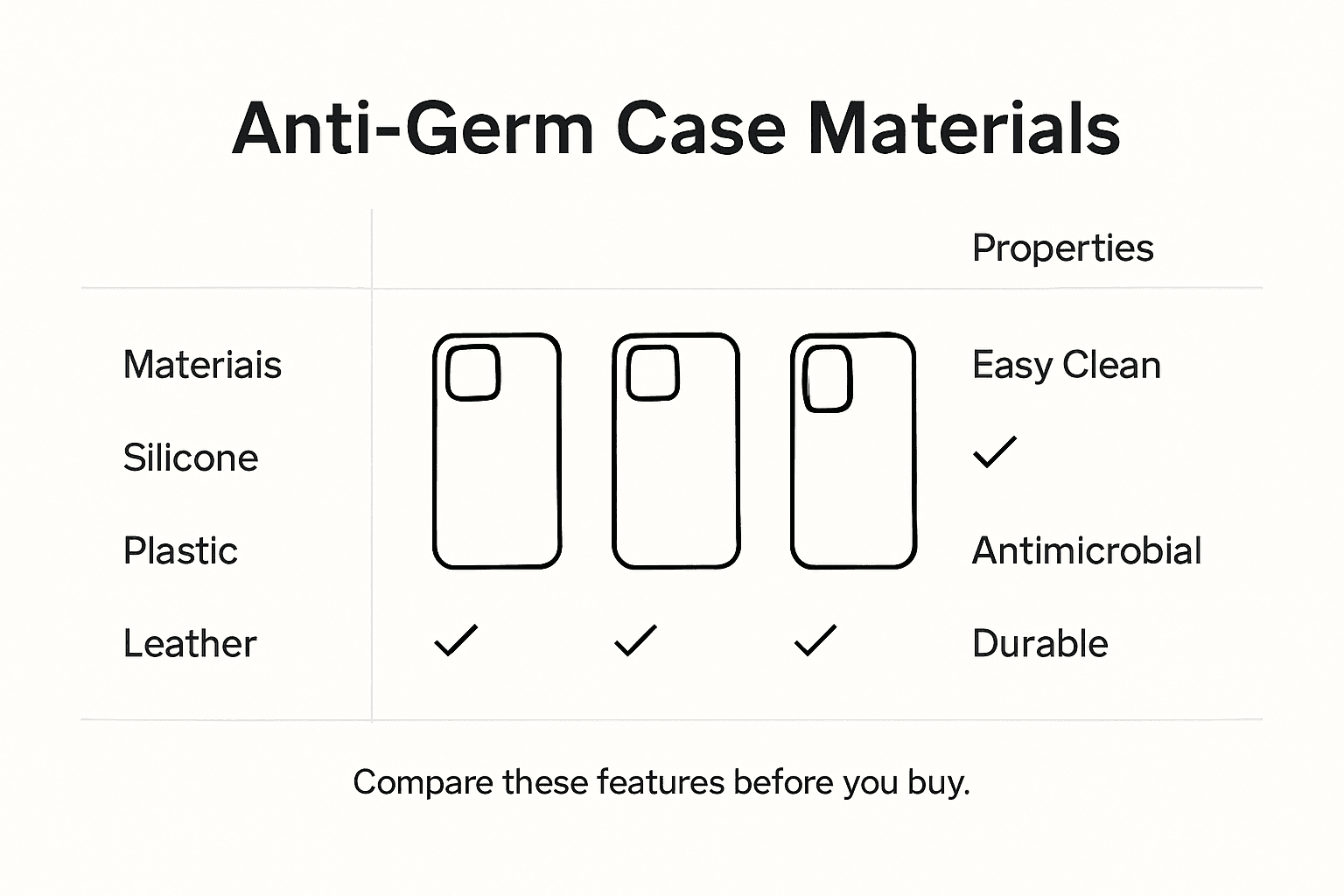
This table compares common phone case materials and their suitability for antimicrobial protection:
| Material | Antimicrobial Potential | Ease of Cleaning |
|---|---|---|
| Silicone | Often treated, effective | Easy, water-resistant |
| High-grade polymer | High with additives | Simple, durable |
| Treated hard plastic | Effective, long-lasting | Easy, resists staining |
| Fabric | Low, harbours germs | Difficult, absorbs spills |
| Leather | Low, can trap bacteria | Challenging, needs care |
Practical tip: Always select phone cases that balance robust antimicrobial protection with practical durability and your child’s specific usage requirements.
Step 3: Prepare devices for case application
Before installing an antimicrobial phone case, proper device preparation is essential to ensure maximum protection and optimal case performance. This critical step involves thoroughly cleaning your smartphone to remove existing bacteria and create a pristine surface for case installation.
Proper device cleaning techniques require careful attention to detail. Begin by powering down your device and gathering a soft lint-free microfibre cloth and a gentle cleaning solution specifically designed for electronic screens. Avoid using harsh chemicals or abrasive materials that might damage your smartphone’s delicate surfaces. Gently wipe the entire device surface systematically starting from the screen and working towards the edges, ensuring you remove all fingerprints, dust particles, and potential microbial residues.
Pay special attention to port openings, speaker grilles, and corners where dirt and bacteria tend to accumulate. Use a soft dry brush or compressed air to remove any trapped debris before applying the cleaning cloth. Ensure the device is completely dry and free from moisture before attempting to install the new antimicrobial phone case, as any remaining liquid could compromise the case’s protective properties or potentially damage your smartphone.
Practical tip: Always perform device cleaning in a well-lit area with clean hands to prevent reintroducing bacteria during the preparation process.
Step 4: Install and check the anti-germ phone case
Successfully installing an antimicrobial phone case requires precision and careful attention to ensure complete device protection. Your goal is to create a seamless barrier that maximises germ prevention while maintaining full device functionality.
Carefully align the case with your smartphone, ensuring all port openings and buttons match precisely. Advanced antimicrobial case installation techniques recommend a systematic approach to checking coverage and fit. Start by gently pressing the edges of the case around the device perimeter, working methodically to eliminate any air bubbles or potential gaps where bacteria might accumulate. Check that the case fits snugly without applying excessive pressure that could potentially damage your smartphone.
After installation, conduct a comprehensive inspection of the case. Verify that all protective features remain fully functional by testing camera access, charging ports, volume controls, and side buttons. Pay special attention to any integrated antimicrobial technologies or protective seals that might have been compromised during installation. Ensure the case provides complete coverage while maintaining the device’s usability and allowing proper ventilation to prevent moisture buildup.
Practical tip: Perform a gentle flex test of the case after installation to confirm its structural integrity and protective capabilities.
Step 5: Maintain cleanliness and verify protection
Maintaining the antimicrobial effectiveness of your phone case requires consistent attention and proactive hygiene practices. Your ongoing commitment will help ensure maximum protection for your family’s mobile devices against potential bacterial contamination.
Regular cleaning remains essential, even with antimicrobial cases. Evidence-based hygiene protocols emphasise the importance of routine surface disinfection to complement the case’s inherent protective features. Use a soft microfibre cloth slightly dampened with 70% isopropyl alcohol to gently clean the case exterior and device surfaces at least twice weekly. Pay particular attention to corners, port openings, and areas frequently touched during device use.
Conduct periodic inspections of your antimicrobial phone case to verify its ongoing protective capabilities. Check for any signs of wear such as micro cracks, surface degradation, or compromised antimicrobial coatings that might reduce the case’s effectiveness. Replace the case if you notice significant physical damage or diminished protective properties. Remember that while antimicrobial technology provides excellent ongoing protection, it works best as part of a comprehensive device hygiene strategy that includes regular cleaning and mindful handling.
Practical tip: Create a monthly device hygiene checklist to ensure consistent and thorough maintenance of your antimicrobial phone protection.
Protect Your Family’s Phones with Effective Anti-Germ Cases Today
Keeping your child’s phone germ-free is essential to safeguard their health while staying connected. This guide highlights the challenge of bacteria buildup from frequent phone handling and public exposure. At StudioShake, we understand the importance of antimicrobial protection combined with durable design that suits busy family life.
Discover our versatile range including the affordable and practical options from the £1 Case Collection – StudioShake alongside specialised solutions for popular models like Samsung Galaxy – StudioShake. Each case is crafted for easy cleaning and long-lasting antimicrobial defence.
Take control of your family’s device hygiene by choosing a phone case that actively prevents bacteria growth today. Visit StudioShake now to explore our full collection and enjoy protection designed to fit your lifestyle. Don’t wait until germs become a problem—act now to keep your devices safe and clean.
Frequently Asked Questions
How can I assess my child’s phone usage for germ exposure?
Begin by tracking your child’s daily smartphone interactions across various situations. Note when they handle their device during meals or outdoor activities and log any instances of unwashed hands or shared usage with peers. Creating a weekly usage diary can help build a comprehensive view of potential germ exposure points.
What features should I look for in an anti-germ phone case?
Choose a phone case that includes antimicrobial technologies designed to inhibit bacterial growth directly within the case material. Prioritise options made from materials like silicone or high-grade polymers that offer easy cleaning and lasting protection against germs.
How do I properly prepare my smartphone before applying an anti-germ case?
Ensure proper device preparation by first powering down the smartphone and using a soft, lint-free microfibre cloth with a gentle cleaner. Clean the device thoroughly, focusing on ports and corners where dirt can accumulate, and make sure it is fully dry before installing the case for optimal protection.
What steps should I follow to install the anti-germ phone case correctly?
Align the case with your smartphone carefully, matching all port openings precisely. Gently press around the edges to remove any air bubbles and ensure a snug fit without applying excessive pressure that might damage the device.
How should I maintain the cleanliness of my anti-germ phone case?
Regular cleaning is essential; use a microfibre cloth dampened with 70% isopropyl alcohol to clean the case and device surfaces at least twice a week. Additionally, inspect the case for any signs of wear or damage, and replace it as needed to maintain effective protection.
How often should I inspect my anti-germ phone case for damage?
Conduct periodic inspections every month to check for signs of wear, such as cracks or surface degradation. Replace the case if significant damage is detected to ensure continued protection against germs.
Recommended
- 7 Smart Tips for Choosing Phone Cases for Families in the UK – StudioShake
- Complete Guide to Phone Cases for Kids – StudioShake
- 7 Durable Phone Case Features Every Parent Should Know – StudioShake
- 7 Top Phone Case Trends 2025 for Parents and Adults UK – StudioShake
- 7 Anwendungsbeispiele für Batterien im Alltag - accu.blog