

Ergonomic Phone Cases: Easing Wrist Strain Daily
More than half of British adults now report some form of wrist discomfort linked to frequent phone use. For middle-aged parents in London, juggling family schedules and screen time can make hand and wrist strain a daily challenge. Discover how specially designed ergonomic phone cases can support your busy routine, offering practical relief and comfort without sacrificing your connection to modern technology or loved ones.
Table of Contents
- What Are Ergonomic Phone Cases?
- Types Of Ergonomic Phone Case Designs
- Key Features That Minimise Wrist Strain
- How Ergonomic Cases Improve Daily Life
- Choosing And Using The Right Case Effectively
Key Takeaways
| Point | Details |
|---|---|
| Ergonomic Phone Cases Reduce Physical Strain | These cases are designed to minimise wrist and hand discomfort during prolonged smartphone use by optimising grip and weight distribution. |
| Variety of Designs Cater to Different Needs | Ergonomic cases come in various styles, such as textured grip and contoured designs, to accommodate diverse user preferences and comfort requirements. |
| Selecting the Right Case is Critical | When choosing an ergonomic phone case, focus on features like grip security and weight balance to ensure it supports your hand’s natural positioning. |
| Active Usage Strategies Enhance Benefits | Regularly changing grip positions and using hands-free accessories can further reduce the risk of repetitive strain injuries during smartphone usage. |
What Are Ergonomic Phone Cases?
Ergonomic phone cases represent a thoughtful technological solution designed to address the growing health concerns associated with prolonged mobile device usage. By integrating specialised design principles, these innovative accessories aim to mitigate the physical strain experienced by smartphone users, particularly those who spend significant hours interacting with their mobile devices.
At their core, ergonomic phone cases are engineered to optimise the interaction between human hands and digital technology. Physical parameters of mobile devices directly impact user comfort, with size, shape, and holding method significantly affecting musculoskeletal stress. These cases strategically modify traditional phone case designs to promote more natural hand positioning, redistribute weight, and reduce the repetitive strain that can lead to wrist and hand discomfort.
The fundamental design principles of ergonomic phone cases focus on several key aspects of user interaction. These include enhanced grip surfaces, strategically placed support zones, weight distribution mechanisms, and contours that align more closely with natural hand anatomy. By addressing the musculoskeletal risks associated with mobile device usage, these cases help prevent long-term health issues such as repetitive strain injuries, carpal tunnel syndrome, and chronic wrist pain.
Quick Tip: Test any potential ergonomic phone case by holding it for several minutes and assessing how naturally your hand feels during extended use.
Types Of Ergonomic Phone Case Designs
Ergonomic phone case designs have evolved significantly, offering diverse solutions to address the complex needs of smartphone users seeking improved comfort and reduced physical strain. Smartphone dimensions play a crucial role in determining grip comfort and design effectiveness, with manufacturers developing specialised cases that cater to different ergonomic requirements.
The primary categories of ergonomic phone case designs include several innovative approaches. Textured grip cases feature specialised surface materials that enhance hand stability and reduce slippage, incorporating soft, tactile elements that improve overall handling. Contoured cases are precisely shaped to match natural hand curvatures, redistributing device weight and minimising pressure points. Some advanced designs integrate additional support mechanisms such as finger loops, pop-out grips, and adjustable kickstands that provide multiple handling options.
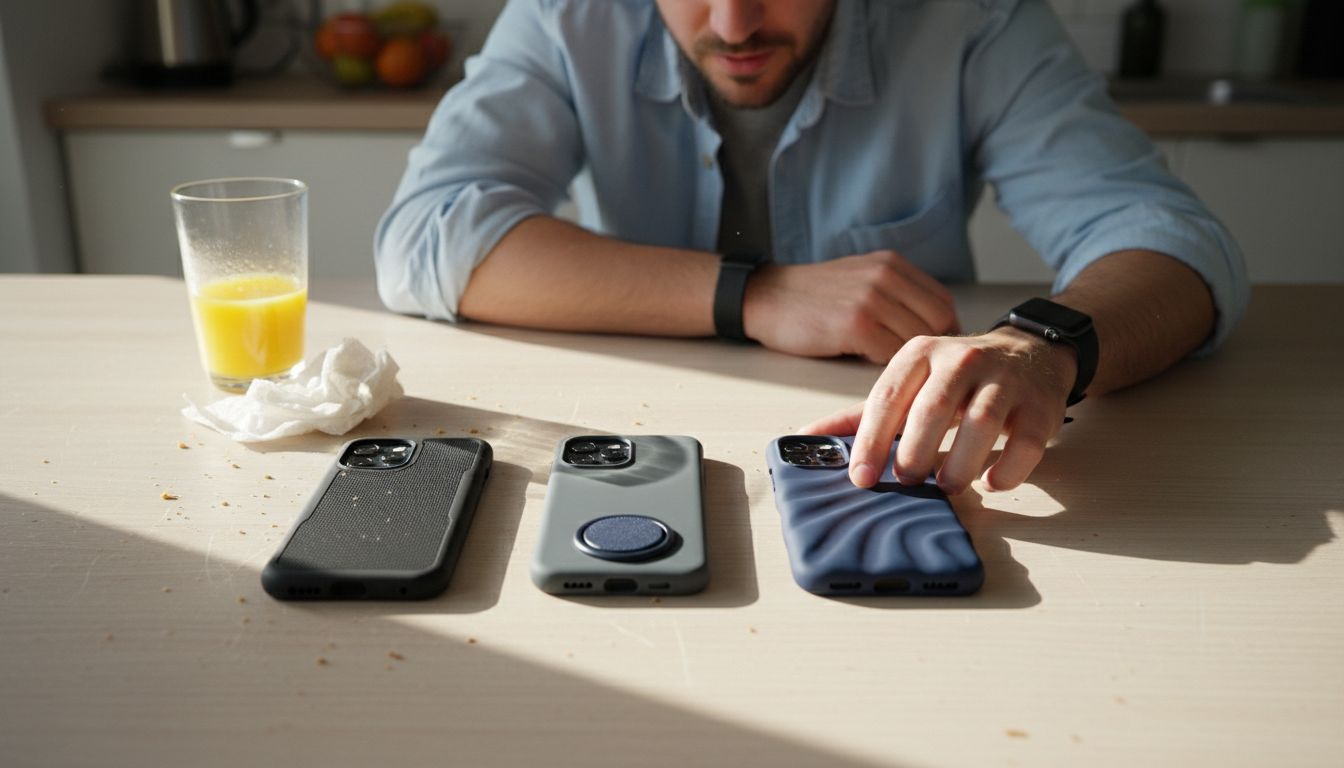
Advanced ergonomic design approaches focus on human-centred principles, considering factors beyond mere physical protection. These sophisticated cases incorporate materials that absorb vibration, provide cushioning, and support natural wrist positioning. Innovative designs might include asymmetrical shapes that promote more balanced device holding, strategic padding in high-contact areas, and lightweight construction that reduces overall strain during prolonged use.
Here’s how major types of ergonomic phone case designs address user comfort:
| Design Type | Main Benefit | Ideal User |
|---|---|---|
| Textured Grip Case | Prevents slipping, secure hold | Commuters, users with active lifestyles |
| Contoured Case | Reduces pressure points, better fit | Office workers, frequent device handlers |
| Support Mechanisms | Extra handling options, stability | Gamers, users with joint sensitivity |
| Lightweight Design | Reduces overall hand strain | Elderly, prolonged phone users |
Pro Tip: When selecting an ergonomic phone case, test multiple designs to find the one that feels most natural and comfortable in your specific hand size and usage pattern.
Key Features That Minimise Wrist Strain
Ergonomic phone case design involves sophisticated strategies for reducing physical strain during device usage. Optimal hard key placement is crucial in minimising awkward hand movements, with manufacturers developing precise configurations that accommodate diverse hand sizes and natural grip postures to reduce muscle activity in the wrist.
The most effective ergonomic phone cases incorporate multiple strain-reduction features. These include strategically designed hand grips that conform to natural hand curvatures, providing support without creating additional tension. Textured surfaces play a critical role in secure grip management, preventing unnecessary wrist movements caused by slipping devices. Some advanced cases integrate supplementary support mechanisms like adjustable stands, finger loops, and weight distribution systems that actively promote more comfortable device handling.
Hands-free accessories and intentional variation in hand positioning are additional key strategies for preventing repetitive strain injuries. Innovative case designs now include built-in kickstands, expandable grips, and ergonomic contours that encourage users to change their holding patterns regularly. These features help distribute physical stress across different muscle groups, reducing the likelihood of localised wrist strain during extended smartphone use.
Pro Tip: Rotate your smartphone case’s grip orientation every 15-20 minutes to prevent muscle fatigue and maintain optimal wrist comfort.
How Ergonomic Cases Improve Daily Life
Ergonomic technology represents a transformative approach to integrating design with human physical capabilities. Ergonomics fundamentally improves quality of work and personal life by creating products that accommodate human physical limitations, reducing strain and enhancing overall well-being through intelligent design solutions.
In daily smartphone usage, ergonomic cases provide multiple practical benefits that extend beyond simple device protection. These specialised accessories help users maintain more natural hand postures, significantly reducing the risk of repetitive strain injuries that can develop from prolonged device interaction. By redistributing device weight, offering supportive grip zones, and encouraging more balanced hand positioning, ergonomic cases actively mitigate the physical challenges associated with constant digital engagement.
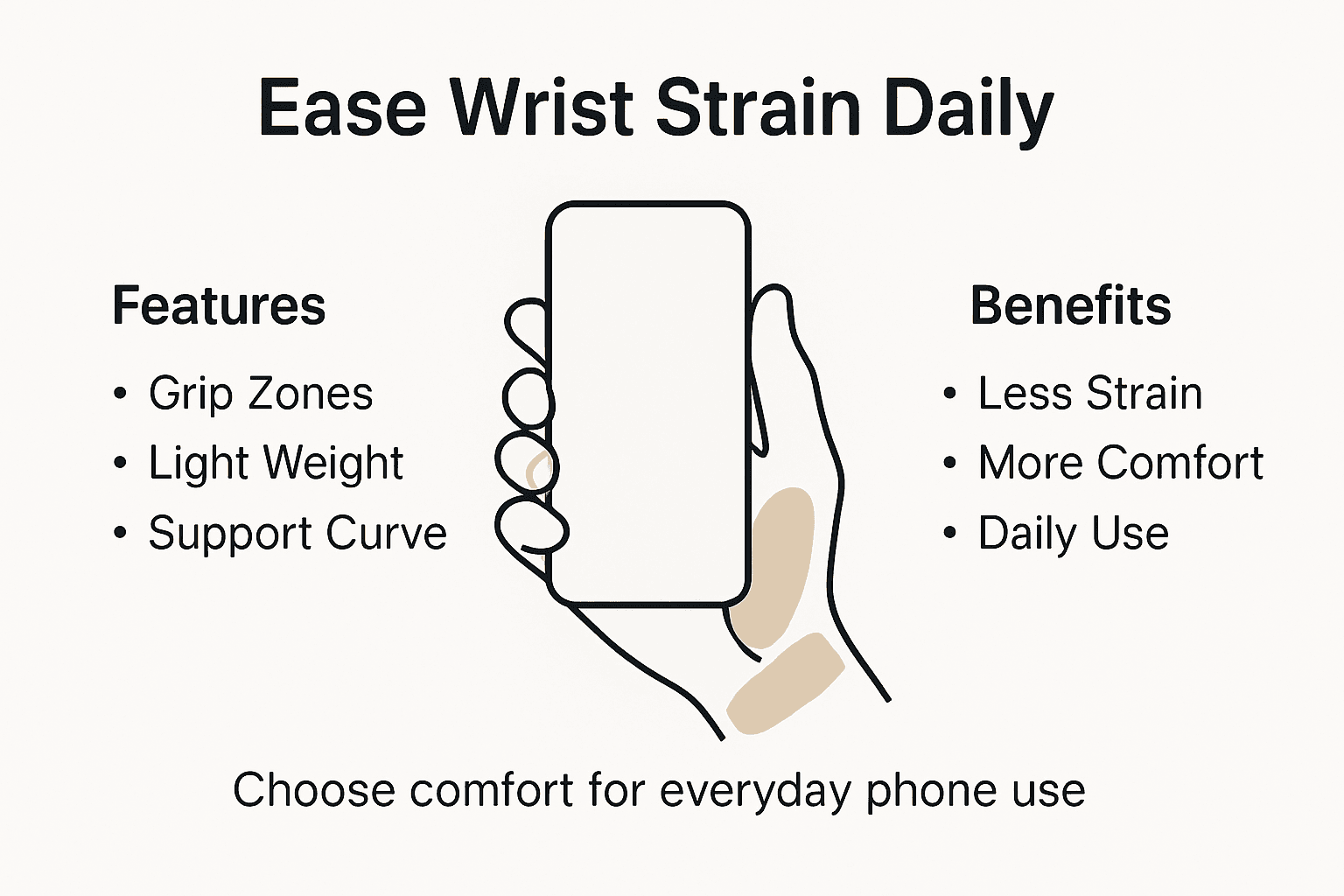
Improved physical comfort and reduced injury potential are central to ergonomic design, transforming how individuals interact with their mobile devices. Advanced ergonomic cases enable hands-free operation, support more varied usage positions, and incorporate design elements that promote healthier interaction patterns. Parents, professionals, and digital natives can benefit from these innovative solutions that prioritise physical well-being without compromising technological convenience.
Summary of key ergonomic features and their specific daily benefits:
| Feature | Musculoskeletal Benefit | Daily Life Enhancement |
|---|---|---|
| Enhanced Grip Surfaces | Less hand fatigue, firmer hold | Easier device use on the move |
| Optimised Weight Balance | Lower wrist tension, even strain | More comfortable long-term usage |
| Hands-free Accessories | Minimise repetitive motion | Enables multi-tasking |
| Adjustable Supports | Support varied holding positions | Fits different hand sizes and tasks |
Pro Tip: Alternate between different grip positions and take regular short breaks when using your smartphone to minimise potential muscle strain.
Choosing And Using The Right Case Effectively
Selecting an ergonomic phone case requires a nuanced approach that goes beyond simple aesthetic preferences. Understanding the risks of prolonged phone use is crucial when choosing protective accessories, as the wrong case can potentially exacerbate physical strain rather than alleviate it. Effective selection involves carefully evaluating factors such as grip security, weight distribution, and overall hand compatibility.
The ideal ergonomic phone case should provide multiple functional benefits. This means looking for features like textured grip surfaces that prevent accidental slipping, strategically placed support zones that distribute device weight more evenly, and designs that accommodate natural hand positioning. Some advanced cases include additional ergonomic elements such as built-in stands, adjustable grips, or modular attachments that enable more flexible usage patterns.
Practical implementation of an ergonomic phone case involves more than just purchasing the right product. Users should actively rotate their grip, use hands-free accessories when possible, and be mindful of their overall posture during device interaction. Different usage scenarios may require subtle adjustments in how the case is held or positioned, emphasising the importance of a versatile and adaptive ergonomic design that can support varied daily activities.
Pro Tip: When testing a new ergonomic phone case, spend at least 15 minutes using it in your typical daily scenarios to assess its genuine comfort and functionality.
Discover Comfort and Protection with Ergonomic Phone Cases
Wrist strain and discomfort from prolonged smartphone use are common challenges that can significantly impact your daily life. This article has highlighted how ergonomic phone cases with enhanced grip surfaces, optimised weight distribution, and supportive designs can reduce musculoskeletal risks and improve overall hand comfort. If you want to protect your device while easing physical strain, finding the right case tailored to your natural hand positioning is essential.
Explore our £1 Case Collection – StudioShake for affordable options that combine style with ergonomic benefits.
Don’t wait until wrist discomfort becomes a real problem. Take charge of your daily smartphone experience today by selecting an ergonomic case from StudioShake. Visit StudioShake to browse our complete range. For options that offer flexible and stable handling, check out our MagSafe – StudioShake collection. Enhance your device use now with practical, comfortable, and supportive protection designed with your wellbeing in mind.
Frequently Asked Questions
What are ergonomic phone cases?
Ergonomic phone cases are designed to reduce physical strain for users who frequently interact with their smartphones. They promote natural hand positioning and minimise wrist discomfort through features like enhanced grip surfaces and weight distribution mechanisms.
How do I choose the right ergonomic phone case?
When selecting an ergonomic phone case, look for features such as textured grip surfaces, support zones that distribute device weight evenly, and designs that accommodate your hand’s natural shape. Consider cases with additional features like built-in stands for added functionality.
What are the benefits of using an ergonomic phone case?
Using an ergonomic phone case can reduce wrist strain and fatigue during prolonged smartphone use. They help maintain healthier hand postures, prevent repetitive strain injuries, and improve overall comfort while using the device for extended periods.
How can I effectively use an ergonomic phone case?
To maximise the benefits of your ergonomic phone case, actively rotate your grip while using the phone, utilise hands-free accessories when possible, and maintain good posture. It’s also helpful to spend time testing the case in typical usage scenarios to ensure comfort and practicality.