

Why Use Anti-Glare Screen Protectors at Home
Nearly 80 percent of British families report difficulty seeing mobile screens in sunny or brightly lit homes. For parents in London, glare disrupts everything from family movie nights to online learning sessions. With more children using devices for schoolwork, finding reliable ways to reduce screen glare and eye strain becomes urgent. This guide reveals proven solutions that help British households create comfortable, clear viewing spaces without sacrificing device performance or family wellbeing.
Table of Contents
- Anti-glare Screen Protectors Explained
- Types Of Anti-glare Screen Protectors Available
- How Anti-glare Protection Improves Family Device Use
- Comparing Benefits Versus Alternatives Like Privacy Screens
- Cost Considerations And Common Mistakes To Avoid
Key Takeaways
| Point | Details |
|---|---|
| Anti-glare screen protectors significantly enhance screen visibility | They reduce glare by up to 95%, making screens easier to read in various lighting conditions. |
| Different types cater to specific user needs | Options include matte finish protectors, privacy filters, and blue light blocking protectors, each with unique benefits. |
| Proper selection and installation are crucial | Choosing the right size and ensuring compatibility with devices improves effectiveness and user experience. |
| Combining technologies can provide comprehensive protection | Users may benefit from using both anti-glare and privacy features for optimal visual comfort and information security. |
Anti-glare screen protectors explained
Anti-glare screen protectors are specialised accessories designed to dramatically improve screen visibility and reduce eye strain, particularly in challenging lighting environments. These protective films use advanced multilayered anti-reflection coatings to minimise surface reflections and enhance visual clarity for digital device users. By blocking specific light spectrum wavelengths, these protectors offer significant benefits beyond simple screen protection.
The technology behind anti-glare screen protectors involves sophisticated optical engineering. Unlike standard screen films, these protectors incorporate microscopic etched surfaces or special chemical treatments that scatter incoming light, preventing harsh reflections from overwhelming the screen’s display. This means that whether you’re working near a bright window or under harsh office lighting, your device’s screen remains readable and comfortable to view. Parents and professionals working from home will appreciate how these protectors reduce eye fatigue during prolonged screen use.
Key characteristics of high-quality anti-glare screen protectors include:
- Reduction of screen glare by up to 95%
- Preservation of screen color accuracy and clarity
- Minimal impact on touchscreen responsiveness
- Protection against scratches and minor impacts
- UV light filtering capabilities
Expert Tip: When selecting an anti-glare screen protector, always measure your device screen precisely and choose a protector specifically designed for your device model to ensure perfect fit and maximum effectiveness.
Types of anti-glare screen protectors available
Screen protectors with anti-glare properties come in diverse variations, each designed to address specific visual needs and device requirements. Screen glare solutions range from physical shields to specialised coatings, offering users multiple options to enhance viewing comfort and reduce eye strain. Manufacturers have developed sophisticated technologies that cater to different device types and user preferences.
The primary categories of anti-glare screen protectors include matte finish protectors, privacy filter protectors, and multilayered anti-reflection coatings. Matte finish protectors feature a slightly textured surface that disperses light, reducing reflections while maintaining screen clarity. Privacy filter protectors go a step further by limiting the viewing angle, ensuring that side viewers cannot easily see the screen contents. Specialised anti-glare products can include fit-over shields with varying tint options designed to accommodate different vision conditions.
Key types of anti-glare screen protectors include:
- Tempered glass anti-glare protectors
- Plastic film anti-glare protectors
- Privacy anti-glare screen filters
- Blue light blocking anti-glare protectors
- Universal stick-on anti-glare films
Expert Tip: Consider your primary device usage and lighting environment when selecting an anti-glare screen protector, as different types offer varying levels of reflection reduction and screen protection.
The following table summarises how different types of anti-glare screen protectors address user needs:
| Protector Type | Best For | Limitation |
|---|---|---|
| Matte Finish | Everyday glare reduction | Slight reduction in contrast |
| Privacy Filter | Confidentiality and privacy | Narrower viewing angle |
| Blue Light Blocking | Extended use comfort | Small colour tinting |
| Tempered Glass | Maximum physical protection | Slight thickness increase |
| Universal Stick-on Film | Multiple device use | Less precise fit |
How anti-glare protection improves family device use
Anti-glare screen protection offers significant advantages for families spending increasing amounts of time on digital devices. Reducing eye strain symptoms associated with prolonged screen use has become crucial in modern households where multiple family members engage with smartphones, tablets, and computers throughout the day. These protective solutions help mitigate common issues like visual fatigue, headaches, and general screen-related discomfort.

By implementing anti-glare technologies, families can create more comfortable digital environments that support healthier screen interactions. Practical anti-glare measures can enhance device usage by minimising reflections and adapting to ambient lighting conditions, which means improved visual comfort for everyone from school-age children to working parents. The protective layers not only reduce glare but also help maintain better posture by eliminating the need to adjust body positions to avoid screen reflections.
Key benefits of anti-glare protection for family device use include:
- Reduced eye strain during extended screen time
- Improved visibility in various lighting environments
- Enhanced screen clarity for children’s online learning
- Decreased likelihood of headaches and visual discomfort
- Protection against harmful blue light exposure
Expert Tip: Rotate and position family devices near indirect light sources to complement your anti-glare screen protectors and create an optimal viewing experience for all users.
Comparing benefits versus alternatives like privacy screens
Screen protection technologies offer diverse solutions for different user needs, with anti-glare and privacy screens serving distinctly different purposes. Privacy screens primarily prevent side-angle viewing of sensitive information, focusing on protecting confidential content from casual observers. In contrast, anti-glare screen protectors concentrate on improving visual comfort and reducing eye strain, making them fundamentally different in their core functionality.
Anti-glare shields are engineered to optimise visual clarity by reducing distracting reflections and enhancing screen contrast, whereas privacy screens limit viewing angles to maintain information confidentiality. This means families and professionals must carefully consider their primary requirements when selecting screen protection. Some users might benefit from combining both technologies to achieve comprehensive screen protection that addresses visual comfort and privacy simultaneously.
Key differences between anti-glare and privacy screen protectors include:
- Purpose of protection (visual comfort vs. information privacy)
- Impact on screen visibility and clarity
- Viewing angle restrictions
- Effectiveness in different lighting conditions
- Compatibility with various device types
Expert Tip: Consider your specific environment and primary device usage when choosing between anti-glare and privacy screen protectors, as the optimal solution depends on your unique personal or professional needs.
Here is a comparison of anti-glare and privacy screen protectors based on their main functions:
| Feature | Anti-glare Protector | Privacy Screen Filter |
|---|---|---|
| Main Purpose | Reduces glare and eye strain | Prevents side-angle viewing |
| Typical Users | Families, remote workers | Business professionals |
| Effect on Display | Maintains clarity, reduces glare | Darkens and limits angles |
| Security Provided | None | Hides sensitive information |
Cost considerations and common mistakes to avoid
Navigating the world of anti-glare screen protectors requires careful consideration of both budget and effectiveness. Many affordable glare reduction solutions exist, ranging from simple DIY methods to more sophisticated screen protectors, allowing families to find options that match their specific needs and financial constraints. While budget-friendly alternatives can provide some protection, investing in quality products often yields more reliable and long-lasting results.
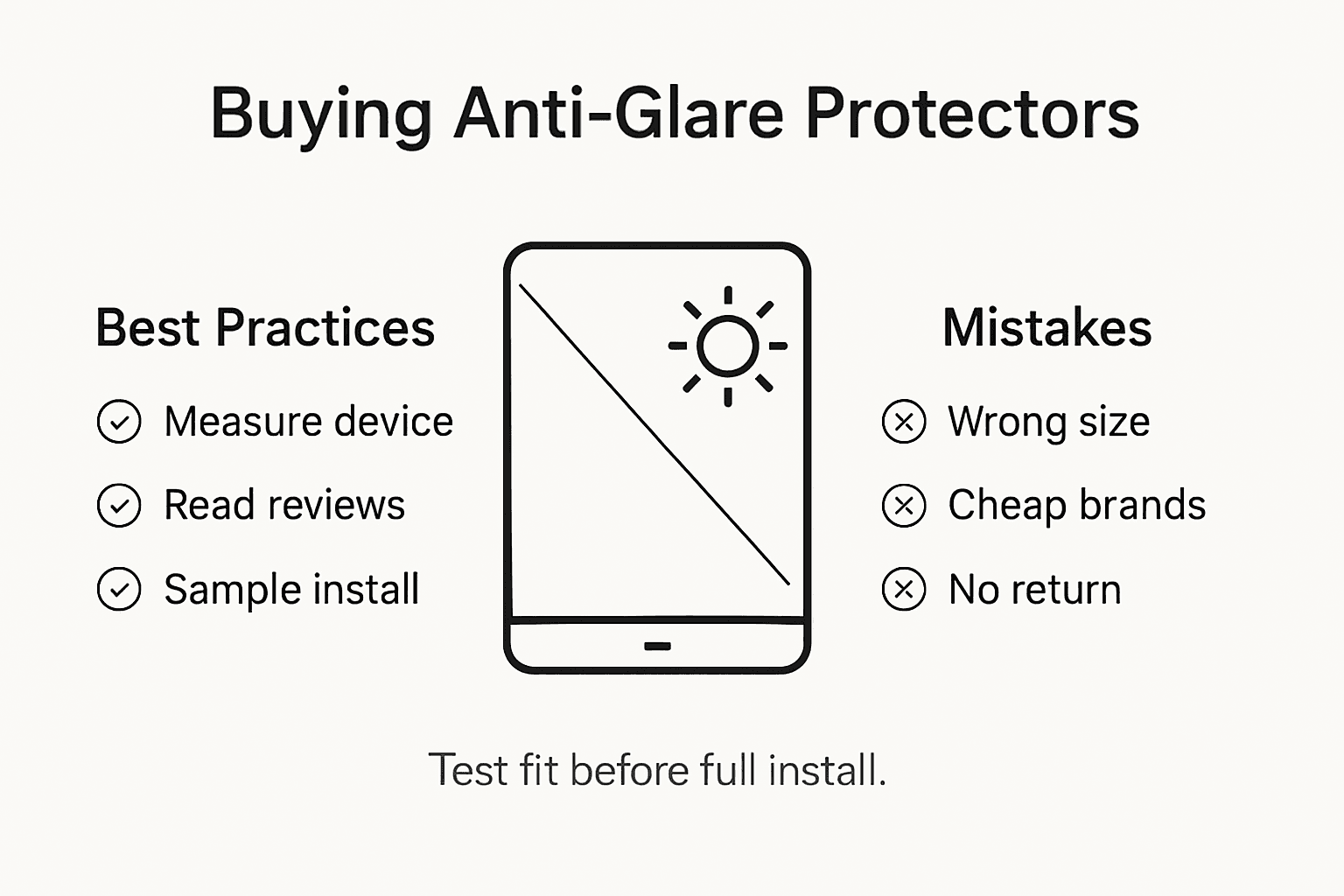
Selecting the right anti-glare solution involves understanding potential pitfalls and avoiding common installation mistakes that could compromise screen protection and visibility. Consumers often make critical errors such as purchasing ill-fitting protectors, choosing products incompatible with their specific device, or selecting materials that significantly degrade screen clarity. The key is to balance cost-effectiveness with genuine protective capabilities, ensuring that the chosen screen protector genuinely improves device usability.
Common mistakes to avoid when purchasing anti-glare screen protectors include:
- Selecting the cheapest option without checking quality
- Ignoring device-specific compatibility requirements
- Failing to properly clean the screen before installation
- Purchasing protectors that significantly reduce screen brightness
- Neglecting to check return and warranty policies
Expert Tip: Always request a demonstration or sample installation before committing to a screen protector, and check whether the product offers a satisfaction guarantee to protect your investment.
Protect Your Family’s Devices with StudioShake’s Mobile Accessories
Eye strain and screen glare are common challenges when using devices at home. The article highlights how anti-glare screen protectors help reduce reflections, protect against blue light, and improve viewing comfort for everyone from children learning online to adults working remotely. If you want to shield your devices from glare and scratches while enhancing usability, StudioShake offers a wide selection of phone cases and accessories designed to safeguard your gadgets without compromising clarity or touchscreen responsiveness.
Discover how easy it is to optimise your home device experience today by exploring our comprehensive range at StudioShake. Don’t wait until eye fatigue or scratches affect your daily digital life. Visit our site now to find the perfect anti-glare accessory that fits your device perfectly and protects your family’s screen investment. Experience better screen comfort combined with reliable protection from the experts in mobile accessories at StudioShake. Start your upgrade now and protect what matters most.
Frequently Asked Questions
What are the benefits of using anti-glare screen protectors at home?
Using anti-glare screen protectors at home can significantly reduce eye strain, enhance screen visibility in bright lighting, and improve overall comfort during prolonged screen use. They are especially beneficial for families that spend a lot of time on digital devices.
How do anti-glare screen protectors improve visibility?
Anti-glare screen protectors utilise advanced optical engineering to minimise reflections and enhance visual clarity. They scatter incoming light, which prevents harsh reflections and helps maintain readability even in bright environments.
Are there different types of anti-glare screen protectors?
Yes, there are various types of anti-glare screen protectors, including matte finish protectors, privacy filter protectors, blue light blocking protectors, and universal stick-on films. Each type offers different levels of glare reduction and protection depending on user needs and device compatibility.
How should I choose the right anti-glare screen protector for my device?
To choose the right anti-glare screen protector, measure your device screen accurately and select a protector specifically designed for your device model. Consider your primary usage and the lighting environment to ensure maximum effectiveness in glare reduction.
Recommended
- 7 Types of Device Screen Protectors All Parents Should Know – StudioShake
- Complete Guide to Mobile Screen Protectors – StudioShake
- Complete Guide to Tempered Glass Protectors – StudioShake
- Complete Guide to the Role of Screen Protectors – StudioShake
- How to Secure Business Laptops: A Step-by-Step Guide - IT Start