

What Is a Flip Case? Screen Defence for Children
Every parent knows the frustration of finding their child’s phone with new scratches after a single school day in London. Kids rely on their devices from the classroom to the playground, making sturdy protection more urgent than ever. Understanding the basics of a flip case helps parents make the right choice, cutting through common myths and highlighting features that keep screens and phones safe without sacrificing style.
Table of Contents
- Flip Case Basics: Definition and Common Myths
- Types and Materials of Flip Cases Explained
- Key Features for Parents and Children
- Protection, Usability, and Drawbacks Considered
- Flip Cases Compared with Other Case Styles
Key Takeaways
| Point | Details |
|---|---|
| Flip Cases Offer Strong Protection | Flip cases effectively protect a child’s phone screen from scratches and impacts when closed, making them ideal for daily use. |
| Material Matters for Durability | Choosing the right material, such as leather or TPU, impacts both protection and usability depending on a child’s age and handling habits. |
| Address Common Myths | Flip cases are not waterproof and require regular cleaning to maintain screen clarity and functionality. |
| Choose Based on Lifestyle | Consider your child’s usage patterns, such as activity level and environmental factors, when selecting a flip case for optimal protection. |
Flip Case Basics: Definition and Common Myths
A flip case is a protective phone cover that folds over like a book, with the screen facing inward when closed. This design offers both protection and a compact form factor that parents appreciate for durability.
The fundamental purpose of a flip case is straightforward: physical protection and convenience. Yet many misconceptions exist about what these cases actually deliver. Let’s sort fact from fiction.
What Flip Cases Actually Do
Flip cases provide a dedicated front cover that shields your child’s screen from daily impacts. When closed, the case completely encloses the device, reducing exposure to accidental drops, spills, and scratches.
Key protective features include:
- Full coverage of the screen when the case is shut
- Edge protection for corners and bezels
- Raised bezel design to prevent screen contact on flat surfaces
- Interior padding or soft lining to cushion the display
- Easy access to ports and buttons on the side
These features work together to guard against everyday wear. A child using their phone at school, in the playground, or at home faces constant risk of damage.
Common Myths About Flip Cases
Myth 1: They provide waterproof protection. Flip cases offer some water resistance, but they’re not waterproof seals. Water can enter through seams, button gaps, and openings.
Myth 2: You never need to clean the screen. Dust and fingerprints still accumulate inside the case. Opening it regularly to clean the display maintains clarity and touch responsiveness.
Myth 3: The cover never wears out. Like any material repeatedly folded, the hinge weakens over time. Regular use causes creasing and eventually, the cover may fail to close properly.
Myth 4: One case fits all phones. Each phone model requires a specifically designed case. Using a universal case compromises fit and protection.
A well-fitted flip case is only effective if it matches your child’s exact phone model and brand.
Why This Matters for London Parents
Children in London navigate busy streets, crowded public transport, and packed school corridors. A case that fails mid-journey leaves their device unprotected. Choosing a flip case that actually fits and functions properly prevents costly screen repairs.
Pro tip: Check the case fit before purchase by ensuring the cover closes smoothly without forcing and all ports align perfectly with your child’s phone model.
Types and Materials of Flip Cases Explained
Flip cases come in different material combinations, each with distinct advantages for protecting your child’s phone. Understanding these options helps you choose the right case for your family’s needs.
The most common materials used in flip cases include leather, silicone, polymer plastics, and TPU. Multiple material combinations offer both aesthetic appeal and functional protection, catering to various preferences and budgets.
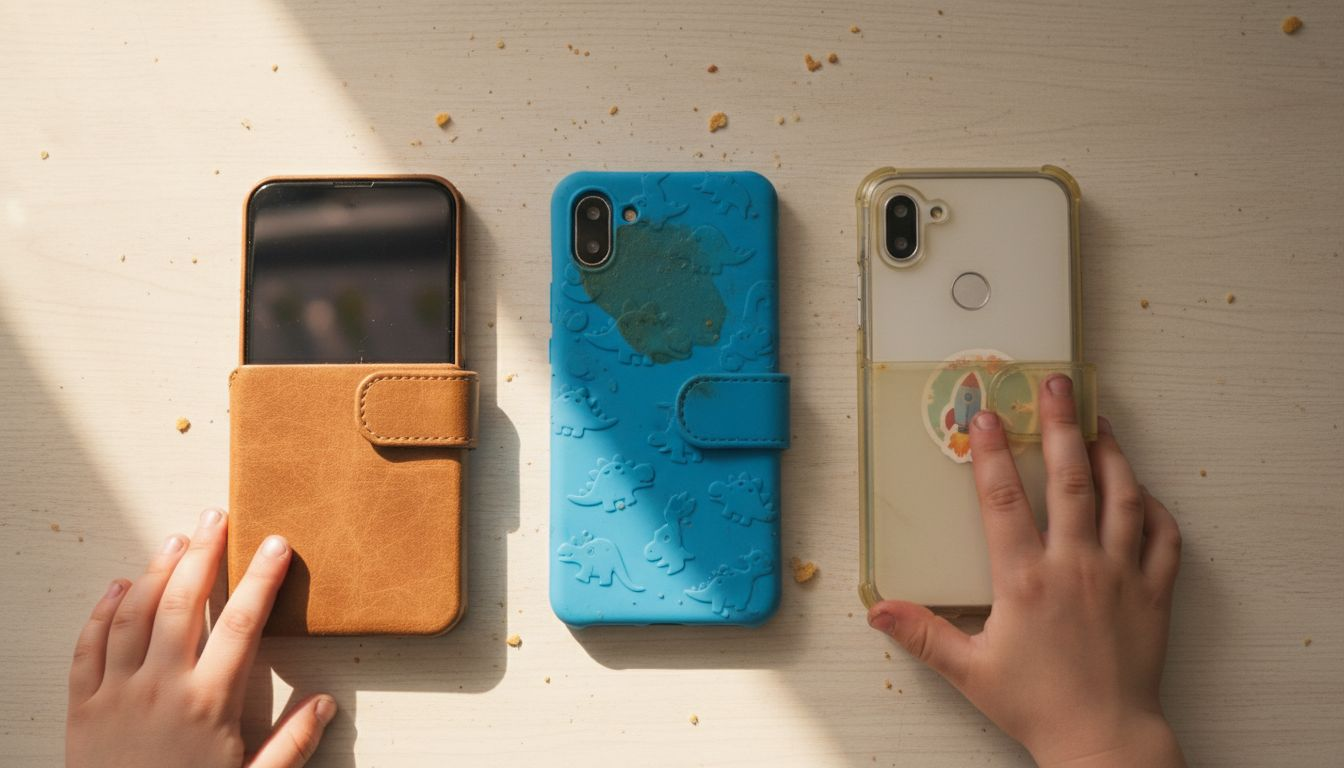
Leather Flip Cases
Leather delivers a premium look that many parents prefer for its style and sophistication. It ages beautifully and develops character over time, making it feel like a genuine investment.
However, leather has trade-offs:
- Excellent durability and timeless appearance
- Limited water resistance compared to synthetic materials
- Requires occasional conditioning to maintain quality
- Can stain if exposed to spills
- Higher price point than plastic alternatives
Leather works well for older children who handle their devices carefully and won’t expose them to harsh conditions.
Here’s how flip case materials compare in everyday scenarios:
| Material | Best for | Key Strength | Limitation |
|---|---|---|---|
| Leather | Older, careful users | Stylish durability | Needs occasional care |
| Silicone | Young, active children | Excellent grip | Shows fingerprints easily |
| TPU | Mixed-aged families | Shock absorption | Less premium look |
| Hybrid (Leather+TPU) | Versatile situations | Style and protection | Bulky and higher cost |
Silicone and TPU Materials
Silicone and TPU (thermoplastic polyurethane) are engineered polymers designed for shock absorption. These flexible materials grip firmly in your child’s hand, reducing accidental drops.
Key benefits include:
- Superior shock absorption for impact protection
- Excellent grip that prevents slipping
- Water-resistant properties
- Affordable pricing
- Easy to clean with a damp cloth
Silicone cases tend to show fingerprints more visibly, whilst TPU offers a cleaner appearance.
Hybrid and Multi-Material Cases
Many quality flip cases combine materials strategically. A leather exterior pairs with TPU interior padding, or hard plastic frames reinforce silicone panels at vulnerable points like corners and edges.
This approach balances aesthetics with protection:
- Leather exterior for style
- Cushioned interior for screen safety
- Reinforced corners for drop resistance
- Better overall durability
The best flip case material for your child depends on their usage habits and the environment they’re in daily.
Choosing Materials for London Life
Children in London face varied conditions—rainy weather, crowded transport, and active play. A case with decent water resistance matters more here than in drier climates.
Consider your child’s habits:
- Do they use their phone near water or in wet conditions?
- Are they rough with devices or careful?
- Do you value style or pure protection?
- What’s your budget range?
Younger children benefit from silicone or TPU’s grip and shock absorption. Older teenagers might appreciate leather’s sophistication, provided they handle devices responsibly.
Pro tip: Choose a TPU or silicone interior regardless of the exterior material, as this layer directly protects your child’s screen from impact damage.
Key Features for Parents and Children
Flip cases pack several features designed specifically to appeal to both parents seeking protection and children wanting functionality. Knowing what matters most helps you select the right case for your household.
Parents prioritise durability, whilst children care about grip and ease of use. The best flip cases satisfy both groups by combining protective design with practical usability features.
Screen Protection Features
Screen protection sits at the top of every parent’s priority list. A flip case’s front cover shields the display from scratches, dust, and direct impacts when the case closes.
Essential screen protection elements include:
- Raised bezel edges that keep the screen slightly recessed
- Soft interior lining that cushions the display
- Complete coverage when the case is shut
- Protective flap that doesn’t leave gaps
- Material that doesn’t scratch the glass
When your child drops their phone face-down, the cover absorbs the impact before the screen makes contact with hard surfaces.
Grip and Ease of Use
Grip matters tremendously for children, especially younger ones with smaller hands. Slippery cases lead to more drops, defeating the entire purpose of protection.
Look for these grip-focused features:
- Textured surface that prevents slipping
- Lightweight design that doesn’t strain small hands
- Easy-to-open cover without requiring excessive force
- Quick access to buttons and charging ports
- Smooth edges that won’t pinch fingers
A case that’s frustrating to open encourages children to leave it open, eliminating screen protection entirely.
Durability and Longevity
Children are hard on devices. A flip case must withstand repeated opening and closing without the hinge weakening or the cover cracking.
Durable flip cases feature:
- Reinforced hinge mechanisms
- High-quality stitching if leather-based
- Scratch-resistant outer materials
- Resistant to creasing and warping
- Strong mounting points for internal padding
Investing in durability means the case protects your child’s phone for years, not months.
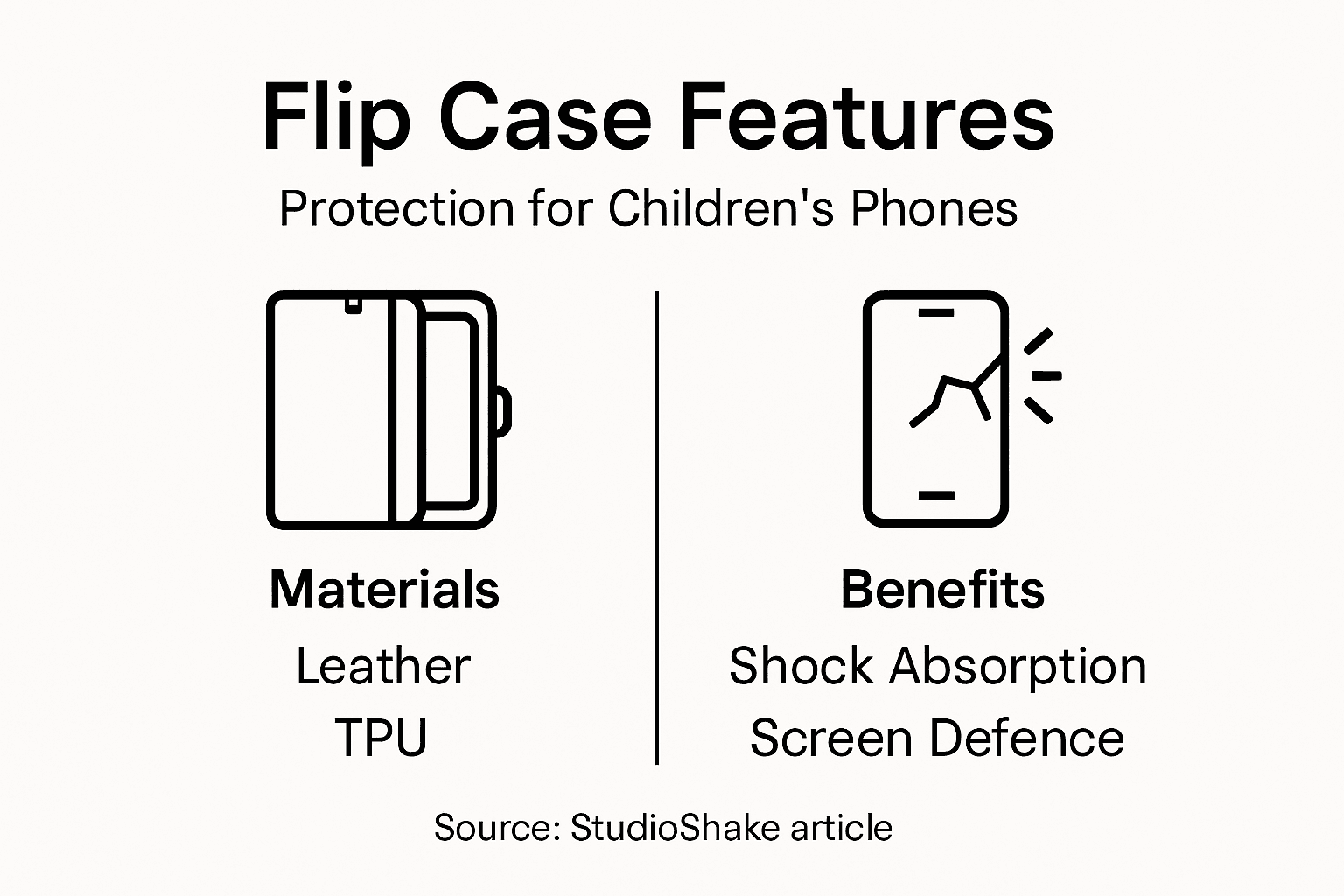
Practical Design Considerations
Selecting safe accessories for children’s devices involves checking that cases don’t restrict essential functions or create safety hazards.
Verify these practical aspects:
- Does the case cover charging ports cleanly?
- Can you access the volume and power buttons easily?
- Does the case block the camera lens?
- Is the weight balanced for comfortable handling?
- Can the flip cover fold completely back without obstruction?
A well-designed flip case should enhance usability, not complicate it.
Style and Appeal for Children
Children are more likely to use a case consistently if they like how it looks. Boring cases get abandoned, leaving phones unprotected.
Many flip cases come in:
- Bold colours that appeal to younger children
- Character designs or licensed artwork
- Pattern options for personalisation
- Premium finishes for older teenagers
- Sleek minimalist designs
When children feel ownership of their case, they treat the device more carefully overall.
Pro tip: Let your child choose the colour or design of their flip case—they’ll be more likely to keep it closed and maintain the protection you’re paying for.
Protection, Usability, and Drawbacks Considered
Flip cases offer genuine protection benefits, but they’re not perfect solutions. Understanding both strengths and limitations helps you make an informed choice for your child’s device.
No single case protects everything equally well. Flip cases excel at screening defence whilst compromising in other areas—knowing these trade-offs matters before you buy.
What Flip Cases Protect Effectively
Flip cases shine at protecting the display and front surfaces, which face the highest damage risk. The front cover absorbs impacts and shields against scratches when closed.
Strengths of flip case protection include:
- Full screen coverage when the case is shut
- Back panel and edge protection from drops
- Dust prevention inside the closed case
- Corner reinforcement at vulnerable points
- Lip protection around the perimeter
Your child’s screen receives superior protection compared to using no case whatsoever. For London families, this matters greatly given the rough handling kids inflict on devices.
Where Flip Cases Fall Short
Flip phone cases leave vulnerable hinges and folding mechanisms exposed to damage. These moving parts take repeated stress from opening and closing, and cases struggle to protect them without adding bulk.
Protection gaps include:
- Hinge mechanisms often lack reinforcement
- Folding points experience constant wear
- Interior seams can fail under heavy use
- Some cases compromise the phone’s slim profile
- Weight increases with reinforced hinges
Children who use their cases roughly may wear out the hinge faster than the phone itself becomes obsolete.
Usability Trade-Offs
Ease of installation favours flip cases—most require no tools or technical knowledge. Your child can apply or remove the case independently without frustration.
Usability considerations:
- Opening and closing the cover adds time to device access
- Some cases catch or jam if not perfectly aligned
- The cover can obstruct your view when typing
- Folded-back covers sometimes get in the way
- Button access requires proper case alignment
Children who find the case annoying may remove it entirely, leaving their phone completely unprotected.
The Thickness Question
Flip cases make phones thicker and heavier than bare devices or slim cases. Younger children with small hands may struggle with the added bulk.
Consider:
- Pockets and bags fill up faster with thicker cases
- Smaller hands find grip more difficult
- Device weight affects comfortable holding duration
- School bags have limited space
The best protection means nothing if your child refuses to use the case because it’s uncomfortable.
Maintenance Demands
Flip cases require more upkeep than simple back covers. Dust accumulates inside, hinges need monitoring, and the cover collects dirt around edges.
Regular maintenance involves:
- Cleaning the interior fortnightly
- Inspecting hinges for damage
- Checking stitching on leather variants
- Wiping edges free from debris
Neglecting this accelerates hinge failure and reduces protective effectiveness.
Pro tip: Choose a flip case with a reinforced hinge even if it adds slight weight—hinge failure renders the case useless, and replacement costs exceed the small weight increase.
Flip Cases Compared with Other Case Styles
Flip cases aren’t the only protection option available. Comparing them with other popular case styles helps you determine which suits your child’s needs best.
Each case type prioritises different aspects—screen protection, portability, style, or functionality. Your choice depends on what matters most for your family.
Flip Cases vs Back Cases
Back cases (also called shell cases) cover only the rear and sides, leaving the screen fully exposed. They’re slimmer, lighter, and easier to pocket than flip cases.
Key differences:
- Back cases are thinner and lighter overall
- Screen receives zero protection from back cases alone
- Back cases cost significantly less money
- They require less maintenance than flip cases
- Installation takes seconds without alignment issues
Back cases work if your child rarely drops their phone face-first. For active children, exposed screens mean costly repairs.
Flip Cases vs Folio Cases
Folio phone cases resemble flip cases but feature a larger flap that wraps around the device. They offer more hand coverage and often include storage slots for cards or cash.
Comparison points:
- Folio cases provide a larger protective surface
- Extra flap adds more weight and thickness
- Storage features are useful for teenagers
- Folio cases feel more like a wallet or clutch
- Screen protection is equally strong as flip cases
Folios work well for older children who appreciate built-in storage and don’t mind the extra bulk.
Flip Cases vs Wallet Cases
Wallet cases integrate card slots and money pockets directly into the case design. They’re practical for teenagers carrying pocket money and ID cards.
Key distinctions:
- Wallet cases combine protection with storage
- Extra pockets add significant weight
- Screen protection matches flip case quality
- Accessing cards requires opening the case
- Price increases with storage features
Wallet cases suit teenagers managing their own pocket money. Younger children rarely need this functionality.
Flip Cases vs Rugged Cases
Rugged cases prioritise maximum protection over aesthetics. They’re thick, heavy, and designed for extreme durability—think military-grade protection.
Comparison summary:
- Rugged cases provide superior shock absorption
- Significantly thicker and heavier than flip cases
- Often feature textured grips and reinforced corners
- Screen protection depends on the specific model
- Higher price point than standard flip cases
Rugged cases work for children who are genuinely rough with devices. Most families find them excessive.
Which Case Type Wins for Children?
Flip cases balance screen protection with reasonable portability. They’re not the thinnest option, but they protect the most vulnerable component—the display.
Flip cases suit children best because:
- Screen receives full protection when closed
- Lighter weight than rugged or wallet cases
- Affordable price compared to premium options
- Easy for children to operate independently
- Available in appealing designs for all ages
Flip cases represent the sweet spot between protection and practicality for most London families with children.
Back cases win only if your child is exceptionally careful. Wallet cases work for older teenagers managing money. Rugged cases suit genuinely rough usage. For typical school-aged children, flip cases deliver the best overall value.
This table summarises the main trade-offs between popular phone case styles for children:
| Case Style | Screen Protection | Weight & Bulk | Ideal User Type |
|---|---|---|---|
| Flip Case | Strong when closed | Moderate increase | Most school-aged children |
| Back Case | Minimal | Lightest | Very careful users |
| Folio Case | High, covers sides | Bulky due to flap | Older children, teens |
| Wallet Case | High, adds storage | Heaviest | Teens carrying cards |
| Rugged Case | Model-dependent | Heaviest, thickest | Very rough users |
Pro tip: Consider your child’s specific usage patterns and handling habits rather than choosing based on popularity—the best case is the one they’ll actually use consistently.
Protect Your Child’s Phone with the Right Flip Case
Every parent knows how tough it can be to keep a child’s phone safe from drops, scratches, and everyday wear. This article has highlighted crucial challenges such as hinge durability, screen defence, and grip that impact your child’s phone protection. Choosing a well-fitted flip case designed with shock absorption and raised bezels can provide the perfect balance between durability and ease of use.
Explore our Samsung Galaxy collection for a variety of flip cases engineered to fit perfectly and protect screens effectively.
Give your child’s device the protection it deserves today with StudioShake. Visit StudioShake now to browse a wide selection tailored for every age and lifestyle. Don’t wait until an accident happens to discover the right case—shop now and safeguard your child’s phone with trusted quality and design.
Also, check our £1 Case Collection for budget-friendly protection options that do not compromise on safeguarding your family’s valuable devices.
Frequently Asked Questions
What is a flip case?
A flip case is a protective phone cover that folds over like a book, providing screen protection and a compact design suitable for children.
How does a flip case protect the screen effectively?
A flip case offers full coverage of the screen when closed, with features like raised bezel edges and soft lining that cushion the display during impacts, helping to prevent scratches and damage.
Are flip cases waterproof?
While flip cases provide some water resistance, they are not waterproof. Water can enter through seams and openings, so they are not suitable for protecting against complete immersion.
What materials are commonly used in flip cases?
Flip cases are typically made from materials like leather, silicone, polymer plastics, and TPU. Each material has its advantages, such as durability, grip, and shock absorption, catering to different needs and preferences.