

Phone Case Material Types – Balancing Protection and Style
Every parent faces unexpected drops and sticky hands, especially in the vibrant mix of London life and family routines. Knowing which phone case material actually safeguards your device matters for parents constantly juggling work, home and outings. This guide clears up common misconceptions, compares top options like Polycarbonate, Silicone and Aramid Fibre and offers practical advice tailored to families who value both style and robust protection. Material selection impacts device longevity and usability far beyond surface appearance.
Table of Contents
- Defining Phone Case Material Types And Common Misconceptions
- Comparing Silicone, Polycarbonate, TPU, Leather And Eco-Friendly Cases
- Durability, Shock Absorption And Everyday Grip Features
- Aesthetic Appeal, Wireless Charging And Compatibility Considerations
- Risks, Costs And Common Mistakes With Phone Case Materials
- Choosing The Right Material For Family And Active Lifestyles
Key Takeaways
| Point | Details |
|---|---|
| Material Selection Matters | Choosing the right phone case material significantly influences device protection, comfort, and longevity. Consider functional qualities over aesthetics when making a selection. |
| Misconceptions on Protection | Thicker cases do not automatically offer better protection; material composition and design are crucial for effective safeguarding. |
| Eco-Friendly Options | Emerging eco-friendly materials provide sustainable choices without compromising on device protection, appealing to environmentally conscious users. |
| Family-Friendly Features | Families should prioritise materials that combine durability and ease of cleaning to ensure phone cases can withstand active lifestyles while remaining functional. |
Defining Phone Case Material Types and Common Misconceptions
Choosing the right phone case material represents a critical decision for modern smartphone users, especially tech-savvy parents seeking robust device protection. Phone case material selection involves understanding not just aesthetic preferences, but comprehensive performance characteristics that impact device longevity and usability.
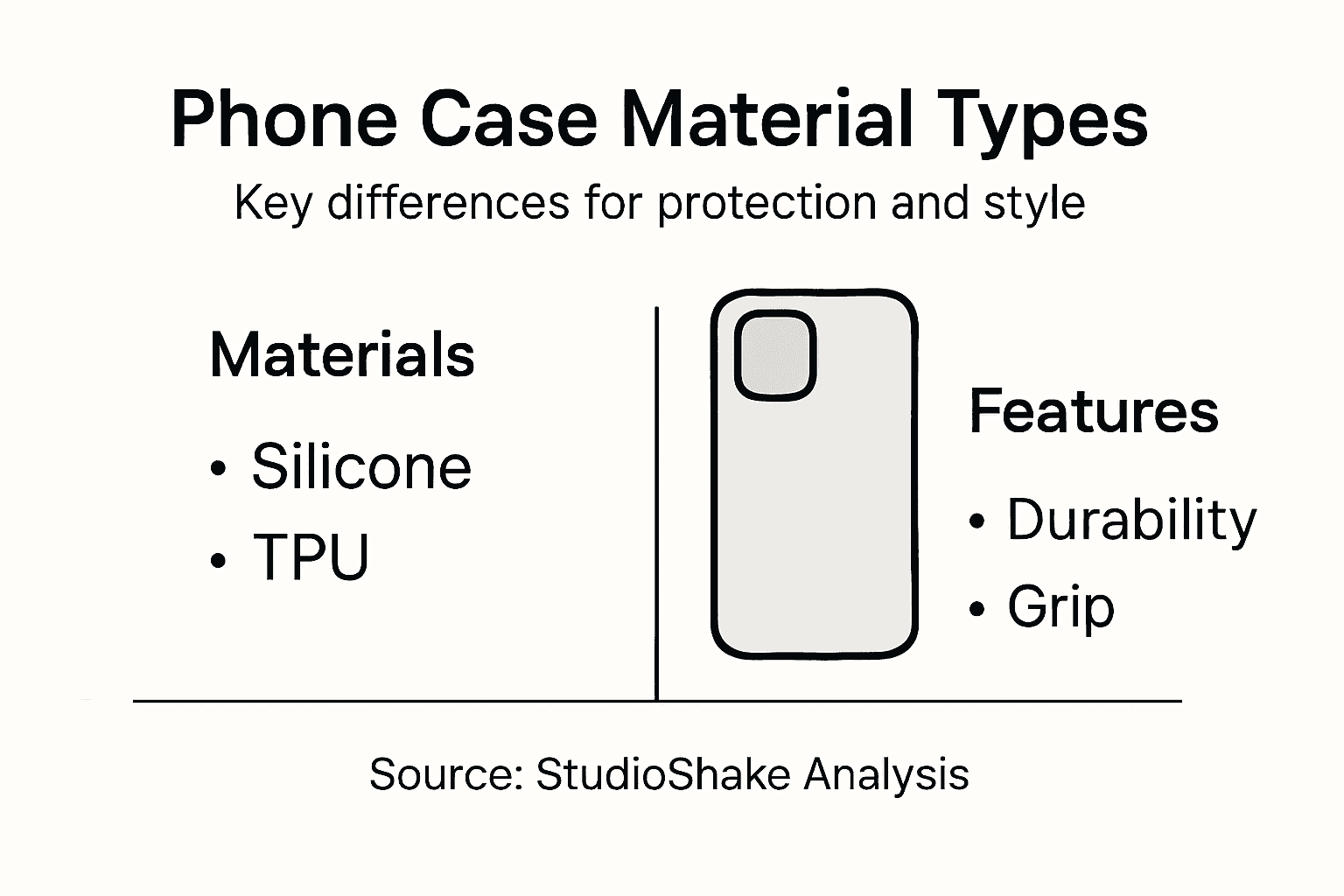
Modern phone case materials typically fall into several core categories, each offering distinct advantages:
- Polycarbonate (PC): Lightweight, durable plastic offering excellent structural integrity
- Silicone: Soft, flexible material providing superior shock absorption
- Thermoplastic Polyurethane (TPU): Combines rubber-like elasticity with plastic’s strength
- Aramid Fibre: Ultra-thin, incredibly strong material popular among minimalist users
- Leather: Premium material offering sophisticated aesthetics and moderate protection
Parents navigating device protection should understand that material selection goes beyond superficial appearance. While some might assume all cases provide equivalent protection, the reality is far more nuanced. Different materials excel in specific scenarios - silicone absorbs impacts brilliantly, polycarbonate resists scratches effectively, and aramid fibre offers remarkable strength-to-weight ratio.
Not all phone case materials are created equal - your choice impacts device protection, comfort, and long-term durability.
Common misconceptions about phone case materials often stem from oversimplified assumptions. Many consumers believe thicker cases automatically mean better protection, whereas material composition and engineering matter significantly more than pure thickness. A well-designed thin case using advanced materials can outperform a bulky, poorly constructed alternative.
Pro tip: When selecting a phone case, prioritise material compatibility with your lifestyle rather than solely focusing on aesthetic appeal.
Comparing Silicone, Polycarbonate, TPU, Leather and Eco-Friendly Cases
Phone case materials represent a complex landscape of technological innovation and personal preference. Understanding the unique characteristics of top phone case materials helps consumers make informed decisions about device protection and style.
Each material offers distinct advantages and potential limitations:
-
Silicone Cases:
- Exceptional shock absorption
- Flexible and lightweight
- Budget-friendly option
- Excellent grip characteristics
-
Polycarbonate (PC) Cases:
- Rigid and impact-resistant
- Lightweight yet durable
- Superior scratch protection
- Excellent for minimalist designs
-
Thermoplastic Polyurethane (TPU) Cases:
- Combines flexibility and strength
- Excellent shock absorption
- Resistant to oils and chemicals
- Maintains shape after repeated impacts
-
Leather Cases:
- Premium aesthetic appeal
- Natural material with classic look
- Moderate protective capabilities
- Ages beautifully with use
-
Eco-Friendly Cases:
- Sustainable material construction
- Reduced environmental impact
- Often made from recycled plastics
- Growing market segment with innovative designs
Parents and tech enthusiasts should recognise that material selection extends beyond mere aesthetic preferences. Each material provides unique protective qualities that can significantly impact device longevity and performance.
Not all phone case materials are created equal - your choice directly influences device protection, comfort, and durability.
While traditional materials like polycarbonate and silicone remain popular, emerging eco-friendly alternatives are gaining substantial market traction. These sustainable options demonstrate that environmental consciousness and robust device protection are not mutually exclusive.

Pro tip: Consider your daily usage patterns and potential environmental exposure when selecting a phone case material, prioritising both protection and personal style.
To help you evaluate which phone case material suits your lifestyle, here is a practical comparison focused on day-to-day priorities:
| Material Type | Most Suited For | Longevity Expectation | Notable Drawback |
|---|---|---|---|
| Silicone | Drop-prone environments | Moderate | Prone to staining |
| Polycarbonate | Slim, scratch resistance | Long | Less grip compared to others |
| TPU | Daily active use | Very Long | Can yellow over time |
| Leather | Professional, business | Long | Sensitive to moisture |
| Eco-Friendly | Sustainability focus | Varies | Can lack premium finish |
Durability, Shock Absorption and Everyday Grip Features
Phone cases serve a critical purpose beyond mere aesthetic appeal, with durable phone case features playing a pivotal role in device protection and user experience. Modern consumers demand sophisticated protection that balances lightweight design with robust impact resistance.
Key durability and protection features include:
-
Impact Resistance:
- Multilayered construction
- Reinforced corner protection
- Advanced shock-absorbing materials
- Ability to withstand multiple drop scenarios
-
Grip Characteristics:
- Textured surface designs
- Non-slip materials
- Ergonomic contour mapping
- Strategic surface friction patterns
-
Material Performance Indicators:
- Compression resistance
- Elasticity under stress
- Temperature tolerance
- Chemical stability
The interaction between material composition and structural design determines a case’s protective capabilities. Thermoplastic polyurethane (TPU) and polycarbonate composites offer exceptional shock absorption, distributing impact forces across the entire case surface rather than concentrating stress at specific points.
Effective phone protection isn’t about thickness, but intelligent material engineering and strategic design.
Modern smartphone users require cases that can withstand everyday challenges - from accidental drops to exposure to various environmental conditions. The best cases integrate multiple protective technologies, creating a comprehensive defence system for increasingly sophisticated mobile devices.
Pro tip: Test your phone case’s grip and drop resistance through controlled home demonstrations before committing to long-term use.
Aesthetic Appeal, Wireless Charging and Compatibility Considerations
Phone cases have evolved from simple protective shells to sophisticated accessories that balance functionality with personal style. Case wireless charging support has become a critical consideration for modern smartphone users seeking seamless technological integration.
Wireless charging compatibility depends on several key factors:
-
Material Considerations:
- Non-metallic materials preferred
- Thin plastic or silicone recommended
- Maximum case thickness around 7mm
- Avoid metal-lined case designs
-
Aesthetic Design Elements:
- Colour and texture variations
- Personalisation options
- Transparent versus solid designs
- Minimalist versus decorative approaches
-
Technological Compatibility:
- MagSafe alignment support
- Qi standard compliance
- Heat dissipation capabilities
- Electromagnetic interference reduction
The intricate relationship between case design and wireless charging technology requires careful material selection. Thin, non-conductive materials allow magnetic fields to pass through efficiently, ensuring optimal charging performance without compromising device protection.
Aesthetic appeal and technological functionality are not mutually exclusive - the right phone case can enhance both protection and personal style.
Modern smartphone users demand cases that reflect their individual personality while maintaining sophisticated technological compatibility. The best designs integrate seamless wireless charging support with visually appealing aesthetics, creating a harmonious blend of form and function.
Pro tip: Measure your case thickness and test wireless charging compatibility before making a final purchase decision.
Risks, Costs and Common Mistakes with Phone Case Materials
Navigating the complex landscape of phone case materials requires careful consideration of production cost challenges that can significantly impact device protection and user satisfaction. Consumers and manufacturers alike must understand the nuanced trade-offs between material quality, durability, and affordability.
Common mistakes in phone case material selection include:
-
Material Quality Risks:
- Compromising protection for cost savings
- Selecting inappropriate materials for usage environment
- Ignoring material compatibility with device specifications
- Overlooking long-term durability factors
-
Cost-Related Considerations:
- Cheap materials often mean reduced protection
- Higher production costs for premium materials
- Balancing budget with necessary protective features
- Understanding the true value of material investment
-
Performance Limitations:
- Reduced shock absorption capabilities
- Increased vulnerability to environmental damage
- Potential interference with device functionality
- Shorter overall case lifespan
The relationship between material cost and protective quality is not linear. Expensive does not always mean better, and budget-friendly options can provide remarkable device protection when engineered intelligently.
Choosing a phone case is an investment in device longevity, not merely a cosmetic decision.
Parents and tech-conscious consumers must look beyond surface-level appearances, examining material composition, manufacturing processes, and real-world performance metrics. Strategic material selection can prevent costly device repairs and replacements.
Pro tip: Prioritise material performance and compatibility over purely aesthetic or budget-driven considerations.
Choosing the Right Material for Family and Active Lifestyles
Family life demands phone cases that withstand unpredictable environments, making material selection crucial for device protection. Role of smart accessories highlights the importance of choosing materials that adapt to dynamic household and outdoor scenarios.
Key considerations for active families include:
-
Durability Factors:
- Impact resistance
- Temperature tolerance
- Chemical resilience
- Flexibility under stress
-
Usage Environment Challenges:
- Child-related accidents
- Outdoor recreational activities
- Workplace exposure
- Sports and fitness interactions
-
Material Performance Criteria:
- Shock absorption capabilities
- Grip enhancement
- Lightweight design
- Quick-cleaning surfaces
Thermoplastic polyurethane (TPU) and hybrid silicone composites emerge as top choices for families navigating complex daily environments. These materials offer exceptional versatility, combining robust protection with comfortable handling characteristics.
Not all phone cases are created equal - selecting the right material can prevent costly device replacements and minimise inconvenience.
Parents require phone cases that seamlessly integrate protection, style, and functionality. The ideal material balances technical performance with practical considerations, ensuring devices remain safeguarded during unpredictable family interactions.
Pro tip: Prioritise case materials with multi-layered protection and easy-clean surfaces for maximum family-friendly functionality.
Here is a summary of phone case features and their business or practical impact for busy families:
| Feature | Benefit for Families | Impact on Device Safety |
|---|---|---|
| Multi-layer protection | Withstands rough handling | Reduces screen cracks |
| Easy-clean surface | Quick mess removal | Prevents residue build-up |
| Shock absorbing material | Survives child’s drops | Minimises repair costs |
| Lightweight design | Comfortable for all ages | Encourages routine use |
Discover Your Perfect Balance of Protection and Style with StudioShake
Selecting the right phone case material is key to safeguarding your device while expressing your personal style. Our article highlights the importance of choosing materials like TPU, Polycarbonate, or Silicone that offer superior shock absorption and durability without sacrificing design. At StudioShake, we understand these challenges and offer carefully crafted solutions designed to meet your protection needs and aesthetic goals.
Explore our extensive collection of iPhone cases that combine cutting-edge materials with sleek design. For those who want advanced functionality, browse the MagSafe range that ensures wireless charging compatibility without bulk. Don’t wait until accidents happen—visit StudioShake today to find a phone case tailored for your lifestyle and enjoy peace of mind with every use.
Frequently Asked Questions
What are the main types of phone case materials?
The primary phone case materials include polycarbonate, silicone, thermoplastic polyurethane (TPU), aramid fibre, leather, and eco-friendly options. Each offers distinct advantages in terms of durability, protection, and aesthetics.
How does material selection affect phone case protection?
Material selection significantly influences device protection. For example, silicone provides excellent shock absorption, while polycarbonate excels in scratch resistance. Understanding the strengths and weaknesses of each material can help you choose a case that best suits your lifestyle.
Are thicker phone cases always better for protection?
Not necessarily. While thicker cases may provide a sense of security, protection depends more on the material composition and design. A well-engineered thin case made of advanced materials can outperform a bulky, poorly designed case.
What should I consider when choosing a case material for family use?
For family use, consider durability, impact resistance, and ease of cleaning. Materials like thermoplastic polyurethane (TPU) and silicone composites are great choices as they offer robust protection and comfortable handling, making them suitable for unpredictable environments.