

Phone Case Fit – Why It Matters for Parents
Every parent in London knows the worry of seeing a smartphone slip from little hands onto a hard floor. Busy family life often turns expensive devices into unintended playthings, making the search for a durable and perfectly fitting phone case a real concern. This guide unpacks how understanding precise model compatibility, material choices, and fit can help you protect your device, keep daily tasks effortless, and avoid those costly repair bills.
Table of Contents
- Defining Phone Case Fit And Key Concepts
- Types Of Phone Cases And Fit Options
- How Proper Fit Safeguards Against Drops
- Hygiene, Usability, And Everyday Benefits
- Risks Of Poor Fit And What To Avoid
Key Takeaways
| Point | Details |
|---|---|
| Proper Fit is Essential | Ensuring the correct fit of a phone case is crucial for optimal protection, preventing damage from accidental drops as well as maintaining device functionality. |
| Various Case Types | Different case types offer unique benefits, and parents should choose based on their family’s specific needs and lifestyle considerations. |
| Impact of Poor Fit | An ill-fitting case can compromise protection, leading to potential device damage and functionality loss. |
| Consider Hygiene and Usability | A well-fitted case enhances grip, promotes cleanliness, and ensures accessibility to buttons and ports for everyday use. |
Defining phone case fit and key concepts
Choosing the right phone case is more than a simple accessory purchase for parents - it’s about protecting valuable technology from unpredictable family chaos. Phone case fit represents the precise alignment between a device’s physical dimensions and its protective covering, ensuring comprehensive protection and functionality.
Understanding phone case fit involves several critical considerations:
- Precise model matching for exact smartphone specifications
- Button and port alignment to maintain device usability
- Material compatibility with device design
- Protection level appropriate for family environment
Successful phone case selection requires understanding how phone case dimensions interact with device engineering. Each smartphone model has unique measurements, button placements, and architectural nuances that demand a tailored approach to case selection.
Parents must consider multiple factors beyond basic size. A well-fitted case prevents potential damage from accidental drops, provides seamless button functionality, and maintains full access to charging ports and device features. Poorly fitted cases can compromise device protection, potentially leading to costly screen repairs or complete device replacement.
Key measurement considerations include:
- Device height and width
- Camera and sensor placement
- Button and port locations
- Expected impact protection levels
Precise case fit isn’t just about aesthetics - it’s about comprehensive device protection.
Pro tip: Measure your smartphone’s exact dimensions and compare them meticulously with potential case specifications before purchasing.
Types of phone cases and fit options
Phone cases come in a diverse range of types, each designed to meet specific protection and functionality needs for parents managing active family environments. Smartphone cases can be categorised into several distinct groups that balance protection, style, and practical usability.
Primary phone case types include:
- Hard shell cases: Rigid protection with minimal bulk
- Soft silicone cases: Flexible impact absorption
- Wallet cases: Integrated card storage and device protection
- Rugged cases: Maximum defence for high-impact environments
- Designer cases: Aesthetic-focused protection options
Each case type offers unique advantages for different parental scenarios. Hard shell cases provide fundamental scratch resistance, while soft silicone cases deliver superior shock absorption - critical for households with young, energetic children who might accidentally drop devices.
Here is a comparison of phone case types and their suitability for family usage scenarios:
| Case Type | Typical Materials | Best For Families With | Notable Drawbacks |
|---|---|---|---|
| Hard Shell | Polycarbonate, ABS | Older children, teens | Limited shock absorption |
| Silicone | Soft silicone, TPU | Young, energetic children | May attract dust and lint |
| Wallet | Faux leather, PU | Families on-the-go | Bulkier, reduced grip |
| Rugged | Multi-layer plastics | Highly active children | Weight, cost |
| Designer | Mixed materials | Fashion-focused homes | Possible weak protection |
When selecting a phone case, parents must consider multiple protective elements:
- Impact resistance
- Material durability
- Button and port accessibility
- Grip and handling comfort
- Child-friendly design features
Not all phone cases are created equal - the right fit depends on your family’s specific needs.
Rugged cases represent the gold standard for families with particularly active children, offering multilayered protection that can withstand significant physical stress. These cases typically feature reinforced corners, raised screen edges, and shock-absorbing materials designed to protect against drops, impacts, and daily wear.

Pro tip: Prioritise cases with raised screen bezels to prevent direct surface contact during accidental drops.
How proper fit safeguards against drops
Protecting smartphones from accidental drops is a critical concern for parents, and effective drop protection starts with proper case fit. A well-designed phone case acts as a crucial defensive barrier, preventing potentially catastrophic device damage during everyday family chaos.
Key drop protection mechanisms include:
- Shock-absorbing materials: TPU and silicone composites
- Structural reinforcement: Strengthened corner designs
- Impact distribution: Even shock dispersion across case
- Raised bezels: Screen protection during direct impacts
The science behind drop protection revolves around preventing internal component damage. When a phone falls, the case’s material and structural design determine how effectively impact forces are dissipated. Soft yet dense materials like TPU and silicone provide optimal shock absorption, while strategic reinforcement points minimise potential damage.
Parents should understand that not all cases offer equivalent protection. Factors determining drop resistance include:
- Material density
- Corner reinforcement thickness
- Overall case flexibility
- Edge and screen protection height
- Shock-absorption technology
A perfectly fitted case is your smartphone’s first line of defence against unexpected drops.
Rugged cases represent the pinnacle of drop protection, incorporating multiple material layers and advanced engineering to shield devices from significant physical stress. These cases typically feature multilayered construction, with shock-absorbing inner cores and hard outer shells designed to disperse impact energy efficiently.
Pro tip: Always perform a ‘shake test’ with your phone case to ensure a snug, movement-free fit before trusting it with your device.
Hygiene, usability, and everyday benefits
Phone cases play a far more nuanced role in family device management than simple protection, offering critical benefits that extend well beyond physical defence. Comprehensive device management involves understanding how a well-chosen case impacts daily interactions, hygiene, and overall device functionality.
Key everyday benefits of properly fitted phone cases include:
- Enhanced grip preventing accidental drops
- Antimicrobial surface reduction of bacterial transmission
- Port and button accessibility maintaining device usability
- Easy cleaning with wipeable exterior surfaces
- Personalisation reflecting individual family member’s style
Hygiene represents a particularly crucial consideration for parents managing devices frequently touched by children. Modern phone cases can incorporate antimicrobial materials that actively reduce bacterial growth, creating a protective barrier against potential illness transmission. This becomes especially important in households with young children who may have less developed hygiene practices.
Usability factors are equally significant in case selection:
- Smooth button responsiveness
- Unobstructed charging port access
- Compatible wireless charging functionality
- Lightweight design preventing hand fatigue
- Minimal added bulk to device profile
A perfectly fitted case transforms your smartphone from a vulnerable device to a family-friendly tool.
Beyond protection and hygiene, modern phone cases offer unexpected lifestyle benefits. They can serve as miniature organisational accessories, with some designs incorporating card holders, kickstands, and integrated screen protectors that streamline daily family interactions.
For quick reference, here’s how proper case fit influences device protection and usability:
| Factor | Impact With Proper Fit | Impact With Poor Fit |
|---|---|---|
| Drop Protection | Efficient shock absorption | Internal damage likely |
| Button Responsiveness | Immediate, smooth input | Unreliable or stuck buttons |
| Port Accessibility | Easy cable connection | Obstructed or blocked ports |
| Device Hygiene | Bacteria barrier present | Increased contamination risk |
| Everyday Handling | Secure, comfortable grip | Slippage and hand fatigue |
Pro tip: Select cases with raised edges and antimicrobial coatings to maximise device protection and cleanliness.
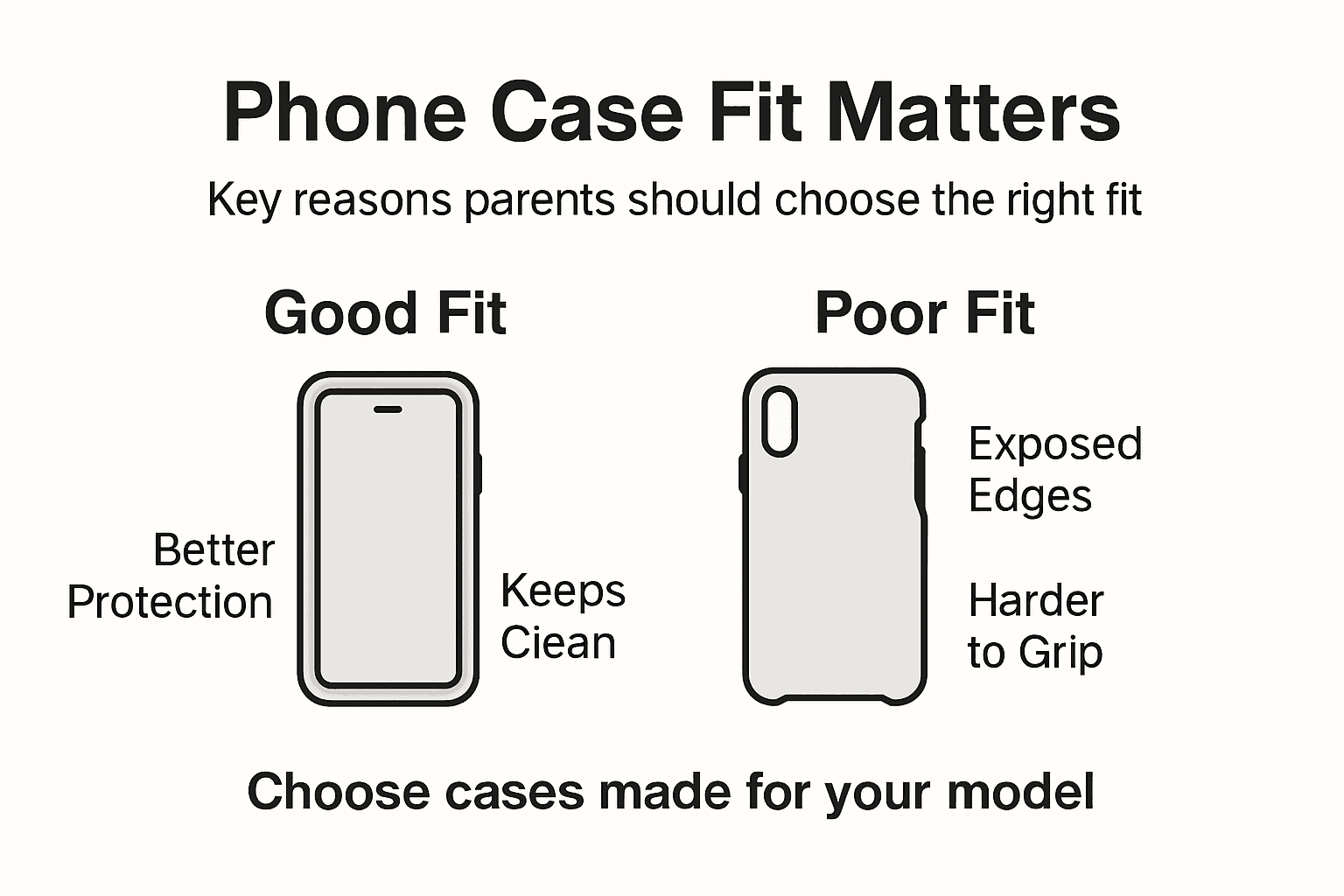
Risks of poor fit and what to avoid
Choosing an ill-fitting phone case can expose families to significant device risks that extend far beyond simple aesthetic concerns. Poor case compatibility creates multiple potential vulnerabilities for expensive electronic devices, potentially leading to costly damage and reduced functionality.
Critical risks of inappropriate phone cases include:
- Reduced shock absorption during accidental drops
- Misaligned port cutouts blocking device connections
- Compromised button responsiveness
- Increased device movement within case
- Potential internal component damage
Loose or improperly sized cases represent a particular danger for families with active children. When a phone can shift inside its protective covering, the case essentially becomes ineffective, potentially causing more harm than protection during impact scenarios.
Parents should be vigilant about several critical fit-related issues:
- Checking precise device model compatibility
- Examining cutout alignment meticulously
- Testing case flexibility and material strength
- Verifying button and port accessibility
- Assessing overall device stability within case
An incorrectly fitted case transforms protection into a potential liability.
Budget cases often compromise on critical engineering details, using generic designs that fail to account for specific smartphone architectures. These low-quality options frequently feature imprecise measurements, weak material compositions, and inadequate protective features that provide a false sense of security.
Pro tip: Always purchase cases specifically designed for your exact smartphone model to ensure comprehensive protection.
Protect What Matters Most With the Perfect Case Fit for Your Family
Parents know that choosing the right phone case is about more than style it is essential for protecting valuable devices from everyday family mishaps. With concerns like precise button alignment, sturdy drop protection, and hygienic materials, the wrong fit can mean costly damage and frustration. At StudioShake, we understand these challenges and offer a diverse selection of phone cases tailored to your device’s exact specifications to ensure optimal safety and usability.
Explore our iPhone collection for cases that combine impact resistance and user-friendly design or browse our budget-friendly options in the £1 Case Collection – StudioShake if you want protection without compromise. Every case is crafted to provide reliable drop defence while maintaining easy port access and a comfortable grip.

Take control of your family’s device safety today by choosing a phone case that fits perfectly and safeguards your technology against unexpected drops and scratches. Visit StudioShake now and find the ideal protective solution designed for your busy life.
Frequently Asked Questions
What is phone case fit, and why is it important for parents?
Phone case fit refers to the precise alignment between a smartphone’s physical dimensions and its protective covering. For parents, this is crucial to ensure comprehensive protection from accidental drops, maintain device functionality, and avoid costly repairs.
How do I choose the right phone case for my device?
To choose the right phone case, measure your smartphone’s exact dimensions and compare them with case specifications. Consider elements such as button and port alignment, material compatibility, and the level of protection suitable for your family’s environment.
What types of phone cases are best for families with active children?
Rugged cases are often the best choice for families with active children because they offer multilayered protection, reinforced corners, and shock-absorbing materials that can withstand significant physical stress from drops and impacts.
What are the risks of using a poorly fitted phone case?
Using a poorly fitted phone case can lead to reduced shock absorption during drops, misaligned port cutouts that block connections, compromised button responsiveness, and increased movement of the device within the case, all of which can result in potential internal damage.