

Lanyard Phone Cases: Practical Benefits for Busy Parents
Every London parent knows the chaos of juggling groceries, young children, and never-ending to-do lists without a free hand for their phone. Keeping your device secure and accessible feels like a daily challenge, especially when fashion trends limit pockets and urban life increases risk of loss or theft. Discover why the hands-free convenience of a lanyard phone case offers real peace of mind, debunking style myths while helping you stay organised in the heart of the United Kingdom.
Table of Contents
- Lanyard Phone Cases Explained And Common Myths
- Varieties And Attachment Methods Compared
- Key Features For Family Convenience And Safety
- How Lanyard Cases Fit Modern UK Lifestyles
- Risks And Drawbacks Versus Alternatives
Key Takeaways
| Point | Details |
|---|---|
| Convenience | Lanyard phone cases provide hands-free accessibility, making them ideal for busy parents managing multiple tasks. |
| Stylish Options | Modern designs offer sleek and neutral styles that integrate well with everyday clothing, dispelling concerns about awkwardness. |
| Versatile Attachments | Varieties include neck, wrist, and hybrid designs, allowing users to choose based on their activities and personal preferences. |
| Protection and Durability | High-quality cases ensure drop protection and security through reinforced attachment points and durable materials, essential for family use. |
Lanyard phone cases explained and common myths
A lanyard phone case is simply a protective case with an attached strap that lets you wear your phone around your neck or wrist. Unlike a standard case that sits in your pocket or bag, a lanyard phone case with an attached strap keeps your device within arm’s reach at all times, offering hands-free convenience when you need it most. For parents juggling school runs, shopping trips, and countless other tasks, this means your phone stays accessible without constantly reaching into your bag or checking whether you’ve left it somewhere. The strap itself is typically made from durable materials like nylon, canvas, or adjustable webbing, designed to support your phone’s weight while remaining comfortable to wear throughout the day.
The practical advantages are straightforward. You’re not fumbling through a handbag whilst managing a toddler in one hand and groceries in the other. Your phone doesn’t slip out of your pocket when you’re bending down to help your child. You won’t spend precious minutes retracing your steps because you’ve misplaced your mobile at the supermarket. What lanyard phone cases address are these real, everyday problems that busy families face—forgotten phones, dropped devices, and the stress of wondering where your phone has gone when you need to check your calendar or answer a call.
Now, let’s tackle the myths. Many parents worry that wearing a phone case on a lanyard looks awkward or unprofessional. The truth? Modern lanyard cases come in sleek designs and neutral colours that integrate seamlessly into your everyday look. You’re not wearing a novelty accessory around your neck; you’re carrying a practical piece of equipment that happens to match your bag. Another common misconception is that lanyard cases are only for people who are “disorganised” or careless. Actually, organised parents use them precisely because they eliminate the mental load of tracking their phones. You’ve already got enough to remember without adding “where’s my phone?” to the list. Some people also assume that lanyards restrict phone access or make using your device more complicated. Modern designs feature quick-release mechanisms or magnetic straps that let you detach your phone instantly when you need full use of both hands, such as when you’re driving or working at your desk.
The construction of these cases reflects their practical purpose. Most quality lanyard phone cases feature reinforced attachment points where the strap connects to the case, preventing the weak points that plague cheaper alternatives. The case body itself provides drop protection and screen coverage, working exactly like a traditional protective case. The strap simply adds the organisational advantage without compromising the protection your phone receives. When you’re evaluating different options, look for cases with adjustable strap lengths (so you can wear them comfortably over jackets or thicker clothing) and secure attachment systems that won’t spontaneously release your phone.
Pro tip: Choose a lanyard case with a quick-detach mechanism so you can easily remove your phone when you need hands-free access, such as whilst driving or using it as a camera during children’s events.
Varieties and attachment methods compared
Lanyard phone cases come in several distinct styles, each with different attachment mechanisms suited to different lifestyles and preferences. The main varieties break down into neck lanyards, wrist lanyards, and hybrid designs that offer flexibility between both. Understanding these differences helps you choose what actually works for your daily routine rather than what looks nice in a product photo.
Neck lanyards are the most traditional option and what most people picture when they think of a lanyard case. These feature a longer strap, typically 50 to 80 centimetres, designed to drape comfortably around your neck. The attachment points are usually fixed, meaning the strap is permanently connected to the case. For London parents managing multiple children at once, neck lanyards keep your phone visible and accessible without requiring you to fumble through a bag. You can glance down to see notifications, answer calls with the phone already at hand, and your device stays secure even if you’re bending over to help a child. The trade-off is that wearing a phone around your neck does take some adjustment, particularly if you’re not accustomed to constant weight around your neck area. Some users find neck lanyards restrict movement slightly when they’re trying to bend down or reach across their bodies.
Wrist lanyards offer a more subtle alternative. These feature shorter, thinner straps that wrap around your wrist like a bracelet, keeping your phone within instant reach without the visibility of a neck lanyard. They work brilliantly when you’re actively moving around, such as during shopping trips or school pickups, because your phone stays secure without bouncing against your chest. The attachment methods for wrist lanyards vary considerably. Some use a single fixed attachment point, whilst others feature dual attachment points that distribute weight more evenly and reduce stress on the case itself. Wrist lanyards suit parents who prefer a less obvious accessory but still want the security of a tethered phone.
Hybrid and detachable designs represent the modern evolution. These cases feature secure attachment systems with quick-release mechanisms or magnetic connections that let you switch between neck and wrist wearing, or remove the strap entirely when you need to work hands-free. Some premium versions offer interchangeable straps in different lengths and materials, so you can adapt your case to whatever you’re doing that day. For busy parents, this flexibility is genuinely valuable. You might wear it around your neck during the school run, switch to wrist mode when you’re at work, and remove the strap entirely when you’re at your desk.
Here is a quick comparison of popular lanyard phone case designs and their ideal use cases:
| Design Type | Ideal Activity | Visibility | Strap Adjustability |
|---|---|---|---|
| Neck lanyard | School runs, shopping | Highly visible | Usually adjustable |
| Wrist lanyard | Crowded public transport | Discreet | Often fixed length |
| Hybrid/detachable | Mixed activities, work to play | Customisable | Highly adjustable |
Attachment methods themselves vary in durability and security. Fixed attachment points involve stitching, metal rings, or plastic connectors permanently joined to the case. These are strong and won’t accidentally detach, but they mean you’re always carrying the strap even when you don’t want it. Metal D-rings or carabiners provide secure attachment with the flexibility to adjust or remove the strap. These work well if you want to swap straps or occasionally go without one. Magnetic attachment systems offer the quickest release but require regular cleaning to prevent dust interference with the magnets. Quick-release clips give you instant detachment when needed, though they require more active management to ensure they’re securely fastened before you move around.
The materials used in straps matter more than many parents realise. Nylon webbing is durable and washable, making it practical for families dealing with sticky fingers and accidental spills. Canvas offers a more fashionable appearance and wears well over time. Leather creates a premium look but requires more care to maintain. Silicone straps provide comfort against skin but can trap sweat in warmer weather. Adjustable webbing lets you customise the length for different wearing styles and different clothing layers.
| Attachment Method | Best For | Durability | Ease of Use |
|---|---|---|---|
| Fixed stitched points | Permanent wear | Very high | Always attached |
| Metal D-rings | Flexibility | High | Quick adjustment |
| Magnetic clips | Quick release | Medium | Instant detach |
| Quick-release buckles | Active parents | High | Manual fastening |
Pro tip: Test the strap length on yourself before purchasing, ensuring it hangs at a comfortable height when worn around your neck and doesn’t pull awkwardly when adjusted to wrist mode.
Key features for family convenience and safety
When you’re selecting a lanyard phone case for your family, certain features make the difference between a case that feels genuinely useful and one that becomes another thing cluttering your life. The best lanyard cases for busy parents share specific characteristics designed around real family situations, not hypothetical scenarios. Understanding what to prioritise helps you invest in a case that actually solves your problems rather than creating new ones.
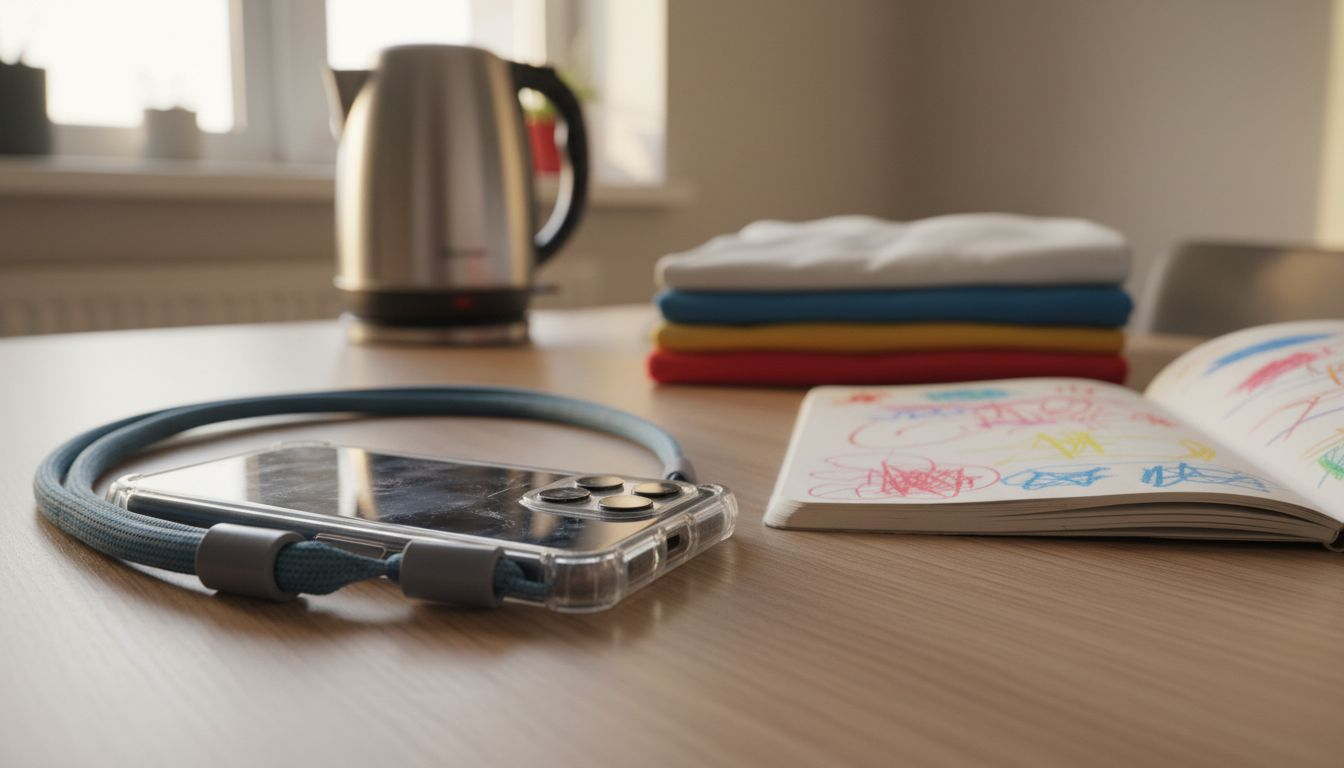
Secure fastenings and attachment durability sit at the top of the priority list. A lanyard case only protects your phone if it stays attached to you. Look for cases where the strap connects using reinforced stitching, metal D-rings, or welded attachment points rather than simple glue or weak plastic clips. The weakest point in any lanyard system is typically where the strap meets the case, so this deserves careful examination before you purchase. When you’re juggling shopping bags whilst keeping track of children, you need absolute confidence that your phone won’t suddenly detach and clatter onto the pavement. Premium attachment systems often feature dual connection points that distribute stress across multiple anchor spots, preventing the catastrophic failure of a single weak point. Test the attachment yourself in the shop by gently tugging on different parts of the strap and case to feel how secure it actually is.
Adjustability for comfort across different situations prevents your lanyard case from becoming uncomfortable during all-day wear. Parents wear their phones in different ways depending on their activities. A 60-centimetre strap might be perfect for draping around your neck whilst wearing a t-shirt, but awkward when you’re wearing a thick winter coat. Look for cases with adjustable straps or multiple attachment points that let you customise the hanging length. Some premium cases feature convertible designs where you can switch from neck wearing to wrist wearing depending on your activity. This flexibility means one case genuinely works across your entire week rather than becoming a drawer decoration when your circumstances change. Straps made from adjustable webbing with slider buckles or clip fastenings offer more versatility than fixed-length alternatives.
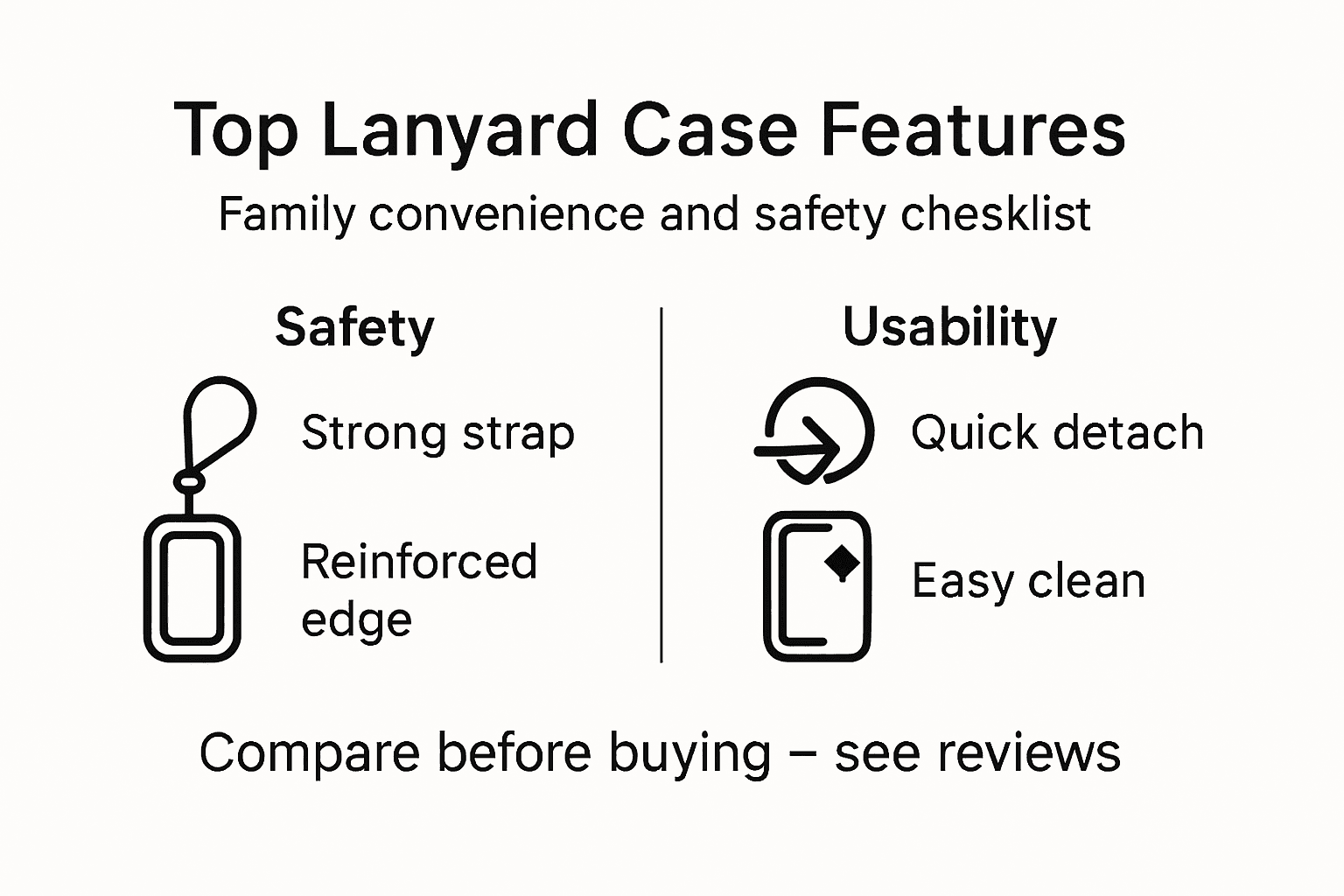
Material quality directly impacts both durability and practicality for family use. Hands-free carrying with durable materials makes your life genuinely easier when you’re managing childcare, shopping, or school activities. Nylon and canvas withstand the inevitable sticky fingers, food spills, and accidental tugs that characterise family life. These materials are also washable, which matters when your case accumulates the debris of parenting. Leather looks premium but requires more maintenance and can be damaged by moisture. Silicone feels comfortable against skin but can trap sweat, making it less ideal for all-day wear in warmer months. The strap material matters equally. Thick webbing distributes weight more comfortably across your neck than thin alternatives, reducing neck strain during extended wear. Look for padded or ergonomic straps if you plan to wear your lanyard case all day.
Drop protection and screen coverage ensure your lanyard case actually protects your phone during the inevitable accidents of family life. The strap keeps your phone tethered to you, but accidents still happen. Children bump into you, you stumble whilst carrying shopping, and unexpected collisions occur in busy environments. Your lanyard case should feature raised bezels around the screen to prevent direct contact with hard surfaces when dropped, and the case body should be made from impact-absorbing materials like TPU (thermoplastic polyurethane) or reinforced polycarbonate rather than thin plastic that cracks easily. Some cases offer shock-absorption technology that cushions drops from typical head height, which is realistic for a phone worn around your neck.
Easy cleaning capabilities deserve more attention than most people give them. Family life is messy. Your phone case will come into contact with chocolate smears, grass stains, sand, and substances you’ll probably prefer not to identify too closely. Cases made from wipeable materials or those featuring removable, washable straps make maintenance straightforward. Nylon and canvas can be gently hand-washed or wiped down with a damp cloth. Plastic cases resist staining better than fabric alternatives. Silicone attracts dust and debris more readily than smooth plastic surfaces, making cleaning more frequent. Consider how much maintenance you’re actually willing to do and choose accordingly.
Quick-access features matter when you’re managing multiple children or high-stress situations. Some lanyard cases include card slots or small storage pockets for emergency cash or cards, eliminating the need to carry a separate wallet. Others feature quick-release mechanisms that let you instantly detach your phone when you need both hands. Magnetic straps offer the fastest release, though they require occasional cleaning to prevent dust accumulation on the magnets.
Pro tip: Prioritise cases with reinforced stitching at the strap attachment points and adjustable straps that fit comfortably over both thin summer clothing and thick winter coats, ensuring genuine year-round usability.
How lanyard cases fit modern UK lifestyles
Modern fashion and daily life in the United Kingdom have created a genuine problem that lanyard phone cases solve elegantly. Walk through any shopping centre in London or any high street across the country, and you’ll notice something striking: contemporary clothing, particularly women’s fashion, features remarkably few functional pockets. Designers prioritise aesthetics over practicality, leaving parents scrambling for somewhere to carry their phones. A decade ago, this wasn’t a major issue because you could rely on a bag with an interior pocket or jeans with reasonable pocket depth. Today’s reality is different. Fast fashion dominates the market, trends change monthly, and functionality often takes a backseat to appearance. This shift in clothing design has made lanyard phone cases genuinely relevant for UK families in ways they perhaps weren’t ten years ago.
The lifestyle pressures facing busy UK parents demand multitasking solutions that traditional phone carrying methods simply cannot provide. Consider your typical weekday. You’re managing a school run, grocery shopping, work commitments, and childcare simultaneously. Your hands are occupied constantly. You’re holding a child’s hand crossing the road, carrying shopping bags, pushing a pram, or juggling a coffee whilst checking your calendar. Lanyard cases address common needs like accessibility without pockets, offering hands-free convenience that keeps your phone instantly available without requiring you to set down other items or rummage through a bag. Your phone doesn’t need to be buried at the bottom of your handbag, inaccessible for the twenty minutes you’re in the supermarket. It stays visible and reachable, whether you’re checking messages, accessing your shopping list, or responding to a work email during your commute. This isn’t luxury; it’s genuine practicality for the way UK families actually live.
Urban living patterns across British cities have also contributed to the relevance of lanyard cases. London, Manchester, Birmingham, and other major urban centres see parents managing crowded public transport systems daily. You’re navigating busy underground platforms, crowded buses, and bustling shopping areas where pickpocketing and lost items pose real risks. A phone in your bag is vulnerable to theft in crowded environments. A phone in your back pocket can be lifted without you noticing. A phone around your neck or wrist stays secure and visible, dramatically reducing the likelihood of loss or theft. Commuters on packed tube trains during rush hour understand this reality immediately. The chaos of city living demands solutions that work within those constraints rather than solutions designed for quieter environments. Lanyard cases transform your phone from a potential liability into a secure, accessible piece of your daily equipment.
The shift towards active lifestyles and outdoor activities among UK families also makes lanyard cases particularly suitable. Parents are increasingly taking children on days out, hiking excursions, and activity-based adventures rather than purely indoor entertainment. When you’re at a children’s play centre, park, or outdoor attraction, you need quick access to your phone for emergencies, photography, or contacting other adults in your group. A lanyard case keeps your phone accessible during active play without the risk of it slipping out of pockets or getting lost in a bag. You can photograph your child’s accomplishments without worrying about where you’ve set your phone down. You can respond immediately if a childcare arrangement changes. You’re not constantly checking whether your phone is still in your possession because it’s literally attached to you.
Weather patterns across the United Kingdom also factor into why lanyard cases suit modern British lifestyles. Rain is frequent. British parents spend considerable time outdoors regardless of weather conditions because that’s simply what life requires. A lanyard case keeps your phone positioned where you can see it, reducing the temptation to remove it from your pocket repeatedly in wet conditions. The phone stays drier because it’s not being constantly moved in and out of pockets that collect moisture. For parents dealing with drizzly afternoons at school gates or outdoor children’s activities in unpredictable weather, a secure, accessible phone case makes genuine practical sense.
Pro tip: Choose a lanyard case with weather-resistant materials and secure fastenings, allowing you to wear it confidently during outdoor activities and rainy British weather without worrying about phone security or moisture damage.
Risks and drawbacks versus alternatives
Lanyard phone cases are genuinely practical solutions, but they’re not perfect for every situation or every person. Honest assessment requires acknowledging the real drawbacks alongside the genuine benefits. Understanding these limitations helps you make an informed decision rather than discovering after purchase that a lanyard case doesn’t suit your life. The key is recognising that no single carrying method works perfectly for every circumstance, and what works brilliantly for school runs might feel awkward during a professional meeting or whilst exercising.
Strap durability and maintenance issues present genuine practical concerns. The attachment point where your strap meets your case is under constant stress. Every time you move, the strap pulls slightly on that connection. Over months of daily wear, repeated tension can cause stitching to fray, plastic connectors to crack, or metal rings to loosen. Unlike a traditional case where the phone simply sits protected inside, a lanyard case adds dynamic stress that cheaper cases simply cannot withstand. You might purchase a budget lanyard case expecting it to last as long as a standard case, only to find the strap attachment failing after four months of regular use. High-quality cases address this with reinforced stitching and premium materials, but this comes at a cost. Additionally, strap wear and breakage risks require understanding that your lanyard case demands more maintenance than traditional options. If the strap fails, you’re either carrying a case with a useless hanging attachment or replacing the entire case.
Practical inconvenience in specific situations is worth acknowledging. Formal occasions where you’re wearing professional clothing present challenges. A phone hanging around your neck doesn’t work well with evening wear, business suits, or formal dresses. You can remove the strap, but then you lose the security benefit. Certain physical activities become awkward. Swimming is impossible with a lanyard case. Gym sessions where you’re moving dynamically can feel restrictive. Playing with children on the ground becomes uncomfortable if your phone is swinging from your neck. Some parents find that the balance between ease of use, security and style requires accepting compromises that don’t suit every activity. You might need to remove your lanyard case entirely for certain parts of your day, defeating some of its practical purpose.
Aesthetic concerns matter to many people, even if some dismiss them as superficial. A phone hanging around your neck is visible. It’s part of your silhouette. Some parents feel self-conscious wearing one, particularly in professional environments or social situations where they worry about appearing disorganised or less sophisticated. The fashion industry hasn’t fully embraced lanyard phone cases as a stylish accessory, despite their growing popularity. If you care deeply about your appearance and feel that visible technology clashes with your personal style, a lanyard case creates genuine discomfort regardless of its practical benefits.
Tangling and discomfort risks develop during extended wear. A longer neck lanyard can tangle with your hair, scarves, or clothing. Some parents find that wearing a phone around their neck for eight hours daily causes neck strain, shoulder discomfort, or marks on the skin where the strap sits. Wrist lanyards pose their own issues, restricting hand movement and creating tension during certain activities. If you’re naturally sensitive to having things around your neck or wrist, a lanyard case might feel genuinely uncomfortable rather than practical.
Comparing realistic alternatives matters. Traditional phone cases offer superior ergonomics and better handling when you’re actively using your phone. Regular cases allow you to grip your phone naturally without a strap getting in the way. Wrist straps (without the full case attachment) provide some security benefits at lower cost and with less visual impact. Wallet cases combine phone protection with card storage, reducing the number of items you need to carry. Crossbody bags designed specifically for phones distribute weight more comfortably than a phone hanging from your neck. Phone pockets in specialised parent bags keep devices secure and accessible. None of these alternatives provide the same combination of security, accessibility, and hands-free convenience, but they might suit your specific lifestyle better.
Here’s a summary of alternative phone carrying methods and their main strengths for UK parents:
| Alternative Method | Security Level | Accessibility | Best For |
|---|---|---|---|
| Traditional case | Moderate | Requires pocket or bag | Seated or static use |
| Wrist strap only | Low | Quick grab | Light activity, minimal movement |
| Wallet case | Moderate | One-hand use | Combining cards and phone |
| Crossbody bag | High | Simple access | Travel, urban commuting |
| Parent bag pocket | High | Quick retrieval | Outings with children |
Your activity level and lifestyle determine suitability. If you spend most of your time in stationary work environments or at home with occasional outings, a traditional case might serve you better. If you’re highly active, frequently in crowded urban environments, or managing multiple children simultaneously, a lanyard case becomes more valuable. If you travel frequently or attend formal events regularly, the drawbacks might outweigh the benefits.
Pro tip: Try borrowing a friend’s lanyard case for a week before purchasing to experience whether strap comfort, aesthetic concerns, and practical inconvenience in your specific activities genuinely matter to you.
Discover Practical Phone Protection Designed for Busy Parents
Finding a phone case that combines security, hands-free convenience and style can feel challenging, especially when everyday family life demands quick access and reliable protection. If you struggle with misplaced phones or juggling multiple tasks, a lanyard phone case offers a smart solution to keep your device close at hand and safe from accidental drops or loss. At StudioShake, we understand these needs and provide a variety of options to enhance your daily routine.

Explore our iPhone collection and find durable cases engineered for busy lifestyles with features like secure attachments and adjustable straps. Whether you prefer the hands-free ease of a lanyard or the quick-release versatility of magnetic MagSafe designs, our range ensures your phone stays protected no matter the activity. Don’t let pocketless clothing or hectic days compromise phone safety. Visit StudioShake now to upgrade your phone protection and enjoy worry-free family moments.
Frequently Asked Questions
What are the benefits of using a lanyard phone case for parents?
Lanyard phone cases keep your phone within arm’s reach, allowing hands-free convenience while you manage children or tasks. They help prevent lost phones and provide easy access for urgent messages or calls.
How do lanyard phone cases compare to regular phone cases?
Unlike regular cases that sit in pockets or bags, lanyard cases are worn around the neck or wrist, making them more accessible. They combine the protective features of standard cases with the added benefit of being easily reachable when needed.
Are there different types of lanyard phone cases?
Yes, lanyard phone cases come in various styles, including neck lanyards, wrist lanyards, and hybrid designs. Each type suits different activities and preferences, allowing you to choose based on your daily routine.
What should I look for when choosing a lanyard phone case?
When selecting a lanyard phone case, consider secure attachment points, adjustability for comfort, material quality for durability, drop protection, and ease of cleaning. These features ensure that the case meets your needs and withstands everyday use.
Recommended
- Why Lanyard Phone Cases Matter for UK Families – StudioShake
- 7 Key Advantages of Slim Phone Cases for Active Parents – StudioShake
- 7 Key Advantages of Wallet Cases for Busy UK Parents – StudioShake
- Phone Case Replacement Workflow for Busy Parents UK – StudioShake
- Kinder Reise-Organizer - Aviation Travel Bag