

How to Prevent Cracked Screens: Protect Every Device Now
Every parent knows how swiftly a smartphone can slip from a child’s hands onto a hard pavement in London. Protecting your family’s devices means more than relying on luck, especially with busy urban routines increasing exposure to potential drops and scratches. By combining smart risk assessment, durable cases, and high-quality screen protectors, tech-savvy parents can build a reliable defence against costly damage and keep every phone safely in use. Explore the most practical strategies for strong family phone protection.
Table of Contents
- Step 1: Assess Your Phone’s Risk Points
- Step 2: Select The Right Protective Case
- Step 3: Apply A High-Quality Screen Protector
- Step 4: Educate Family Members On Safe Handling
- Step 5: Regularly Check Your Device For Potential Damage
Quick Summary
| Key Point | Explanation |
|---|---|
| 1. Assess your phone’s risk | Regularly evaluate your phone’s environment and usage to identify vulnerabilities. |
| 2. Choose a protective case | Select a case with impact resistance and full coverage based on your lifestyle. |
| 3. Apply a quality screen protector | Ensure precise installation of a screen protector to prevent scratches and impacts. |
| 4. Educate family on safe handling | Teach family members proper device use to reduce accidental damage risk. |
| 5. Conduct regular inspections | Schedule monthly checks to identify and address any signs of damage or wear. |
Step 1: Assess your phone’s risk points
Understanding the potential vulnerabilities of your mobile device helps prevent screen damage and protect your investment. Mobile phones are exposed to numerous risks daily, from accidental drops to environmental hazards that can compromise their structural integrity.
To effectively evaluate your phone’s risk points, consider these critical factors:
- Physical environment: Assess where and how you typically use your device
- Usage patterns: Analyse your handling habits and potential impact scenarios
- Current device condition: Inspect existing wear and potential fragility points
Start by examining your phone’s current state. Mobile device safety practices recommend regularly checking for existing micro-cracks, screen vulnerabilities, and structural weaknesses that could escalate into major damage.
Your phone’s risk profile depends on your lifestyle, handling habits, and daily interactions with the device.
Key risk assessment strategies include:
- Evaluate your typical daily locations
- Consider your phone handling frequency
- Check protective accessories currently in use
- Assess potential drop zones and hard surfaces
Smartphone environments dramatically influence damage potential. A phone used in construction settings faces different risks compared to one used in an office environment. Urban commuters, for instance, have higher exposure to potential drops and impacts during transit.
Pro tip: Conduct a weekly visual inspection of your phone’s screen and edges to catch potential damage early and prevent progressive deterioration.
Step 2: Select the right protective case
Choosing the perfect phone case is crucial for preventing screen damage and ensuring your device’s long-term protection. Your case acts as the primary defence against accidental drops, impacts, and everyday wear and tear.
When selecting a protective case, focus on key protective features:
- Impact resistance: Prioritise cases with shock-absorbing materials
- Full coverage: Ensure the case protects all vulnerable device edges
- Material durability: Select high-quality, resilient case materials
Consider the specific personal protective equipment requirements for electronic devices. Different environments demand different levels of protection, so match your case to your lifestyle and usage patterns.
A well-chosen phone case is your device’s first line of defence against potential damage.
Key case selection criteria include:
- Assess your typical daily activities
- Evaluate potential impact risks
- Examine case material strength
- Check compatibility with device model
Smartphone protection strategies vary depending on your specific needs. An urban professional might require a sleek, minimalist case, while a construction worker needs robust, heavy-duty protection.

Materials like silicone, polycarbonate, and reinforced polymers offer different levels of protection. Some cases combine multiple materials to provide comprehensive device shielding.
Here’s a quick comparison of phone case materials and their protective benefits:
| Material | Impact Resistance | Weight | Durability |
|---|---|---|---|
| Silicone | Moderate | Lightweight | Flexible, easy grip |
| Polycarbonate | High | Medium | Strong, rigid |
| Reinforced Polymer | Very High | Heavy | Maximum protection |
| Hybrid (Mixed) | Balanced | Depends on layers | Enhanced coverage |
Pro tip: Select a case with raised edges around the screen to create a protective lip that prevents direct screen contact when placed face-down.
Step 3: Apply a high-quality screen protector
Protecting your smartphone’s screen requires precision and careful application of a high-quality screen protector. This crucial step can significantly extend your device’s visual integrity and prevent costly screen damage.
To ensure a flawless screen protector installation, you’ll need to prepare carefully:
- Clean workspace: Use a dust-free environment
- Proper tools: Gather microfibre cloth, dust removal stickers
- Lighting: Work in bright, well-lit conditions
Carefully follow display screen equipment protection guidelines to minimise potential installation errors and ensure maximum screen defence.
A perfectly applied screen protector creates an invisible shield against scratches and impacts.
Detailed application steps include:
- Thoroughly clean your device screen
- Remove all dust particles
- Align the protector precisely
- Smooth out air bubbles systematically
Screen protection techniques vary depending on the protector type. Tempered glass offers superior impact resistance, while flexible film protectors provide lightweight coverage.
Consider different protector materials - each offers unique benefits. Ceramic protectors provide exceptional hardness, whilst tempered glass delivers optimal clarity and touch sensitivity.
For easy reference, here is a summary of common screen protector types and their advantages:
| Type | Main Benefit | Typical Thickness | Clarity |
|---|---|---|---|
| Tempered Glass | Superior impact resistance | 0.3-0.5mm | Very clear |
| Ceramic | Exceptional hardness | 0.4-0.6mm | High transparency |
| Flexible Film | Lightweight scratch shield | 0.1-0.2mm | Moderate |
Pro tip: Apply screen protectors in a humidity-controlled room to minimise dust interference during installation.
Step 4: Educate family members on safe handling
Teaching your family about smartphone protection requires a thoughtful, collaborative approach that transforms device care into a shared responsibility. Effective communication can dramatically reduce the risk of accidental screen damage and encourage mindful device handling.
Create a family strategy for smartphone protection by focusing on key educational elements:
- Age-appropriate guidelines: Develop different rules for children and teenagers
- Demonstration techniques: Show proper handling and carrying methods
Follow mobile phone handling guidelines to establish consistent safety protocols across your household.
Successful device protection begins with understanding, not just rules.
Key education strategies include:
- Explain the cost of screen replacements
- Demonstrate careful device handling
- Establish clear consequences for carelessness
- Create visual reminders about protection
Smartphone safety conversations should be ongoing and positive. Approach the topic as a collaborative learning experience rather than a strict set of prohibitions.
Consider creating a family device care contract that outlines expectations, responsibilities, and mutual understanding about protecting expensive electronic equipment.
Pro tip: Schedule quarterly family device care meetings to reinforce good habits and discuss any emerging challenges in smartphone protection.
Step 5: Regularly check your device for potential damage
Maintaining your smartphone’s integrity requires consistent, proactive monitoring to identify and address potential vulnerabilities before they escalate into costly repairs. Regular device inspections are crucial for preserving your phone’s functionality and preventing progressive screen damage.
Develop a systematic approach to device inspection by focusing on these key areas:
- Screen examination: Look for micro-cracks and stress lines
- Physical inspection: Check edges and corners for structural weaknesses
- Battery health: Monitor for swelling or performance changes
Mobile phone safety practices recommend thorough and frequent device assessments to catch early signs of potential damage.
Small imperfections can quickly become significant problems if left unchecked.
Effective inspection strategies include:
- Use natural light for detailed screen examination
- Rotate device to check from multiple angles
- Test touchscreen responsiveness
- Verify protective accessories remain intact
Smartphone vulnerability assessment involves more than visual checks. Pay attention to subtle performance changes that might indicate underlying structural issues.
Consider maintaining a digital log of your device’s condition, noting any changes or potential stress points you observe during routine inspections.
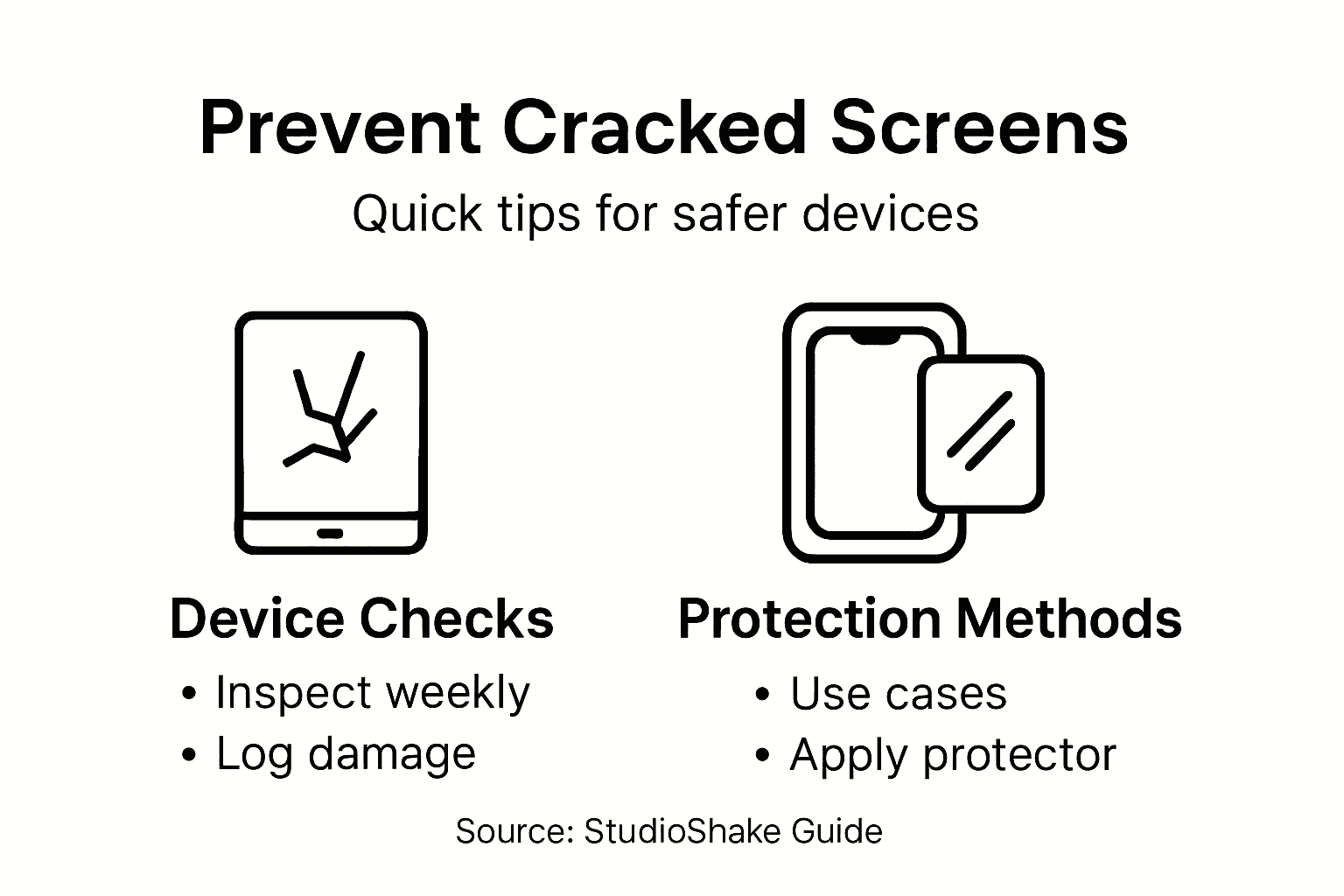
Pro tip: Schedule monthly device health checks, treating your smartphone inspection like a routine medical check-up to catch issues early.
Protect Your Smartphone Screen with StudioShake Solutions
Preventing cracked screens and keeping your devices safe requires more than just careful handling. If you want to defend your investment from drops, impacts, and everyday risks, StudioShake provides a comprehensive range of phone cases and accessories expertly designed to add durable, stylish protection that suits your lifestyle. Whether you need shock-absorbing materials, raised edges for extra screen defence, or versatile cases for any environment, we have you covered.

Explore our collection now at StudioShake to find the perfect case that fits your phone model and usage needs. Don’t wait until a small crack turns costly — take action today and safeguard your device with trusted protection from StudioShake. Discover how easy it is to protect every gadget by visiting our homepage and learn more about essential mobile accessories that complement your phone’s screen protection.
Frequently Asked Questions
How can I assess the risk points of my smartphone to prevent cracked screens?
To assess your smartphone’s risk points, evaluate your physical environment, handling habits, and the current condition of your device. Conduct a visual inspection every week, checking for micro-cracks and vulnerabilities, and note areas that require additional protection.
What features should I look for in a protective case to prevent screen damage?
When selecting a protective case, prioritise impact resistance, full coverage of edges, and durable materials. Choose a case that is specifically designed to absorb shocks and withstand potential drops related to your daily activities.
How do I properly apply a screen protector to avoid installation errors?
To apply a screen protector correctly, start by cleaning the device screen thoroughly in a dust-free environment and align the protector precisely before smoothing out any air bubbles. Follow these steps carefully, as a well-applied screen protector can significantly enhance your screen’s protection against scratches and impacts.
What educational strategies can I use to teach my family about smartphone care?
Develop age-appropriate guidelines and demonstrate proper handling techniques to instil good smartphone habits within your family. Encourage discussions that outline the importance of careful device use, and consider creating visual reminders to reinforce these practices.
How often should I check my smartphone for potential damage or vulnerabilities?
You should check your smartphone for potential damage at least once a month. Conduct a thorough inspection of the screen, edges, and battery, as this proactive approach helps identify and address minor issues before they lead to costly repairs.
Recommended
- How to Prevent Screen Damage with Quality Accessories – StudioShake
- Complete Guide to Mobile Screen Protectors – StudioShake
- Complete Guide to the Role of Screen Protectors – StudioShake
- Step by Step Phone Screen Protection: Keep Your Device Safe – StudioShake
- Luxury Handbag Care Workflow for Pristine Condition - BVPRIVE
- 8 E-bike Safety Tips for Urban Commuters – The Beam