

Why Double Layer Phone Cases Matter for Families
Every parent faces the daily challenge of keeping expensive phones safe when family life gets hectic. Between bustling mornings in London, after-school trips, and children eager to grab your device, accidental drops feel almost inevitable. Choosing a double-layer phone case helps protect against these common mishaps, combining a hard outer shell and a soft inner layer for all-around shock absorption without unnecessary bulk. Discover what sets these cases apart and dispel the myths that keep families from truly safeguarding their phones.
Table of Contents
- Defining Double Layer Phone Cases And Misconceptions
- Main Types And How Double Layer Cases Function
- Protection Benefits For Active Family Life
- Comparing Double Layer Versus Single Layer Cases
- Key Buying Tips For Parents In London
Key Takeaways
| Point | Details |
|---|---|
| Double-Layer Cases Offer Superior Protection | The combination of hard outer shells and soft inner layers absorbs shocks and distributes impact effectively, making them ideal for active families. |
| Misconceptions About Size and Aesthetics | Modern double-layer cases typically add minimal bulk and come in various designs, proving that protection does not compromise style. |
| Cost-Effective Investment | Spending £25 to £80 on a quality double-layer case is prudent, as it prevents the higher costs associated with replacing damaged devices. |
| Assess Family Needs for Smart Purchases | Evaluate your family’s lifestyle and risk factors to choose the most suitable case, ensuring optimal protection and usability. |
Defining Double Layer Phone Cases and Misconceptions
Double-layer phone cases are built with two distinct layers working together: a hard outer shell and a soft inner cushion. This combination creates a protective system that absorbs shocks from drops and everyday impacts. Most parents think adding two layers automatically means a bulkier phone, but that’s simply not true in practice.
The outer shell typically uses rigid materials like polycarbonate or rigid plastic. The inner layer employs softer materials such as TPU (thermoplastic polyurethane) or silicone. Together, these materials create multiple layers of protection without necessarily adding excessive thickness to your pocket or bag.
What Double-Layer Cases Actually Do
These cases serve specific purposes for families with active lifestyles:
- Absorb impact energy when your phone hits the ground or gets knocked about during school runs
- Distribute shock across a wider surface area rather than concentrating it at a single point
- Provide grip through textured inner materials, reducing accidental drops in the first place
- Combine style with function by offering design choices without sacrificing protection
Common Misconceptions About Double-Layer Cases
Several myths circulate about these protective cases, particularly among parents considering them for family devices.
Misconception One: They make phones too thick. Reality: Modern double-layer designs add only 2-3mm to overall thickness. Your phone still fits comfortably in most pockets and car mounts.
Misconception Two: They’re only for clumsy users. Not accurate. Accidents happen to everyone, especially in busy households where children, pets, and packed schedules create chaotic environments.
Misconception Three: They sacrifice aesthetics. Double-layer cases come in numerous colours, patterns, and finishes. You don’t need to choose between protection and appearance anymore.
Misconception Four: They’re unnecessarily expensive. Actually, preventing a £400-800 phone replacement makes the investment logical. Prevention costs far less than repair or replacement.
Double-layer cases protect phones effectively without the bulk or style compromise that older protective cases demanded.
When you’re managing multiple devices for different family members, this distinction matters significantly. Understanding what these cases actually offer helps you make better purchasing decisions for your household’s specific needs.
Pro tip: Check the specific impact ratings for cases you’re considering, as some double-layer designs exceed others in shock absorption capability despite similar appearance.
Main Types and How Double Layer Cases Function
Double-layer cases come in several distinct varieties, each designed for different family needs and lifestyle situations. Understanding the main types helps you choose the right protection level for your household. The fundamental design remains consistent: a hard outer shell paired with a soft inner layer, but variations exist in materials, thickness, and additional features.
Standard Double-Layer Construction
The most common configuration combines a durable hard outer shell with TPU or silicone inner lining. This pairing provides reliable everyday protection without excessive bulk. The hard exterior resists scratches and crushing forces, whilst the soft inner layer cushions impacts from drops.
Key features of standard models include:
- Impact absorption through strategically placed inner cushioning
- Scratch resistance on the hard polycarbonate exterior
- Raised bezels protecting the screen and camera lens during face-down drops
- Anti-slip surfaces reducing accidental drops in the first place
Specialised Double-Layer Variants
Beyond standard designs, several specialised types serve specific purposes:
Military-grade protection models add extra layers and reinforced corners for maximum impact resistance. These suit parents with particularly active children or work environments requiring maximum durability.
Slim hybrid designs minimise thickness whilst maintaining dual-layer protection. Parents who prefer lighter pockets appreciate these options without sacrificing protection capabilities.
Textured grip versions feature specially designed surfaces for improved handling. Families with younger children benefit from reduced slip risk during everyday use.
How the Dual-Layer System Functions
The protective mechanism works through complementary material properties working together. When your phone experiences impact, the hard outer layer distributes shock forces across a wider surface area rather than concentrating them at a single point.
The soft inner layer then absorbs remaining energy, preventing transmission to your device’s sensitive internal components. This sequential energy management dramatically reduces damage risk compared to single-layer protection.
The combination of rigid exterior and soft interior creates a shock-absorption system that no single-material case can match.
Different lifestyle needs determine which variant suits your family best. A parent managing multiple children might prefer military-grade protection, whilst commuters appreciate slim designs that fit easily in bags.
Below is a reference table summarising the main variants of double-layer cases and whom they best suit:
| Variant Type | Design Feature | Best For |
|---|---|---|
| Military-grade | Reinforced corners, extra layers | Rugged use, young children |
| Slim hybrid | Thinner, lighter build | Commuters, minimalists |
| Textured grip | Special anti-slip exterior | Families with younger children |
| Standard model | Balanced everyday durability | General use, typical families |
Pro tip: Test how the case feels in your hand before purchasing, as different grip textures and weights significantly affect daily usability beyond protection alone.
Protection Benefits for Active Family Life
Active families face unique challenges when protecting their devices. Between school runs, sports activities, and everyday household chaos, phones endure constant risk of drops and impacts. Double-layer cases directly address these real-world scenarios that London parents encounter daily.
The primary benefit is straightforward: shock-absorbing inner materials combined with durable outer shells prevent costly damage from accidental drops. Children are particularly prone to dropping phones during transitions between activities, yet with proper protection, these incidents rarely result in expensive repairs.
Real-World Protection Scenarios
Consider typical family situations where phone protection matters:
- School gate chaos where younger children bump into you whilst you’re holding your phone
- Sports sideline moments when phones slip from pockets during movement and activity
- Kitchen accidents where devices fall whilst you’re managing multiple tasks simultaneously
- Play sessions where children grab or knock phones from tables during family time
- Commute pressure where busy train journeys create crowded conditions risking drops
Double-layer cases perform reliably across all these scenarios because they distribute impact forces effectively.
Financial Protection and Peace of Mind
Replacing a modern smartphone costs between £400 and £1,200 depending on your model. A quality double-layer case typically costs £25 to £60. The mathematics are straightforward: preventing a single drop pays for the case investment multiple times over.
Beyond financial protection, there’s genuine peace of mind. Parents with young children particularly appreciate knowing their devices are protected during hectic family routines. You focus on parenting rather than worrying about accidental damage.
Extended Device Lifespan
Regular drops and scrapes accumulate damage over time. Even minor impacts occasionally cause internal component failures months later. Double-layer protection minimises these gradual wear patterns, extending your phone’s functional lifespan by 12 to 24 months on average.
This extended usability means you’re not forced into early replacements due to accumulated drop damage. Your investment in the phone itself lasts significantly longer.
Double-layer cases transform phones from fragile electronics into genuinely durable devices suited to real family life.
For London families managing multiple devices across different age groups, this protection consistency matters considerably. Younger children benefit from maximum impact absorption, whilst parents appreciate knowing their own devices survive daily family activities.
Pro tip: Pair your double-layer case with a tempered glass screen protector for comprehensive protection that covers both the most common damage points on your device.
Comparing Double Layer Versus Single Layer Cases
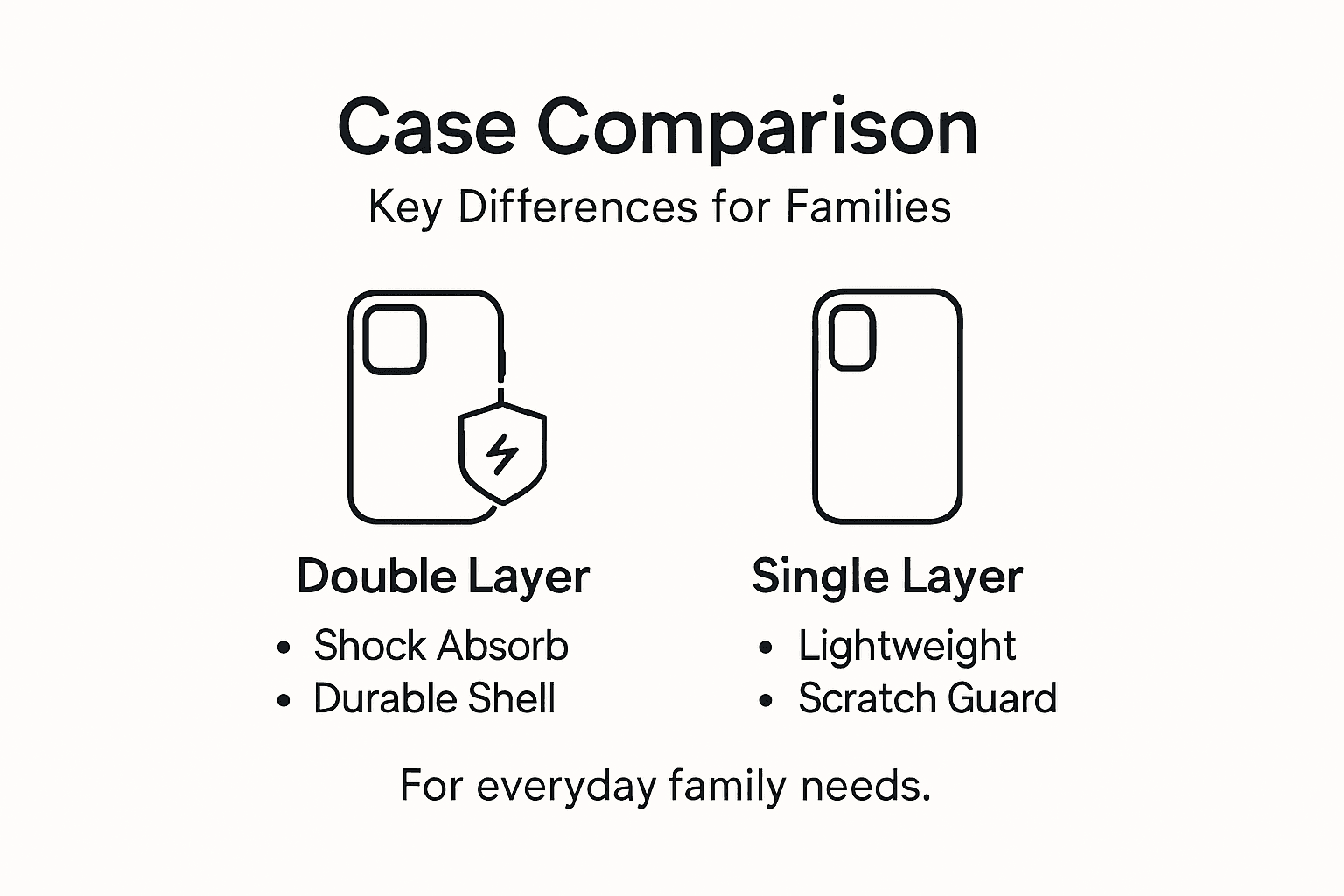
Choosing between single-layer and double-layer cases requires understanding what each type actually delivers. The differences matter significantly when you’re protecting devices that cost hundreds of pounds. Single-layer cases offer basic protection, but double-layer designs provide substantially more comprehensive defence for active families.
What Single-Layer Cases Provide
Single-layer cases typically consist of a single material wrapping your phone. They excel at preventing scratches and dust accumulation. However, single-layer cases provide only basic protection against minor bumps, lacking the advanced shock absorption of dual designs.
When your phone experiences significant impact, single-layer protection becomes insufficient. The rigid or soft material absorbs some energy, but concentrated impact forces can still damage internal components.
The Double-Layer Advantage
Double-layer cases fundamentally transform how your phone handles drops and impacts. The two-material system works sequentially: the hard outer layer distributes force across a wider surface, whilst the soft inner layer absorbs remaining energy.
Key advantages include:
- Superior shock absorption through complementary material properties
- Better impact distribution preventing concentrated force damage
- Dual protection mechanism that single materials cannot replicate
- Enhanced durability for active family environments
- Greater reliability across various drop scenarios
Practical Differences for Families
For London parents managing active households, these differences translate directly into real outcomes. A single-layer case might survive a drop from waist height but fail from shoulder height. Double-layer designs typically withstand both scenarios reliably.
Younger children particularly benefit from dual-layer protection. Their phones experience more frequent drops, rougher handling, and less careful treatment. The extra protection layer directly reduces repair costs and replacement frequency.
The Bulk Question
Single-layer cases remain slightly thinner than double-layer options. However, modern dual designs add minimal bulk—typically 2 to 3 millimetres extra thickness. This minor increase is negligible compared to the protection benefits delivered.
Most parents find the thickness trade-off worthwhile when considering device protection and extended lifespan advantages.
Here is a comparison overview to help you differentiate between single-layer and double-layer phone cases:
| Aspect | Single-Layer Case | Double-Layer Case |
|---|---|---|
| Typical Thickness | 1-2 mm | 2-4 mm |
| Drop Protection | Low to moderate | High, multi-angle impact resistant |
| Aesthetic Options | Wide, usually sleeker | Wide, with various finishes |
| Average Price Range | £8–£30 | £25–£80 |
| Recommended For | Careful users | Active families, children |
Double-layer cases provide comprehensive protection that single-layer designs simply cannot match, making them the logical choice for families with active lifestyles.
Your decision ultimately depends on how much protection your household genuinely needs. Single-layer cases work for careful users with low-risk environments. Families with young children or active routines benefit substantially from double-layer investment.
Pro tip: Calculate your replacement costs: if you’ve replaced or repaired a phone more than once in three years, double-layer protection will save money despite higher upfront case costs.
Key Buying Tips for Parents in London
Purchasing the right double-layer case requires understanding your family’s specific needs and priorities. London parents juggle multiple considerations: budget constraints, device compatibility, aesthetic preferences, and protection requirements. Making an informed choice saves money and ensures your investment genuinely serves your household.
Assess Your Family’s Risk Profile
Start by evaluating how your phones actually get used. Families with younger children face higher drop risks than households with adults. Consider your daily activities, work environment, and how many times you’ve previously damaged devices.
Your risk assessment directly influences which case features matter most. High-risk households need maximum shock absorption. Low-risk users can prioritise slimmer designs without guilt.
Material Quality Matters
Not all double-layer cases deliver equal protection. Examine the specific materials used in both outer and inner layers. Quality polycarbonate outer shells resist scratches and impacts far better than cheap plastic alternatives.
The inner TPU or silicone layer should feel firm yet cushioned. Cheap inner materials compress permanently and lose shock-absorption capability quickly. This degradation means diminishing protection over time.
Consider Practical Compatibility
Your case must actually fit your phone model precisely. Loose-fitting cases shift during impacts, reducing protection effectiveness. Check that button access, port openings, and camera cutouts align perfectly with your specific device.
Precise fitment also matters for case longevity. Poorly fitting cases wear unevenly and may separate at seams.
Budget Strategically
Double-layer cases typically cost between £25 and £80 depending on brand and features. Rather than buying the cheapest option, invest moderately in quality. Mid-range cases deliver excellent protection without premium pricing.
Remember: a single phone replacement costs hundreds of pounds. Even premium cases represent substantial savings compared to device damage.
Key considerations when shopping:
- Brand reputation for durability and customer service
- Warranty coverage protecting your investment
- Colour and design matching your personal style
- Weight distribution ensuring comfortable daily carrying
- Grip texture preventing accidental drops
Read Verified Reviews
Check customer feedback from people with similar devices and lifestyles. Parents’ reviews reveal real-world performance across actual family scenarios. Look for mention of longevity, how the case withstands drops, and whether it feels protective without excessive bulk.
Choose cases based on your family’s actual usage patterns, not marketing claims or what others recommend.
London’s diverse retail environment offers both online and physical shopping options. Testing cases in-hand before purchasing helps confirm comfortable grip and precise fitment.
Pro tip: Buy one case first, test it with your device for a week, and only then purchase additional cases for other family members once you’ve confirmed quality and comfort.
Protect Your Family’s Devices with Trusted Double-Layer Cases
Families face daily challenges keeping phones safe from knocks drops and everyday accidents. This article reveals how double-layer phone cases offer superior shock absorption and durability without bulky compromises. At StudioShake we understand these concerns and provide a comprehensive range of high-quality double-layer phone cases to suit every lifestyle and device.
Discover cases that combine:
- Impact-resistant hard outer shells
- Cushioned inner layers for maximum protection
- Stylish designs perfect for all ages
Explore our selection of phone cases and find the right fit for your family’s needs today.

Don’t wait for the next accidental drop to worry about costly repairs. Act now and safeguard your devices with trusted dual-layer protection from StudioShake. Visit StudioShake to browse our quality collection and enjoy peace of mind knowing every family phone is well defended.
Frequently Asked Questions
What are double-layer phone cases?
Double-layer phone cases consist of two distinct layers: a hard outer shell for impact resistance and a soft inner layer for shock absorption. This design provides enhanced protection without significantly adding to the bulk of your device.
How do double-layer cases protect family devices?
Double-layer cases absorb impact energy and distribute shock across a wider surface, reducing the risk of damage from drops. The combination of a rigid exterior and a cushioned interior ensures comprehensive protection, especially for devices frequently used by children.
Do double-layer cases make phones bulky?
Not necessarily. Modern double-layer cases typically add only 2-3mm of thickness, which most users find manageable. The trade-off for this slight increase is significantly enhanced protection for your device.
Are double-layer cases worth the investment for active families?
Yes, double-layer cases are a smart investment for active families. They provide superior protection, potentially saving you hundreds of pounds in repair or replacement costs, especially for devices used by children who are more prone to drops.