

Biodegradable Phone Cases: Impact on UK Family Life
Finding mobile accessories that are genuinely sustainable and reliable can feel challenging for families who care about reducing plastic waste in London. With standard phone cases lingering in landfills, biodegradable options crafted from natural or recycled materials are changing the way parents protect their devices. This article uncovers common myths about biodegradable phone cases while explaining their real environmental and protective benefits, helping you make smarter choices for both your family and the planet.
Table of Contents
- Biodegradable Phone Cases Explained And Common Myths
- Materials And Types Of Sustainable Phone Cases
- How Biodegradable Cases Protect Devices And The Planet
- Uk Manufacturing, Regulations And Eco Safety Standards
- Costs And Comparing With Traditional Plastic Alternatives
- Practical Disposal, Recycling And Avoiding Greenwashing
Key Takeaways
| Point | Details |
|---|---|
| Biodegradable Cases Offer Protection | Many biodegradable cases provide comparable protection to traditional plastic cases, debunking the myth that they are less durable. |
| Material Matters | Selecting a biodegradable phone case involves considering its entire environmental profile, including material sourcing and manufacturing processes. |
| Understanding Disposal Options | Proper disposal methods for biodegradable cases are crucial for maximising their environmental benefits, as home composting is often ineffective. |
| Cost Consideration | Biodegradable phone cases are competitively priced, typically 10-25% more than standard alternatives, factoring in their long-term environmental impact. |
Biodegradable phone cases explained and common myths
Biodegradable phone cases represent a groundbreaking solution for environmentally conscious families seeking sustainable mobile accessories. Unlike traditional plastic cases that persist in landfills for centuries, these innovative products are designed to break down naturally, reducing long-term environmental impact.
The fundamental difference between standard and biodegradable phone cases lies in their material composition. Eco-friendly phone cases are crafted from natural or recycled materials that can decompose without leaving harmful residues. These materials typically include:
- Plant-based polymers
- Recycled agricultural waste
- Organic compounds derived from renewable sources
- Compostable bioplastics
However, not all biodegradable cases are created equal. Some common myths persist about their performance and environmental credentials. Here are the most prevalent misconceptions:
- Myth: Biodegradable cases are less protective
- Reality: Many sustainable cases offer robust protection comparable to traditional options
- Myth: These cases decompose immediately
- Reality: Proper biodegradation requires specific environmental conditions
Durability Considerations
Contrary to popular belief, biodegradable phone cases can provide substantial device protection. Protective packaging research indicates that advanced manufacturing techniques allow these cases to maintain structural integrity while remaining environmentally responsible.
Not all biodegradable materials are created equal - lifecycle analysis matters more than simple marketing claims.
Families should understand that biodegradability doesn’t automatically mean inferior quality. Modern sustainable phone cases undergo rigorous testing to ensure they meet consumer expectations for protection, aesthetics, and environmental responsibility.
Pro tip: When selecting a biodegradable phone case, examine its complete environmental profile, including manufacturing process, expected lifespan, and decomposition conditions.
Materials and types of sustainable phone cases
Sustainable phone cases represent an innovative solution for environmentally conscious families, offering a range of materials that minimise ecological impact while providing robust device protection. Eco-friendly mobile accessories have evolved significantly, presenting consumers with multiple sustainable options beyond traditional plastic materials.
The primary sustainable materials used in modern phone cases include:
- Bamboo: Rapidly renewable, biodegradable, and naturally antibacterial
- Cork: Lightweight, water-resistant, and harvested without damaging trees
- Recycled plastics: Repurposed from existing waste streams
- Plant-based bioplastics: Derived from agricultural waste and renewable sources
- Organic hemp fibres: Durable, low-environmental-impact material
Each material offers unique advantages for environmentally mindful families. Bamboo cases, for instance, provide natural antimicrobial properties while being completely compostable. Cork offers exceptional lightweight protection with minimal environmental footprint, making it an attractive option for eco-conscious consumers.

Here’s a comparison of common sustainable phone case materials, highlighting unique properties and environmental impact:
| Material | Unique Property | Environmental Benefit |
|---|---|---|
| Bamboo | Naturally antibacterial | Rapidly renewable resource |
| Cork | Water-resistant and lightweight | Harvested without tree harm |
| Recycled Plastics | Durable through repurposing | Diverts waste from landfill |
| Plant-Based Bioplastics | Heat-dissipating | Lower carbon footprint |
| Organic Hemp Fibres | Extra strong and flexible | Low resource cultivation |
Sustainable phone case materials are not just about environmental credentials, but also about delivering high-performance protection for your device.
Modern manufacturing techniques have dramatically improved the durability and protective capabilities of sustainable phone cases. These materials now undergo rigorous testing to ensure they meet the same structural integrity standards as traditional plastic cases, dispelling myths about compromised device safety.
Beyond material selection, sustainable phone cases also consider the entire lifecycle of the product. Manufacturers are increasingly focusing on:
- Minimising production emissions
- Using renewable energy in manufacturing
- Creating easily recyclable or compostable packaging
- Designing cases for maximum longevity
Pro tip: When selecting a sustainable phone case, examine not just the primary material, but also the manufacturer’s entire environmental commitment and production practices.
How biodegradable cases protect devices and the planet
Biodegradable phone cases offer an innovative solution that simultaneously protects mobile devices and reduces environmental impact. Eco-friendly phone cases demonstrate remarkable capabilities in safeguarding smartphones while minimising ecological footprints through intelligent material design and sustainable manufacturing processes.
The protective features of biodegradable cases include:
- Impact resistance: Multiple layers of natural materials providing shock absorption
- Moisture protection: Plant-based polymers creating water-resistant barriers
- Scratch prevention: Durable organic compounds maintaining device aesthetics
- Thermal regulation: Natural materials that dissipate heat effectively
These cases are engineered to provide comprehensive device protection through advanced manufacturing techniques that do not compromise environmental responsibility. Advanced plant-based materials can absorb impacts, resist daily wear and tear, and protect delicate smartphone components just as effectively as traditional plastic alternatives.
Sustainable protection means safeguarding both your device and the planet’s future.
Beyond individual device protection, biodegradable cases contribute to broader environmental conservation efforts. By selecting these cases, families make a tangible difference through:
- Reducing plastic waste in landfills
- Supporting circular economy principles
- Minimising carbon emissions during production
- Encouraging sustainable consumer choices
Pro tip: Always check the specific biodegradation conditions and expected lifecycle of your sustainable phone case to maximise its environmental and protective benefits.
UK manufacturing, regulations and eco safety standards
The United Kingdom has established robust regulatory frameworks to ensure the safety, quality, and environmental responsibility of biodegradable phone cases. Bioplastics certification standards play a critical role in guaranteeing that these innovative products meet stringent ecological and performance requirements.
Key regulatory considerations for biodegradable phone case manufacturers include:
- BS EN13432 compliance: Mandatory standard for compostable materials
- Toxicity testing: Ensuring no harmful chemicals are released during decomposition
- Performance standards: Maintaining equivalent protective capabilities to traditional cases
- Lifecycle assessment: Evaluating total environmental impact
The UK government and environmental organisations have developed comprehensive guidelines that address multiple dimensions of sustainable manufacturing. These regulations focus not just on the final product, but on the entire production process, including raw material sourcing, manufacturing emissions, and eventual disposal methods.
Below is a summary of main UK regulatory standards for biodegradable phone cases and their significance:
| Standard/Requirement | Main Focus | Consumer Value |
|---|---|---|
| BS EN13432 | Compostability certification | Ensures genuine biodegradability |
| Toxicity Testing | Chemical safety during breakdown | Protects health and environment |
| Performance Standards | Drop and impact resistance | Guarantees adequate device safety |
| Lifecycle Assessment | Full environmental appraisal | Transparent sustainability claims |
Sustainable manufacturing is about creating products that protect both your device and the environment.
Manufacturers must navigate complex requirements to achieve certification, which typically involves:
- Rigorous material testing
- Emissions monitoring
- Transparent supply chain documentation
- Independent environmental audits
Pro tip: Look for UK-based manufacturers displaying clear environmental certifications when selecting a biodegradable phone case to ensure genuine sustainability.
Costs and comparing with traditional plastic alternatives
Biodegradable phone cases are increasingly becoming a financially viable option for environmentally conscious UK families. Eco-friendly mobile accessories demonstrate that sustainable choices need not come with prohibitive price tags.
Cost comparison between biodegradable and traditional plastic cases reveals several key insights:
- Entry-level range: £15-£30 for biodegradable options
- Mid-tier cases: £30-£50 with advanced protective features
- Premium sustainable cases: £50-£75 with specialised materials
- Comparable traditional plastic cases: £20-£80 price range
Contrary to popular perception, biodegradable cases are competitively priced, especially when considering long-term environmental benefits. Families can expect to invest marginally more for sustainable options, typically between 10-25% higher than standard plastic alternatives.
The true cost of a phone case extends beyond its purchase price - consider environmental impact and longevity.
Factors influencing pricing for biodegradable cases include:
- Research and development costs
- Specialised manufacturing processes
- Sustainable raw material sourcing
- Certification and compliance expenses
Pro tip: Calculate the lifecycle cost of your phone case by considering its environmental footprint alongside its initial purchase price.
Practical disposal, recycling and avoiding greenwashing
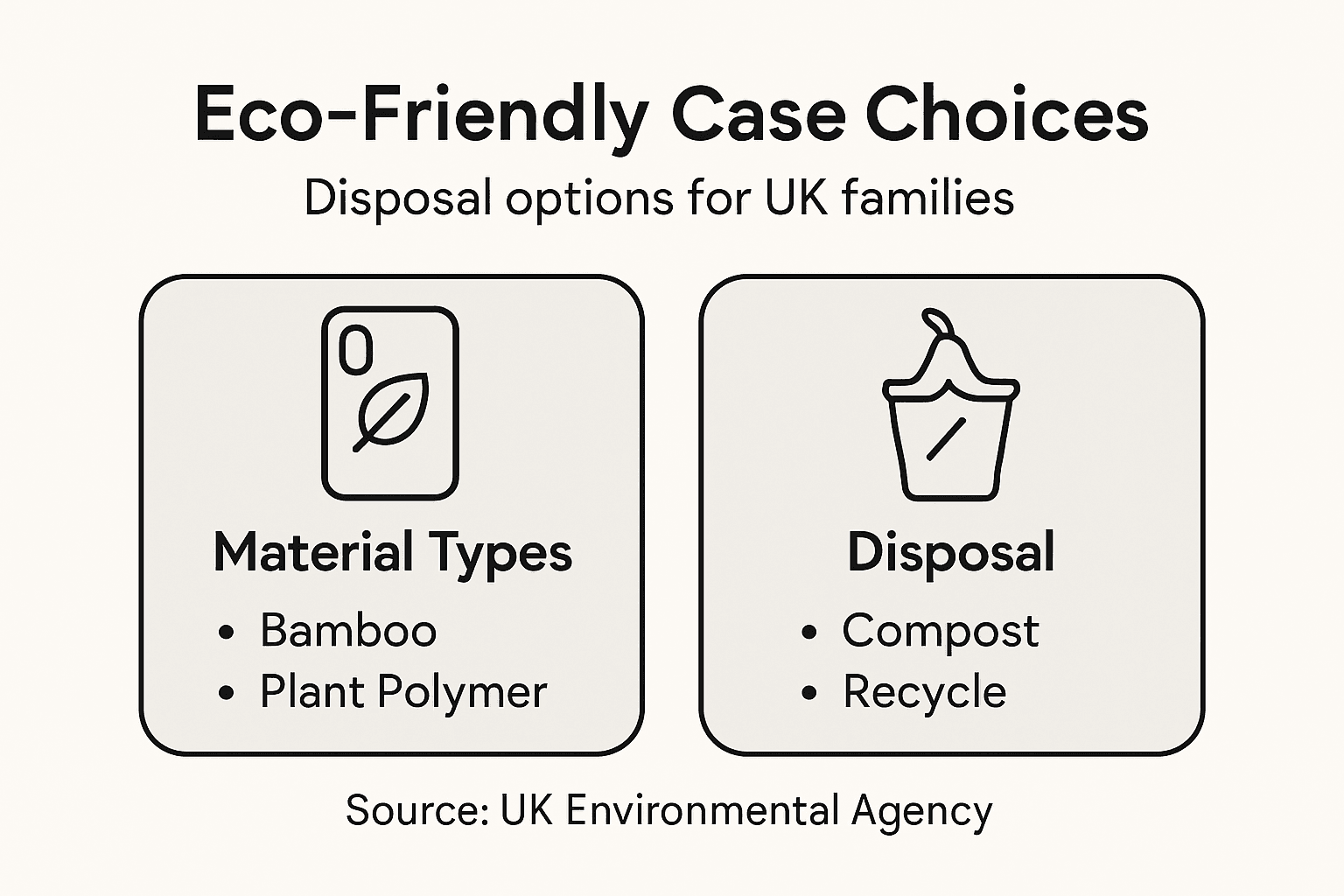
UK families seeking sustainable mobile accessories must navigate complex disposal requirements for biodegradable phone cases. Compostable phone case disposal demands careful consideration to ensure genuine environmental benefits.
Key disposal methods for biodegradable phone cases include:
- Industrial composting: Preferred method requiring specific temperature and humidity conditions
- Local council recycling centres: Some facilities accept specialised biodegradable materials
- Take-back programmes: Manufacturer-led recycling initiatives
- Specialised recycling streams: Dedicated processing for bioplastic materials
Greenwashing remains a significant concern for environmentally conscious consumers. Families should scrutinise product claims by checking for:
- Verified biodegradability certifications
- Clear disposal instructions
- Transparent manufacturing processes
- Independent environmental assessments
Not all biodegradable claims are created equal - verification is crucial for genuine sustainability.
Understanding the nuanced differences between biodegradable, compostable, and recyclable materials helps families make informed choices. Home composting is often ineffective for these specialised phone cases, requiring industrial processing to break down completely.
Pro tip: Always contact your local waste management authority to confirm specific biodegradable case disposal guidelines in your area.
Protect Your Devices and the Planet with StudioShake
Families across the UK face the challenge of choosing phone cases that offer lasting protection while reducing environmental harm. The article highlights the importance of biodegradable materials and sustainable choices that do not compromise on device safety or style. At StudioShake, we understand your goal to support eco-friendly solutions without sacrificing quality. Our carefully curated iPhone and MagSafe collections include sleek, protective cases designed with sustainability in mind.
Explore our range today at StudioShake and make the smart switch to biodegradable and responsibly made phone cases. Protect your loved ones’ devices and contribute to a greener future. Act now to choose cases that combine style, durability, and environmental responsibility in one seamless package.
Frequently Asked Questions
What are biodegradable phone cases made of?
Biodegradable phone cases are typically crafted from natural or recycled materials such as plant-based polymers, recycled agricultural waste, compostable bioplastics, and organic compounds derived from renewable sources.
Do biodegradable phone cases provide the same level of protection as traditional plastic cases?
Yes, many biodegradable phone cases offer robust protection comparable to traditional plastic options, utilizing advanced manufacturing techniques to ensure structural integrity and durability.
How do I properly dispose of a biodegradable phone case?
Biodegradable phone cases should ideally be disposed of through industrial composting facilities. Some local council recycling centres may accept them, or you can participate in manufacturer-led take-back programmes for proper recycling.
Are biodegradable phone cases environmentally friendly?
Yes, biodegradable phone cases are designed to break down naturally, reducing long-term environmental impact. They help minimise plastic waste in landfills and support sustainable consumer choices, provided they are disposed of correctly.